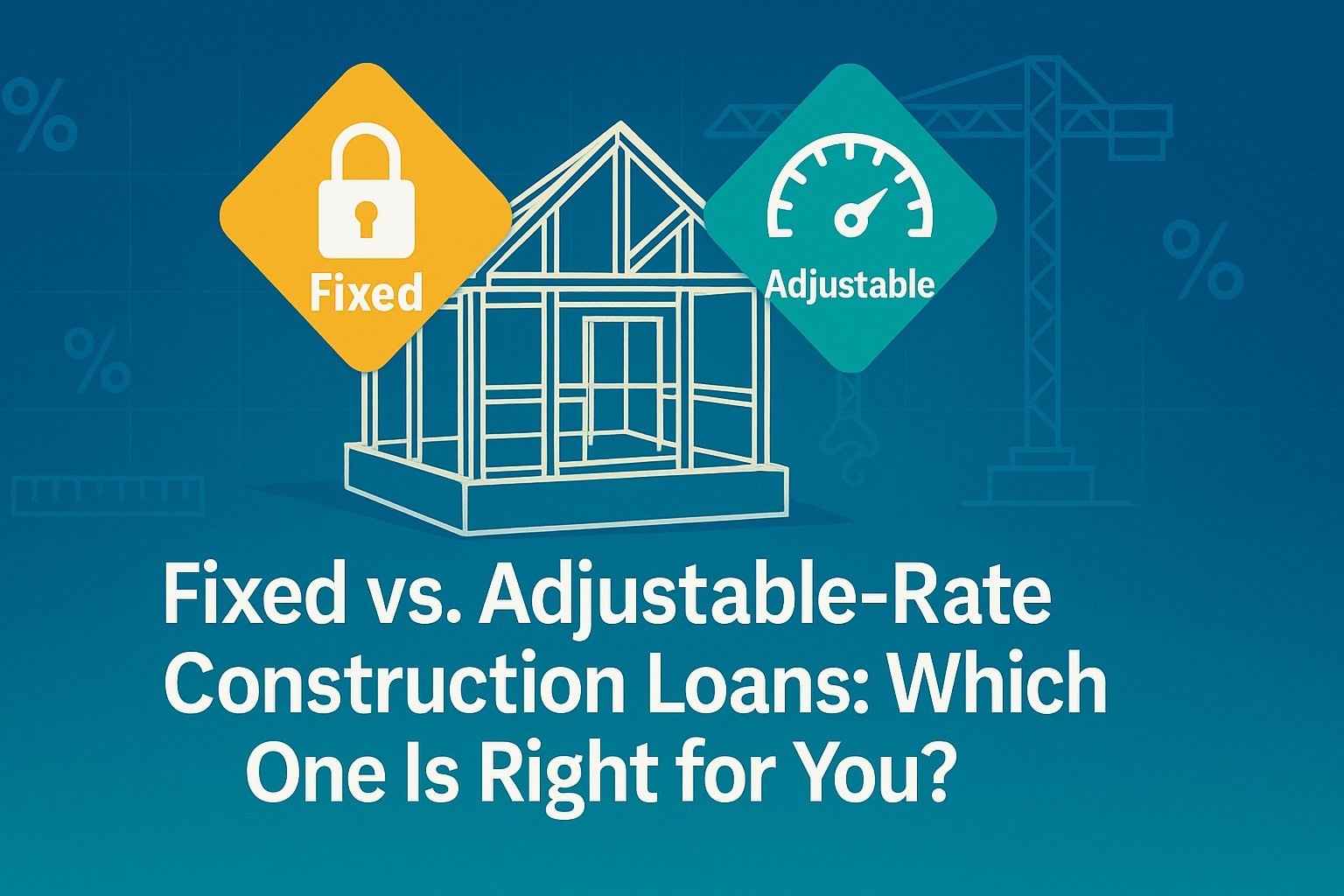
Construction loans help you fund a new build or a major renovation in stages. As the work progresses, the lender releases funds in installments, and you typically only incur interest on the amounts drawn during the construction phase. When construction ends, many borrowers convert the balance to a standard mortgage or pay it off with a separate loan. This guide compares fixed vs. adjustable-rate construction loans in plain language. You will learn what each option means, how the payments work, and how to choose the right path using a simple five-step method. The lens here is Money Basics, so we will keep the ideas clear, the steps practical, and the terms easy to follow.
Construction Loans 101 (quick refresher)
A construction loan is designed around the way a project unfolds. You do not receive all the money on day one. Instead, the lender approves a total amount and releases funds in draws that match milestones, like foundation, framing, and finishing. Each draw is verified by an inspection. You pay interest only on the amount that has been drawn so far, which keeps early payments lower while the home is still being built.
At the end of the build, you will have two common paths. First is a construction-to-permanent loan, also called a one-time close. You close once at the start, the construction phase funds the build, and the loan converts to a permanent mortgage when the home is complete. Second is a construction-only loan. You initially finalize the construction financing and subsequently arrange a separate end loan. Construction-only gives you more freedom to shop later, but it can add cost and paperwork because there are two closings.
Because cash flow is tight during a build, the structure of interest-only payments matters. You will see the payment rise as more funds are drawn. That is normal. Your long-term payment begins after the project is complete and the loan converts or is refinanced.
What “Fixed” and “Adjustable” mean for construction loans
A fixed-rate construction-to-permanent loan locks in a rate for the permanent phase before you break ground. During construction you still make interest-only payments on drawn funds, but once the home is done your loan converts and the rate stays the same for the life of the mortgage. Predictability is the main benefit.
An adjustable-rate construction-to-permanent loan, often called an ARM, typically starts with a lower introductory rate. After the intro period ends, the rate can adjust at set times based on an index plus a margin. ARMs have caps that limit the rate’s movement at the first adjustment, each later adjustment, and over the loan’s life. The appeal is a lower starting cost with flexibility later.
Both fixed and ARM versions can be structured as one-time close. Both can also exist in a construction-only format. The differences show up in the rate behavior during and after the build and in how you plan to hold, refinance, or sell the property.
Side-by-side comparison (inspired by the reference’s A/B layout)
Cost & payments
Fixed-rate construction loans often carry a higher rate than the starting rate on an ARM, but they trade that for stability. You will know your principal and interest payment when the home is finished. That helps with budgeting, especially if your income is steady and you plan to live in the home for many years.
Adjustable-rate construction loans usually offer a lower starting rate. That can make both the construction phase and the early years after completion more affordable. The tradeoff is that the rate can change later. If rates rise across the market, your payment could increase when the first adjustment happens. If rates fall, you may benefit at adjustment, or you might refinance by choice.
For many borrowers, the key question is time. If you intend to remain in the home for an extended period, a fixed rate may seem more secure. The lower initial cost of an ARM may be alluring if you plan to sell or refinance within a few years.
During-build cash flow
During construction, both fixed and ARM versions are usually interest-only on drawn funds. That keeps payments tied to your build progress. An ARM’s lower starting rate may trim your interest-only outlay a little during this phase. The difference is rarely huge in the earliest months because the drawn balance starts small and grows in steps. Still, every bit of cash flow helps when you are also paying rent, a current mortgage, or living expenses.
Rate environment fit
Match the loan to the rate outlook you believe is most likely. If you expect rates to climb or stay elevated, a fixed-rate construction loan helps protect your future payment. An ARM offers you a lower initial cost and the potential to profit later if you believe rates may decline. None of us can predict rates with perfect accuracy. That is why the next section includes a stress test step that helps you plan for a range of outcomes.
Timeline & exit plan
Put your timeline on paper. Will you hold the home for at least seven to ten years, or is this a shorter stop? If you expect to keep the home long-term, a fixed-rate construction loan can remove worries about future adjustments. If you plan to move, sell, or refinance in the near to medium term, an ARM’s early savings may win. The most important part is to decide your exit plan before you choose the loan. That keeps you from reacting later under pressure.
Closing logistics
One-time close can simplify your life. You complete the paperwork once, secure the terms, and concentrate on the build. Both fixed and ARM options can be one-time close. Construction-only is also common, but it adds a second closing at the end. Weigh the simplicity of a one-time close against any flexibility you want later. There is no universal best. There is only the setup that fits your budget, your builder, and your tolerance for changes.
Quick A/B table
Table: This compact view highlights how each option fits different goals so you can match the loan to your budget and timeline.
| Dimension | Fixed-rate construction loan | ARM construction loan | Best if | Watchouts |
|---|---|---|---|---|
| Payment path | Rate set for permanent phase | Lower start, may adjust later | Fixed for long-term holders | ARM can rise at adjustments |
| Build phase | Interest-only on draws | Interest-only on draws | Both keep early costs tied to progress | Draw balance grows, so payments rise |
| Budgeting | Predictable future payment | Flexible early cost | Predictability is a priority. | Plan for payment changes |
| Rate view | Suits rising or steady rates | Suits stable or falling rates | You want protection | You must track adjustment rules |
| Logistics | Works with one-time close | Works with one-time close | You want one closing | Construction-only adds a second closing |
How to choose in 5 steps (strategy steps)
Step 1 – Map your build and hold timeline
Write down three dates. Start of construction, expected completion, and how long you plan to live in the home after it is finished. If you have a long-term plan, fixed-rate construction financing can provide a sense of security. If your hold is short or you expect a clear trigger to refinance, an ARM may deliver a better total cost. Add notes about life events that could change the plan, like a growing family or a job move. A simple timeline turns a fuzzy idea into a concrete choice.
Step 2 – Stress-test payments
An ARM includes adjustment rules and caps. Even without memorizing formulas, you can build a safety buffer. Take the starting payment and model two versions: a moderate-rise case and a worst-case within the caps. Ask yourself if your budget can absorb those numbers. Then compare that range with the fixed-rate payment you would have at conversion. If the worst-case ARM still fits, you can make a confident call. If not, the fixed path may be wiser.
Step 3 – Read the draw schedule and interest rules
Please request a sample draw schedule prior to signing. It lists the stages of work and how much is released at each step. Confirm how interest accrues during draws and how inspections work. Look for details like when the interest-only phase ends and when your first full principal and interest payment begins. Clarity here prevents surprises later when the final draw hits and your budget shifts to long-term mode.
Step 4 – Compare one-time-close offers
Request quotes for both fixed and ARM one-time-close structures on the same day so you can compare apples to apples. Note the starting rate, anticipated conversion terms, any lock features, and all closing costs. Keep a small comparison sheet. If the ARM saves meaningfully in the early years and you are certain about your exit plan, the lower cost may outweigh the risk of later adjustments. If the savings are minor, predictability may be worth more.
Step 5 – Decide on a refi plan or float-down option
If you lean toward an ARM, define your next step in advance. Will you refinance to a fixed rate after construction if rates fall, or will you hold the ARM and monitor the adjustments? If a fixed option is your choice, ask about lock features that protect you during a long build. Some lenders offer ways to update the rate if the market improves. A clear plan turns unknowns into manageable decisions.
Who should pick a fixed-rate construction loan?
Choose a fixed-rate construction loan if you value stability above all else. It fits owners who plan to live in the home for many years and want a payment that stays the same in the permanent phase. It also suits anyone who dislikes monitoring rates or tracking future changes. If your income is steady and your budget is tight, the fixed path can reduce worry. It removes the chance that a later adjustment will collide with other life costs, like childcare or a new car. The tradeoff is that your starting rate may be higher than an ARM, but many borrowers treat that as the price of peace.
Who should pick an adjustable-rate construction loan?
Pick an adjustable-rate construction loan if you want the lowest early payment and have a firm plan for what happens next. It is a practical match when you expect to refinance or sell within the initial period. It also fits builders who believe rates could soften and want a chance to benefit later. You must be comfortable with moving parts. That means knowing your caps, knowing when adjustments happen, and running your numbers ahead of time. If you have a passion for fine-tuning your budget and closely monitoring market trends, an ARM can be a rewarding investment.
Money Basics checklist (put near the top for UX)
Use this short checklist as you decide. It is the Money Basics version, so it is concrete and simple.
-
Write your build timeline and your expected hold period after completion
-
List your required cash buffer for overruns and payment changes
-
Model a worst-case ARM payment and confirm it fits your budget
-
Decide fixed vs ARM before you sign, not after the drywall goes up
-
Request quotes for both structures from at least three lenders on the same day
-
Ask for a sample draw schedule and read every milestone
-
Confirm interest-only rules during construction and when full payments start
-
Put your exit plan in writing: hold, refinance, or sell
-
Track only a few core terms: rate, caps (if ARM), costs, and conversion details
-
Keep every document in one folder so decisions stay fast and stress stays low
FAQ
What is a construction-to-permanent loan, and why does a one-time close matter?
A construction-to-permanent loan funds the build and then converts to a standard mortgage when the home is finished. One-time close means you handle the closing once at the start. It can cut repeat paperwork and help you focus on the build rather than a second closing.
Are construction loan payments interest-only?
Yes, during the build, you usually pay interest only on the amount drawn so far. That keeps early payments lower while work is underway. After completion and conversion, your standard principal and interest payment begins according to the permanent terms.
Can I switch from an ARM to a fixed rate later?
Yes. Many borrowers who begin with an ARM choose to refinance to a fixed rate once their home is completed, provided that this aligns with their financial strategy. The key is to set rules for yourself in advance. Please determine the payment or rate level that will prompt a refinance and adhere to it.
Do ARMs have limits on how much the rate can change?
Yes. ARMs use caps that limit how much the rate can move at the first adjustment, at later adjustments, and in total over the life of the loan. Ask for those three numbers when you compare offers. They are your guardrails.
Is an ARM always cheaper than fixed?
Not always. An ARM often starts cheaper, but the total cost depends on how long you keep it and how rates move. If you refinance or sell inside the intro period, the early savings can win. If you hold long-term and rates move up, a fixed rate may cost less over time.
Which option is better for first-time builders?
First-time builders often prefer the predictability of a fixed-rate construction loan. It removes one major variable while you juggle many decisions. If you are comfortable tracking your budget and monitoring the loan, an ARM can still be a smart choice, but you must plan for adjustments.
How do I reduce surprise costs during construction?
Start with a realistic budget and a builder contingency. Review the draw schedule, inspection steps, and what happens if a stage costs more than expected. Keep a small cushion for those moments. Clear communication between you, your builder, and your lender is the best defense against surprises.
Does the choice affect my long-term financial goals?
Yes. Your mortgage payment is often your largest monthly expense. A fixed rate supports long-term planning with a steady payment. An ARM supports flexibility and early savings. Align the loan choice with your goals for savings, investing, and debt payoff so your home supports the rest of your plan.