Gold is a scarce, non-yielding asset often held to offset the long-run loss of purchasing power caused by inflation. An inflation hedge is any investment expected to rise—or at least hold value—when consumer prices climb. In this article, you’ll learn about the biggest mistakes both new and seasoned gold buyers make and tactical steps to buy smarter, store cheaper, and integrate gold sensibly into a diversified portfolio.
Does Gold Really Protect Against Inflation?
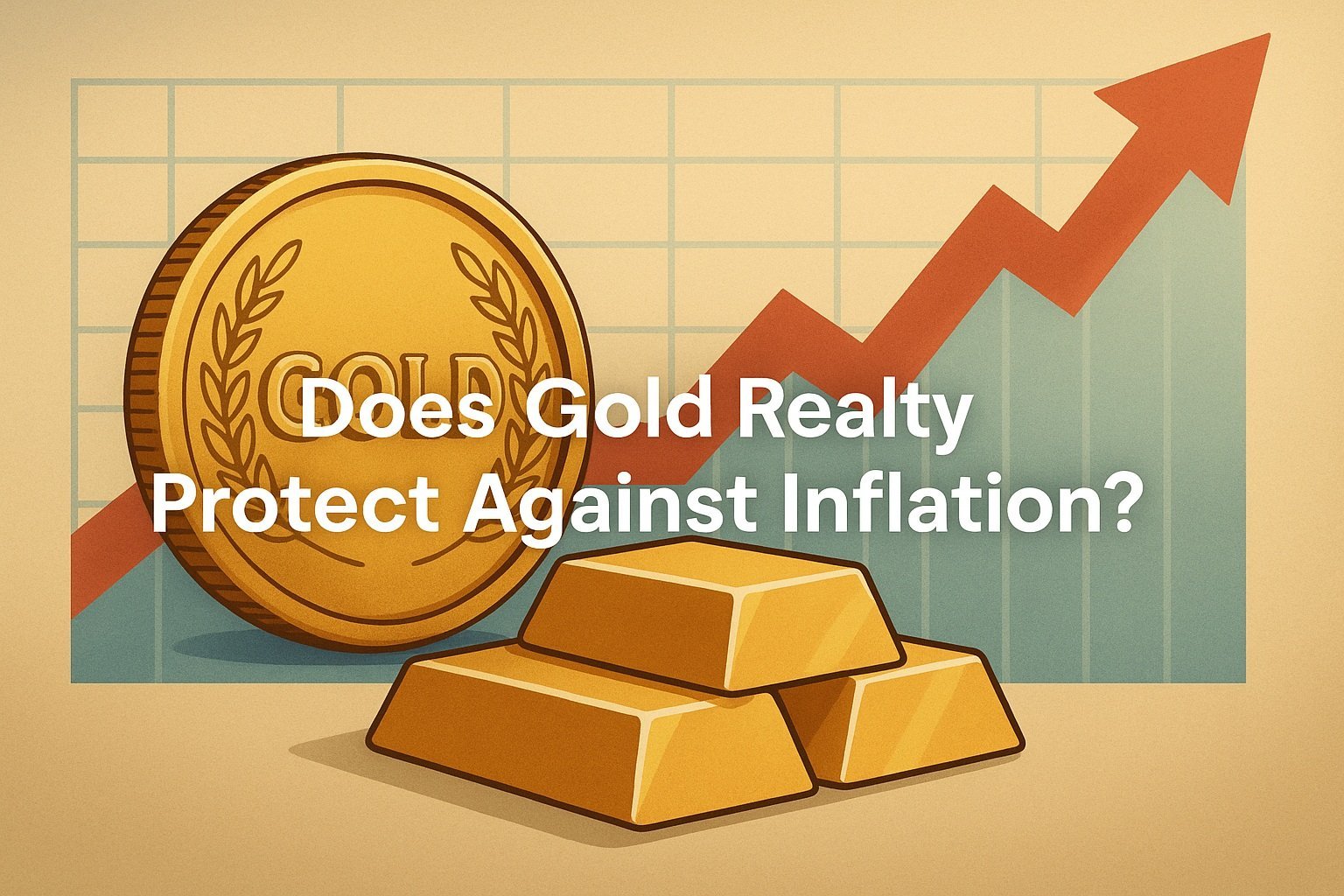
Despite its reputation, gold’s track record as a reliable inflation hedge is uneven. Looking at quarterly data over the past 20 years, gold prices and real interest rates exhibit a strong negative correlation of around –0.64—meaning as rates rise, gold often falls, and vice versa. Meanwhile, month-to-month changes in headline inflation and the spot price of gold show virtually no meaningful correlation over the period from 1979 to 2024 (correlation coefficient confidence interval roughly –0.004 to 0.162). Yet in certain environments—like the equity sell-offs of early 2025—gold has surged to record highs as investors sought alternatives, underscoring its potential as a portfolio diversifier even if it doesn’t track inflation perfectly.
Treat gold as a long-term volatility dampener, not a short-term crash helmet.
11 Money Mistakes to Avoid When Buying Gold
| Money Mistake (Question) | Strategy Step | Key Source |
|---|---|---|
| 1. How much is too much—should gold be 25% of my portfolio? | Cap exposure to roughly 5–10% of investable assets and rebalance annually. | BlackRock |
| 2. Paying excessive premiums for collectible coins | Focus on buying standard bullion bars or coins with low spreads to market spot price. | CFA Institute |
| 3. Ignoring storage and insurance costs | Factor in vault storage fees and insurance when calculating total cost of ownership. | BlackRock |
| 4. Chasing short-term price spikes | View gold as a multi-year position; avoid timing the market based on recent rallies. | CFA Institute |
| 5. Forgetting to verify authenticity | Always purchase from reputable dealers and insist on assay certifications or serial-numbered bars. | BlackRock |
| 6. Overlooking tax and reporting implications | Understand your jurisdiction’s tax treatment for physical gold, ETFs, and mining shares before buying. | CFA Institute |
| 7. Confusing different gold forms | Choose the right product—physical bullion for a safety cushion, ETFs for ease of trading, or mining stocks for leverage. | BlackRock |
| 8. Neglecting to compare alternative hedges | Consider inflation-linked bonds or broad commodity ETFs alongside gold to optimise the risk-return trade-off. | CFA Institute |
| 9. Holding gold in taxable accounts without planning | Use tax-advantaged accounts if possible to minimise capital gains or collectibles tax rates on gains. | BlackRock |
| 10. Ignoring liquidity requirements | Keep a portion of exposure in liquid vehicles (ETFs) for emergency access rather than all in physical bars. | CFA Institute |
| 11. Failing to integrate gold into overall asset allocation | Build an asset allocation plan first, then layer in 5–10% gold—adjusting as market conditions evolve. | BlackRock |
By avoiding these common pitfalls and following the tactical steps above, you can harness gold’s strengths—its scarcity, low correlation to many traditional assets, and potential as a portfolio stabiliser—without overpaying for premiums, taking on hidden costs, or leaving yourself exposed to unwanted risks.
“Am I Overpaying for Shiny Metal?”
Many gold buyers get caught up in fancy packaging or limited-edition designs and end up paying significantly over spot price. That extra cost, known as the dealer premium, covers minting, distribution, and dealer markup. While a small markup is reasonable, routinely paying more than 5 percent above spot will erode any inflation-hedge benefit you hope to achieve.

Before clicking “buy”, take a few minutes to compare premiums across multiple dealers. Check both online platforms and local coin shops, noting the spot price at the time of your inquiry. Be sure to include shipping or handling fees in your calculations. If one dealer’s quote is 7 percent above spot and another’s is 3 percent, you’re effectively paying double the extra cost for the same ounce of gold.
| Premium Category | Percentage Over Spot | Recommendation |
|---|---|---|
| Standard bullion | Up to 5 percent | Acceptable – proceed with purchase |
| Elevated bullion | 6–10 percent | Shop around or negotiate a better deal |
| Numismatic/collectible | Above 10 percent | Only if you value the collectibility |
Compare dealer premiums and aim for no more than 5 percent over spot on common bullion bars and coins.
Are Collectible Coins Really ‘Better’ Than Bullion?
It can be tempting to chase beautiful, limited-edition coins under the assumption they will always outshine plain bullion. In reality, collectible—or numismatic—coins often carry much higher premiums above spot price to cover rarity, condition grading, and licensing. That extra cost may never be recouped if you need to liquidate quickly. Widely traded bullion coins such as the American Eagle or Canadian Maple Leaf typically trade close to spot with tight bid-ask spreads and broad market demand. Unless you genuinely appreciate coin history and collectibility, you will usually get more reliable inflation protection and liquidity by sticking to standard bullion.
| Feature | Bullion Coins | Collectible Coins |
|---|---|---|
| Premium Over Spot | Typically ≤ 5% | Often 10 % to 30 % or higher |
| Liquidity | High — bought and sold globally | Lower — depends on niche buyer demand |
| Market Transparency | Price tied closely to gold spot price | Price driven by rarity and grading |
| Ideal For | Simple inflation hedge and portfolio diversification | Hobbyists and seasoned numismatists |
Stick to widely traded bullion such as American Eagle or Maple Leaf unless you are a dedicated numismatist.
Can I Trust This Dealer on Social Media?

Social media ads and slick Instagram posts can make any dealer look credible overnight. Before you hit “buy”, do a quick background check to avoid scams. First, confirm that the dealer holds a valid precious metals dealer licence in your jurisdiction. Next, search for their Better Business Bureau rating or equivalent local consumer agency reviews. Membership in industry groups like the Professional Numismatists Guild or the London Bullion Market Association adds another layer of credibility. Finally, read the fine print on their buyback policy. A trustworthy dealer will publish transparent terms, including minimum buyback percentages and any restocking or assay fees.
| Verification Checkpoint | What to Look For | Why It Matters |
|---|---|---|
| Dealer License | State or national precious metals dealer license | Ensures regulatory oversight and accountability |
| Consumer Reviews | BBB rating, Trustpilot or local review platforms | Reveals real customer experiences and red flags |
| Industry Membership | Logos or listings on guild/association websites | Signals adherence to ethical standards |
| Buy-Back Policy Transparency | Published rates, fee disclosures | Prevents unpleasant surprises when you sell back |
Where Will I Keep 20 lb of Gold?
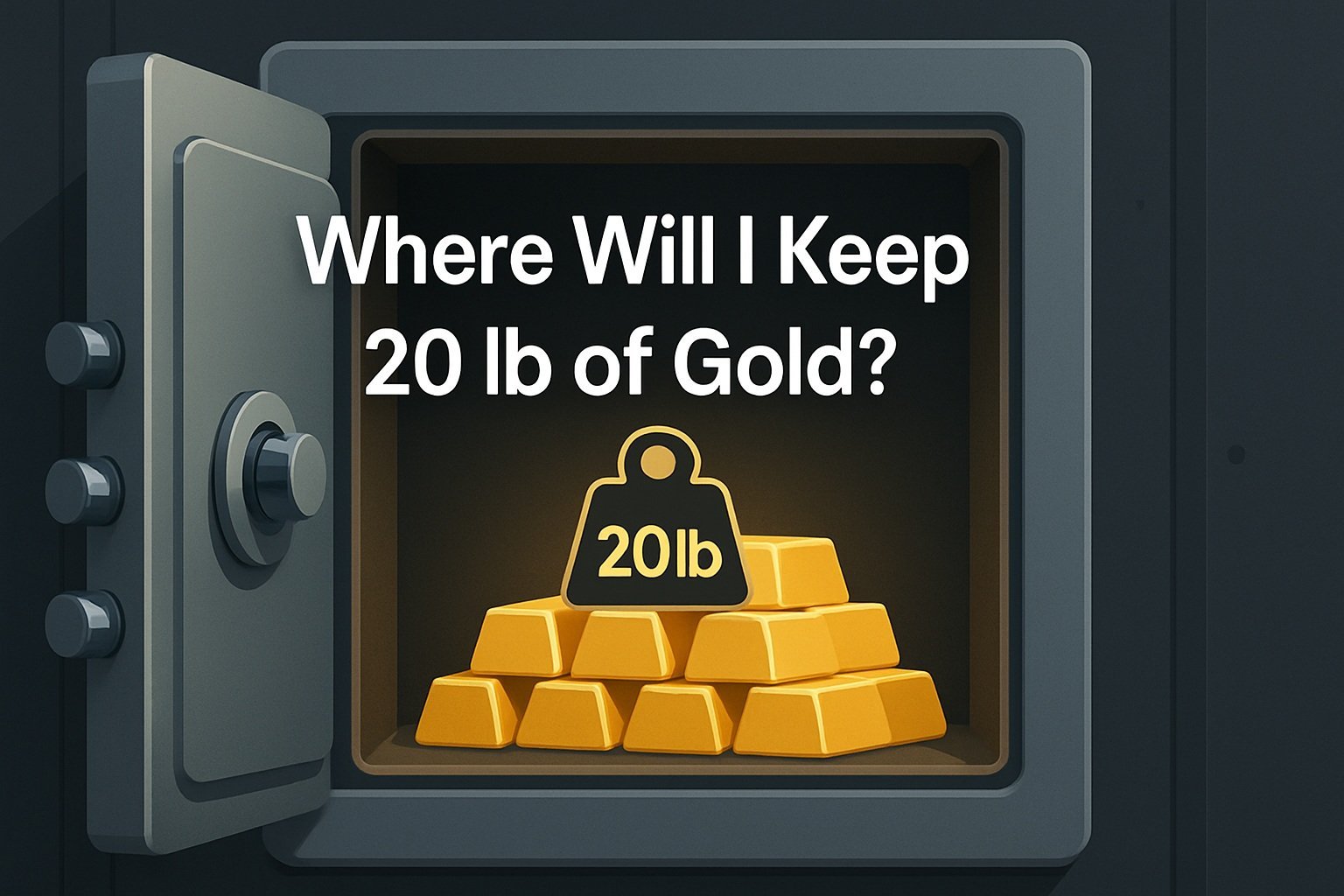
Imagine unboxing nearly 300 ounces of gold coins or bars and then wondering where to stash them. At roughly 0.5 cubic feet in volume, 20 pounds of gold takes up more space than you might expect—and that’s before considering insurance and security. Before you pay for the metal, get quotes for two main storage options: insured vault storage at a reputable facility and a high-grade home safe.
A professional vault typically offers 24/7 surveillance, climate control, and full insurance coverage for a fee that can range from 0.25% to 1% of your gold’s value per year. By contrast, a top-tier home safe may cost $2,000 to $5,000 upfront, plus a separate insurance rider—often 0.5% to 1% of the contents’ value annually. You’ll trade some convenience and control at the vault for enhanced security and liquidity, while a home safe gives instant access but may carry higher long-term costs and greater personal responsibility.
| Storage Option | Approximate Annual Cost | Pros | Cons |
|---|---|---|---|
| Insured Vault Facility | 0.25%–1% of gold value | Maximum security, full insurance, climate control | No instant access; storage fees add up over time |
| High-Grade Home Safe | $2,000–$5,000 initial + 0.5%–1% insurance | Immediate access, one-time safe purchase | Upfront cost, insurance rider needed, personal liability |
Do I Understand the Tax Bill?
It’s easy to forget that Uncle Sam wants his share when you turn gold into cash. In the U.S., profits from physical gold are treated as collectible gains, not standard long-term capital gains. That means any ounce you sell after a year could be taxed at up to 28 percent, rather than the 15 or 20 percent that applies to most stocks or ETFs. To avoid a nasty surprise come tax time, keep meticulous cost-basis records—date of purchase, purchase price, any dealer premiums you paid, and storage or insurance fees you can deduct. Having those details on hand will help you calculate your true gain and minimise your tax liability.
| Gain Type | Holding Period | Applicable Tax Rate |
|---|---|---|
| Physical gold (collectibles) | More than 1 year | Up to 28 percent |
| Physical gold (collectibles) | 1 year or less | Ordinary income rates |
| Gold ETFs or mining stocks | More than 1 year | 0 to 20 percent |
Is Gold a Crash-Proof Short-Term Hedge?
It’s tempting to think of gold as a guaranteed safe haven that will rocket higher the moment markets start to tumble. In practice, gold’s price behaviour in the weeks or months around a stock crash can be surprisingly muted or even move in tandem with equities. During some recent corrections, gold initially dipped alongside stocks before recovering over the following year. That pattern reflects investors’ shifting liquidity needs and the fact that gold often shines brightest only after panic has subsided and longer-term concerns take hold.
Expect low or even positive correlation with stocks in the short run and plan for multi-year holding periods.
Am I Chasing the Hype at All-Time Highs?
It’s all too easy to see gold hitting new highs and think you need to rush in or miss out. In reality, buying a big block of ounces at a peak can leave you nursing losses if prices dip back down. A smarter move is to dollar-cost average—break your investment into smaller, regular purchases over weeks or months. That way, you’ll buy more when prices are lower and less when they’re elevated, smoothing out your overall cost basis and reducing the chance of buying right at the top.
| Strategy | Purchase Pattern | Risk of Buying High |
|---|---|---|
| Lump-Sum | One-time buy at market price | High if price later falls |
| Dollar-Cost Average | Regular small buys over time | Lower, as cost is averaged |
Could I Be a Fraud Victim?
Scammers love to crank up the fear, warning that inflation will explode tomorrow and only gold can save you. If a dealer leans on doom-and-gloom rhetoric or pressures you to wire funds “right now”, it is usually a sign to walk away. Always verify the seller’s physical address, check for independent reviews, and ask for references. Never wire money to a new dealer without doing your homework—wiring is almost impossible to reverse if something goes wrong. Instead, use payment methods that offer buyer protection, such as credit cards or escrow services, and always insist on a signed sales agreement showing the specific gold you are buying.

| Warning Sign | Safe Response |
|---|---|
| High-pressure fear tactics | Pause, research the dealer, and compare alternatives |
| Requests for immediate wire transfers | Opt for credit card, escrow service, or bank draft with fraud protection |
| Lack of verifiable contact information | Insist on physical address, business registration details, and reviews |
| No written purchase agreement or assay | Require a formal contract and assay certificate before payment |
Bars, Coins, ETFs or Mining Stocks—Which Is Liquid?
Not all gold exposures are created equal when it comes to liquidity. Physical bullion in the form of bars or coins can be very liquid if you have a dealer relationship, but you may face premiums or assay delays when you sell. ETFs trade on exchanges like stocks, offering near-instant execution at market prices and low trading costs. Mining stocks can move faster than gold itself and offer upside leverage, but they also carry company-specific risks and wider bid-ask spreads in volatile markets.
| Vehicle | Liquidity Characteristics | Best Used For |
|---|---|---|
| Bullion (bars/coins) | Solid resale market, but may involve shipping and testing | Disaster insurance and long-term holding |
| Gold ETFs | Tradeable during market hours with tight spreads | Tactical trading and portfolio rebalancing |
| Mining Stocks | High volatility, affected by operational news | Growth exposure and leverage to gold prices |
Do I Ever Rebalance Out of Gold?
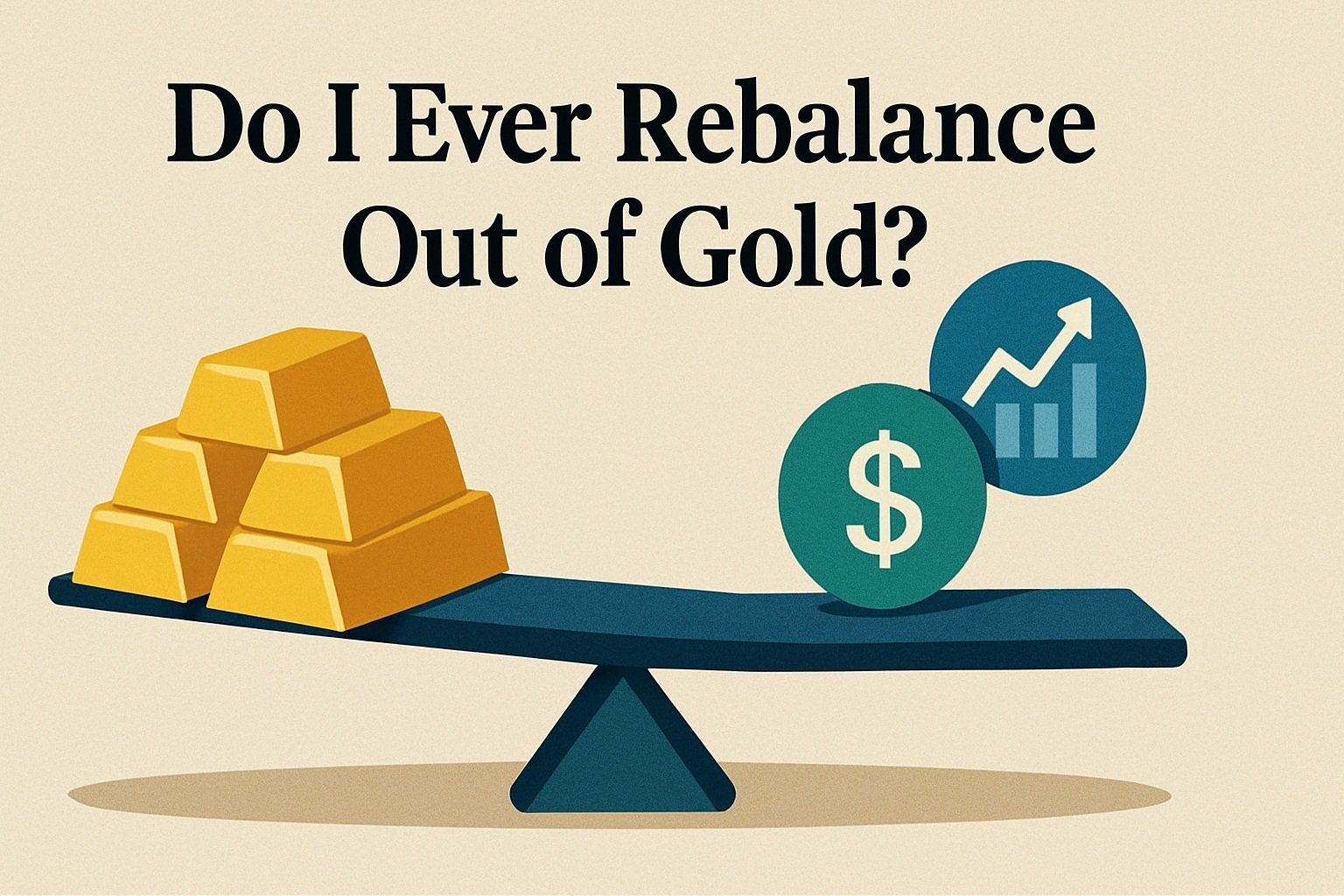
It can feel counterintuitive to sell gold after it has run higher, but rebalancing is key to disciplined portfolio management. If your target allocation is 8 percent and gold spikes to 12 percent, you are now overweight and taking on unintended risk. By trimming the excess back to your target, you lock in profits and free up capital for other opportunities. Conversely, when gold dips below your target range, you can hold off selling and even consider adding incrementally if it fits your broader plan. Sticking to a regular rebalancing schedule—quarterly or semiannual—helps you avoid emotional decision-making and keeps your overall risk profile in check.
| Gold Allocation | Recommended Action |
|---|---|
| Above target | Sell down to target weight to realise gains |
| At target | No action—stay the course |
| Below target | Maintain position or add gradually if appropriate |
Pulling It All Together: A Balanced Gold Strategy
Before you click purchase, run through this quick checklist to make sure gold fits your plan and you’ve thought through every angle:
-
Cost – What dealer premium am I paying, and how does that compare to other quotes?
-
Custody – Have I priced insured vault storage and a high-grade home safe plus insurance?
-
Liquidity – Which vehicle am I using (physical bars, coins, ETFs, miners), and how easily can I convert it back to cash?
-
Taxation – Do I understand that U.S. physical-gold gains are taxed as collectibles up to 28 percent and that I need detailed cost-basis records?
-
Portfolio fit – Have I capped my gold allocation at my target (for example 5–10 percent) and planned a regular rebalance schedule?
To keep things simple, many investors use a “core and satellite” approach. Here’s a basic template you can adapt:
| Portfolio Component | Allocation | Review Frequency |
|---|---|---|
| Core diversified assets | 90 percent | Annual or semiannual |
| Satellite gold allocation | 10 percent | Annual or semiannual |
Answering those pre-purchase questions and following this allocation framework helps you buy smarter, manage risk, and let gold do its job as a balanced portfolio diversifier.
FAQ
Is gold a good hedge against inflation today?
Gold tends to track broad inflation trends over decades rather than matching every annual price swing. If you look at price data going back fifty years, gold holds purchasing power well when measured over long periods. In the short term, however, it can lag or even dip as real interest rates and investor sentiment shift. Think of gold as a slow but steady guard against rising prices rather than a year-by-year shield.
How much gold should I own?
Financial planners typically recommend allocating between 5% and 10% of your long-term portfolio to gold, depending on how much risk you can tolerate. If you prefer smoother returns and lower volatility, lean toward the lower end of that range. If you accept more swings in exchange for potential diversification benefits, you might tilt toward 10%. Whatever you choose, treat your gold slice as part of a balanced plan and rebalance regularly.
What’s safer – gold coins or bars?
One-ounce coins are often easier to recognize and sell, since dealers know their size and purity at a glance. That liquidity comes at a slightly higher premium when you buy. Larger bars tend to cost less per ounce because of lower minting and packaging expenses, but they can face more rigorous authenticity checks and carry a higher risk of counterfeiting. If ease of sale matters most, pick coins. If you want the lowest cost per ounce and can manage verification, bars may suit you better.
Where should I store physical gold?
For many investors, an insured depository or vault provides the strongest security, climate control, and insurance protection. If you prefer direct control, a high-security home safe plus a dedicated insurance rider can also work, especially when you schedule regular audits and maintenance. Avoid bank safe-deposit boxes if you need round-the-clock access, since banks limit hours and may not insure your contents fully.
What fees do gold ETFs charge?
Mainstream gold ETFs such as GLD or IAU usually carry expense ratios in the range of 0.20% to 0.40% per year. On top of that, you will pay ordinary broking commissions when you buy and sell shares. Those ETF costs are often much lower than dealer premiums on physical bullion, but remember you lose direct ownership of the metal itself.