What Exactly Are “Smart Spending Habits”?
Smart spending habits are not about pinching pennies until you snap. They are about buying intentionally, so every rupee, dollar or pound you part with serves a purpose. Imagine your money as team players: you only want the MVPs on the court, not benchwarmers draining resources.
Needs versus wants check-in
Before you spend, pause and ask yourself, “Will this move me closer to a goal like becoming debt-free or is it a quick thrill that vanishes in minutes?” Framing every purchase as a choice between progress and pleasure makes it easier to spot impulse buys.
Delay by default
Give yourself a 24-hour cooling-off period on non-essentials. That one-day wait cracks the whip on impulse: studies show this simple habit can cut spontaneous purchases by half. By the time the timer dings, you’ll often find the urge has fizzled away.
Value-per-use ratio
Think beyond sticker price to how often you’ll actually use the item. Thirty dollars for running shoes that you lace up 150 times translates to just twenty cents per wear. Four artisan coffees at ten bucks a pop, on the other hand, cost forty cents per sip. That math makes the choice crystal clear.
Automatic comparison
Train yourself to check at least two competitors’ prices or hunt for a coupon before you click “buy”. A quick price-comparison routine can shave 5–15 percent off your average order total without feeling like a chore.
Easy tracking
You don’t need sophisticated software Your phone’s notes app works just fine. Jot down every expense for a week, and you’ll see where money seeps out of your budget: that daily convenience-store snack here, the app subscription you never use there. Once you spot patterns, you can plug those leaks.
Each of these habits is like a muscle: the more you work it, the stronger your discipline becomes. Before long, smart spending isn’t a forced behaviour but an automatic part of your daily routine.
Debt-Snowball 101: Why It Works (and When It Doesn’t)
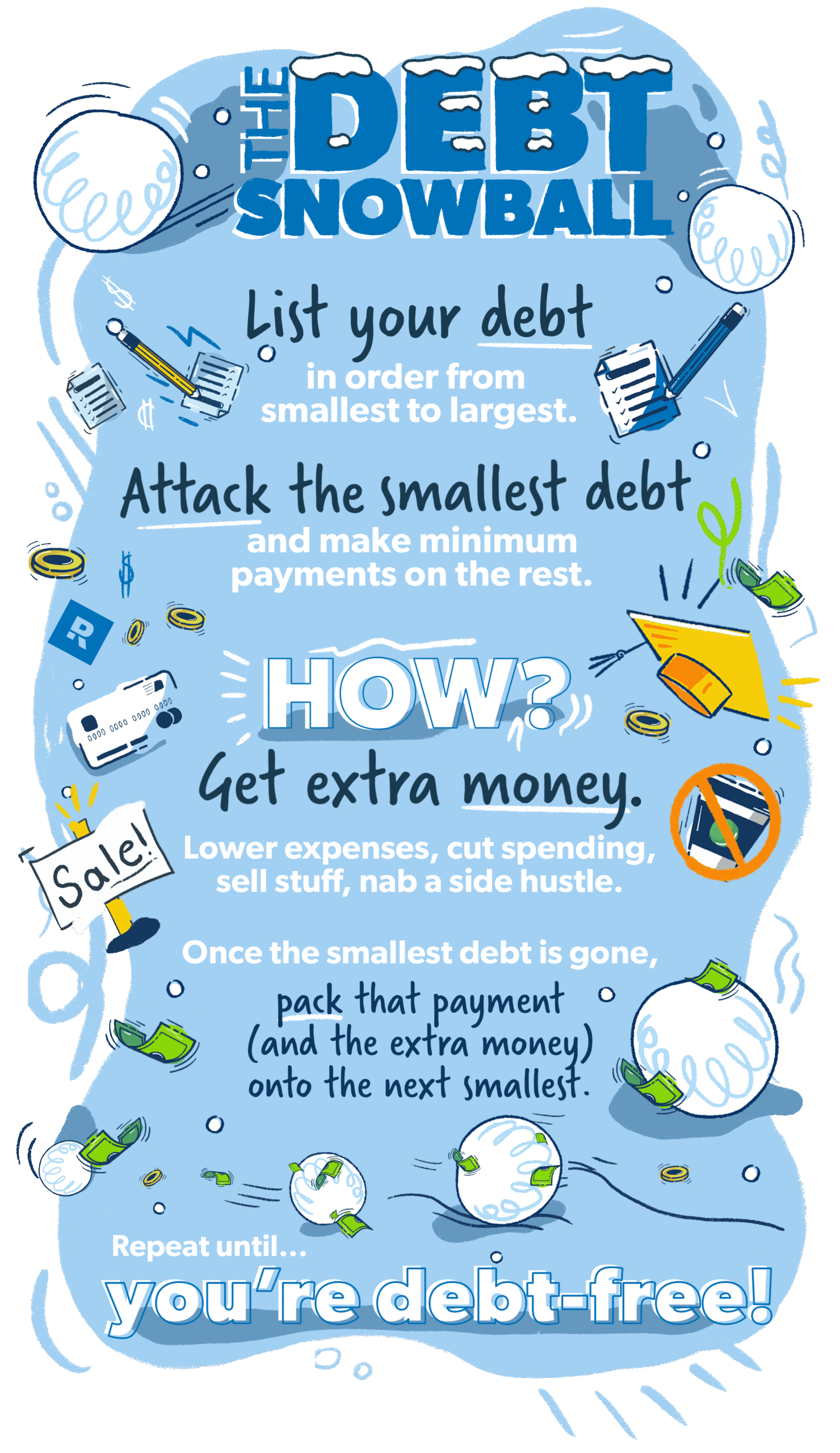
The debt-snowball method is built on two simple ideas: focus on one debt at a time and celebrate every win. Here’s how it rolls:
-
List your debts from smallest to largest, regardless of interest rates.
-
Pay the minimum on all but the smallest balance.
-
Channel every extra rupee toward that smallest debt.
-
Once it’s paid off, “snowball” its payment into the next smallest debt.
Picture a real snowball: at first it’s tiny, but as it rolls downhill and picks up more snow, it grows faster and faster. Your payments work in exactly the same way.
Why the snowball sticks
-
Psychological momentum trumps pure math. Knocking out a small loan in weeks feels amazing, and that boost in confidence drives you to keep going.
-
Fewer open accounts means less mental clutter. Closing a debt account is as satisfying as crossing an item off a to-do list.
-
Visible progress turns abstract balances into a shrinking list you can actually see.
When to reconsider the method
Snowballing isn’t always the perfect fit. If one of your debts carries an extremely high interest rate (think payday loans or rent-to-own agreements), you could be haemorrhaging cash while you chip away at tiny balances. In that case, you might:
-
Refinance the high-rate debt to a lower rate or a fixed-payment plan.
-
Tackle it first, even if its balance is larger, then go back to your snowball order for the rest.
Still, for most of us juggling multiple credit cards, personal loans and perhaps a medical bill or two, the debt snowball’s mix of simplicity and quick wins keeps motivation high. By pairing it with smart spending habits, you’ll not only pay off debts faster, you’ll transform how you relate to money for good.
Step-by-Step: Pairing Smart Spending with Your Debt-Snowball
Step 1: Map Your Money
Begin with a full audit: for 30 days, record every single outflow. Whether it’s a ₹20 chai, a ₹500 streaming bill, or that ₹50 delivery fee, log it alongside the category (food, entertainment, bills) and the emotional trigger (“tired”, “reward”, “peer pressure”). By the end of the month, you’ll spot phantom spending – those fees and subscriptions you barely notice but that add up. Maybe you’re still paying for a trial you forgot to cancel or ordering takeout because you don’t have groceries on hand. This granular view turns invisible leaks into obvious targets for cuts.
Step 2: Identify Quick-Win Cuts
Scan your log for easy wins:
-
Subscription creep: Are you juggling three music services and two cloud-storage plans? Keep your top pick; cancel the rest.
-
Convenience charges: Spot those ₹30 “express checkout” fees or daily delivery charges. Schedule grocery runs or bundle orders instead.
-
Brand-name loyalty: Try swapping your usual detergent or cereal for a store-brand alternativeoften 30–50 percent cheaper with almost identical quality.
-
Dining-out swaps: Choose two restaurant meals per week to re-create at home. A homemade curry or stir-fry can cost 40–50 percent less than dining out.
Total these savings Say you cancel a ₹299 streaming plan, save ₹150 on groceries by switching brands, and cut three delivery fees of ₹60 each: that’s ₹629 a month freed up. Then, set up an automatic transfer of exactly that amount into your smallest-balance loan or card.
Table: Example Monthly Savings
| Category | Original Cost | Cut or Swap | Monthly Savings |
|---|---|---|---|
| Streaming subscription | ₹299 | Cancel second service | ₹299 |
| Groceries | ₹3,000 | Swap 50% to store brands | ₹150 |
| Delivery fees | ₹180 (3×60) | Bundle orders twice per week | ₹180 |
| Dining out | ₹1,200 (2×600) | Cook at home twice | ₹600 |
| Total | ₹1,229 |
Step 3: Redirect Savings to the Smallest Debt
Automation is your ally. The moment extra cash hits your account, have it swept into your smallest-debt payment. Log in to your bank or lender portal and adjust the payment amount to include that savings figure. Schedule it for the day right after payday so you never even see the money in your checking balance. Label the transaction “Snowball Boost” or similar This mental reminder keeps motivation high and ensures you don’t accidentally spend what’s destined for debt destruction.
Step 4: Grow the Snowball
Now that you’ve primed the pump, accelerate growth:
-
Side-hustle infusion: Dedicate a weekend afternoon to freelance writing, tutoring, graphic design or try micro-gigs online. Even an extra ₹5,000 a month, funnelled entirely into debt, can shave weeks off your payoff timeline.
-
Bill negotiation scripts: Every six months, call your internet or phone provider armed with a friendly script: “I’m reviewing my budget and looking at competitors’ offers.” You’ll often qualify for loyalty discounts or waived fees in under 10 minutes.
-
Cashback cycle: Use a cashback credit card but only if you pay it off in full each month. Funnel every rupee of cash back directly into your snowball. That ₹250 reward becomes ₹250 less to owe, and the cycle repeats.
Each extra rupee added makes the next payoff come faster, creating real financial momentum.
Step 5: Celebrate & Reinforce
Don’t skip the fun part: celebrate each debt you clear, but do so in a way that doesn’t blow your budget. Cook a special dinner at home, plan a free hike with friends, or watch a favourite movie marathon. These low-cost rewards reinforce the positive feelings tied to smart spending and steady progress. By associating financial wins with joy rather than splurges, you’ll cement new habits and keep your snowball rolling strong until every balance is gone.
Advanced Accelerators
-
Biweekly payment trick: If salaried, split your regular payment in half every two weeks. You’ll make 26 half-payments, or 13 full payments, each year, with an extra month knocked off principal with no pain.
-
Zero-based budget + snowball: At month’s start you assign every rupee a job (expenses, savings, debt). Surplus goes to the snowball, ensuring no leftover cash vanishes in impulse buys.
-
Refinancing wisely: Rolling a high-interest personal loan into a lower-rate credit union loan can save thousands. Lock in the lower rate but keep monthly payments at the old higher amount to finish faster.
Common Pitfalls & How to Dodge Them
-
Lifestyle creep: As income rises, expenses quietly stretch. Counter it by raising snowball payments each time you get a raise or side-hustle bump.
-
Windfall temptation: Tax refunds and bonuses can vanish overnight. Commit in advance: 10 percent to a small treat, 90 percent to debt.
-
Emergencies: Without a buffer, one surprise medical bill can restart the cycle. Build a starter emergency fund of one month’s living expenses in parallel with the snowball.
Tracking Progress: Tools & Templates
Apps That Sync With Snowball Math
-
EveryDollar: Drag-and-drop budgeting matches snowball order automatically.
-
NerdWallet: Links accounts, shows payoff projections, and sends “debt free date” alerts.
-
Tally: For credit cards, it automates payments and may lower APR if you qualify.
DIY Spreadsheet Walk-Through
Create columns for Debt Name, Balance, Minimum Payment, Extra Payment, New Balance, and Payoff Date. Use conditional formatting so a zero balance turns the row green – an instant hit of motivation.
Visual Milestone Chart
Print a thermometer or mountain outline divided into sections equal to each ₹10,000 of debt. Colour a section every time your total drops by that amount. Place it where you see it daily.
30-Day Smart-Spending Challenge (Implementation Plan)
| Week | Focus | Key Action |
|---|---|---|
| 1 | Expense audit | Track every outflow with notes on triggers |
| 2 | Debt listing | Order balances from smallest to largest |
| 3 | Cuts → Snowball | Automate transfers of saved cash to smallest debt |
| 4 | Review & adjust | Lock in habits; set next 90-day goals |
Complete the challenge once each quarter for ongoing refinement.
FAQ
What is the difference between the debt snowball and avalanche methods?
The snowball attacks the smallest balance first to create psychological momentum. The avalanche targets the highest interest rate to save more on interest. Choose the method that keeps you consistent, because consistency pays off every time.
How do I create a debt-snowball spreadsheet?
Open a blank sheet, list debts in ascending balance order, and add columns for rate, minimum, and extra payment. Use a simple subtraction formula after each payment to update balances and a SUM function to show total debt remaining.
Is lifestyle inflation ever good?
It can be, if higher spending buys genuine life improvement like health, education, or income-boosting tools. The key is intentionality. Inflate on purpose, never by accident.
Which everyday tweak yields the biggest savings?
Consistently preparing meals at home often frees up hundreds per month. Grocery planning beats frequent takeout without sacrificing enjoyment.
Should I build an emergency fund before starting the snowball?
Yes. A modest starter fund of one month’s living costs shields you from new debt when surprises hit, allowing uninterrupted snowball progress.
Can I still use credit cards while on the snowball plan?
Yes, if and only if you pay the statement balance in full each month. Otherwise, interest erases your snowball gains.