Developing a robust U.S. credit scores can be challenging. A credit score can feel like trying to grow a plant in the dark—everyone says “water it,” but no one explains how much, how often, and what sunlight actually is. This guide, Credit Score 101: How United States Beginners Build a 700+ FICO, turns the lights on.
A 700+ FICO is often the point where approvals get easier and interest rates start looking “reasonable” instead of punishing. What’s even better? You don’t need to be wealthy or carry debt to get there. You need a system—starting with the fundamentals of budgeting, saving, and debt control (see: Money Basics Playbook).
In my experience, most beginners face challenges due to two main factors: either they lack sufficient credit history (thin file), or they unintentionally encounter common pitfalls such as high utilization, missed payments, or applying too quickly. We’ll fix that with a step-by-step blueprint, real-world examples, and simple “do this next” actions—whether you live in the U.S. This guide is applicable regardless of whether you currently live in the U.S. or are moving there for work, study, or family; we will help you achieve your credit score goals.
Quick Takeaway: A 700+ FICO isn’t about being perfect—it’s about being predictably on-time, low-risk, and consistent.

Credit Score 101: The 700+ FICO Goal (What It Unlocks)
A credit score is essentially a risk forecast—how likely you are to repay on time—based on your credit reports and account behavior.
So what does 700+ mean in practice?
-
It typically signals you manage credit responsibly and are less likely to miss payments.
-
It can help you qualify for better loan terms, larger credit limits, and easier approvals.
-
It often reduces friction in real life: renting apartments, setting up utilities, and sometimes insurance pricing or certain screenings (varies by state and situation).
Most consumer credit scores commonly range from 300 to 850, and “good” often starts around the high 600s. A 700 is typically within the “good” tier, and moving into the 740+ range can push you into “excellent,” depending on the model and lender.
Why worldwide readers should care: If you plan to live, study, work, invest, or buy property in the U.S., your U.S. A credit profile can matter, even if you have excellent credit elsewhere. Many countries’ credit histories don’t automatically transfer.
“A strong score is less about income and more about proven repayment behavior over time.”
Pro Tip: Don’t chase a single number from one app. Lenders may pull different score versions, and your goal is a healthy file, not a vanity score.
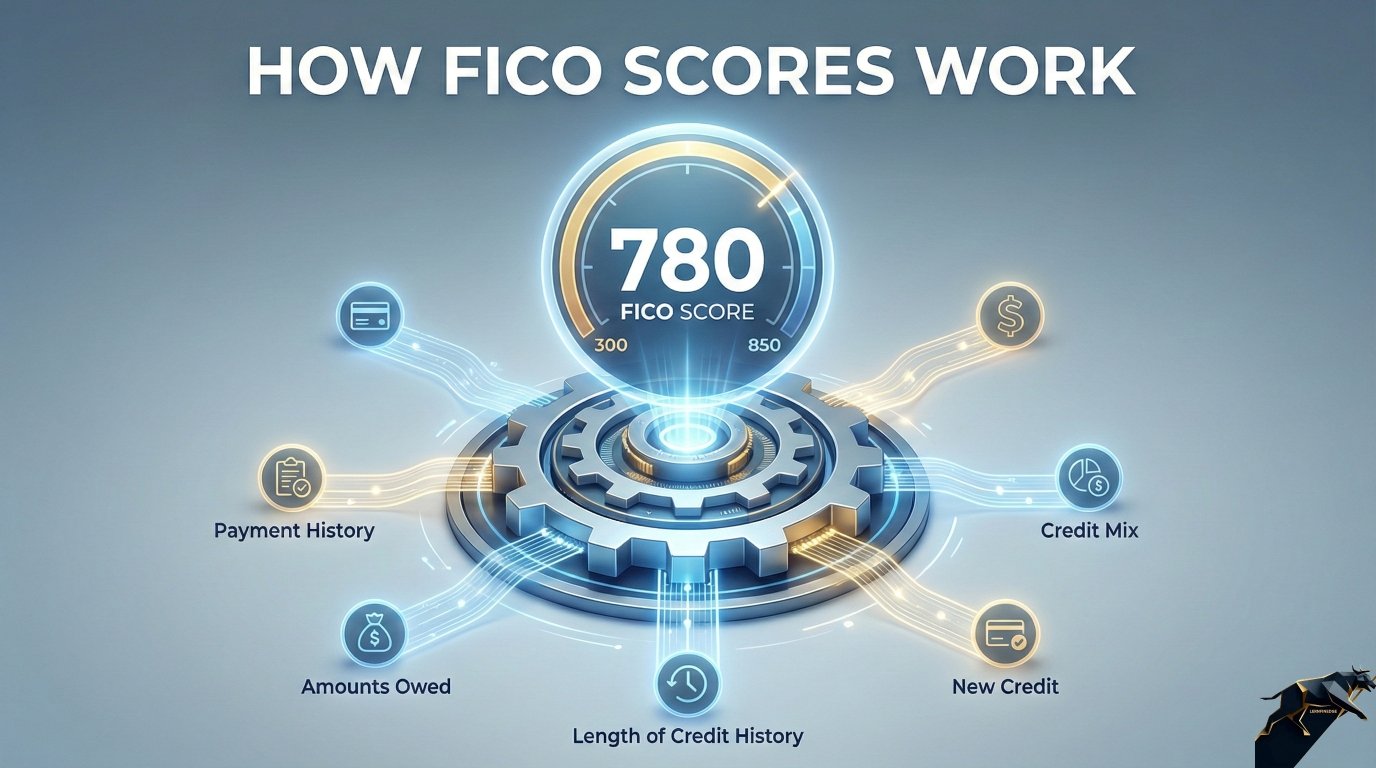
How FICO Scores Work (The Five Factors That Drive Your Number)
If you want to win a game, you need the rules. FICO Scores are broadly influenced by five categories: payment history (35%), amounts owed/utilization (30%), length of credit history (15%), new credit (10%), and credit mix (10%).
Think of FICO like a trust score built from receipts. Each month, your accounts “report” whether you paid on time, how much you owe, and how you manage limits.
Payment History (35%): The heartbeat
On-time payments are the single major driver. A single late payment can have a much greater negative impact than people anticipate because it directly questions the likelihood of repayment. question.
Amounts Owed/Utilization (30%): The pressure gauge
Utilization is how much of your credit limit you’re using on revolving accounts (like credit cards). Lower utilization generally looks safer to scoring models and lenders. If you want the practical version of this rule (and how to actually stick to it), use Money Mistakes to Avoid as your “don’t sabotage yourself” checklist.
Length of Credit History (15%): The time component
Older accounts and a long average age usually help. This is why closing your first card too soon can backfire.
New Credit (10%): This category assesses whether you appear desperate for credit. signal
Applying too many times in a short period can result in lower scores and raise concerns from lenders.
Credit Mix (10%): The portfolio effect
Having both revolving credit (cards) and installment loans (auto/student/mortgage or a credit-builder loan) can help—but only if managed well.
Featured Snippet Opportunity (direct answer):
FICO Scores are mainly based on payment history, credit utilization/amounts owed, length of credit history, new credit, and credit mix—with payment history and utilization carrying the most weight.
“FICO doesn’t reward debt—it rewards controlled, consistent credit behavior.”
Quick Takeaway: If you focus on just two important actions—paying on time and keeping your credit utilization low—you are already making the most impactful moves.
Your credit reports serve as the foundation before you begin to “build” your credit score.
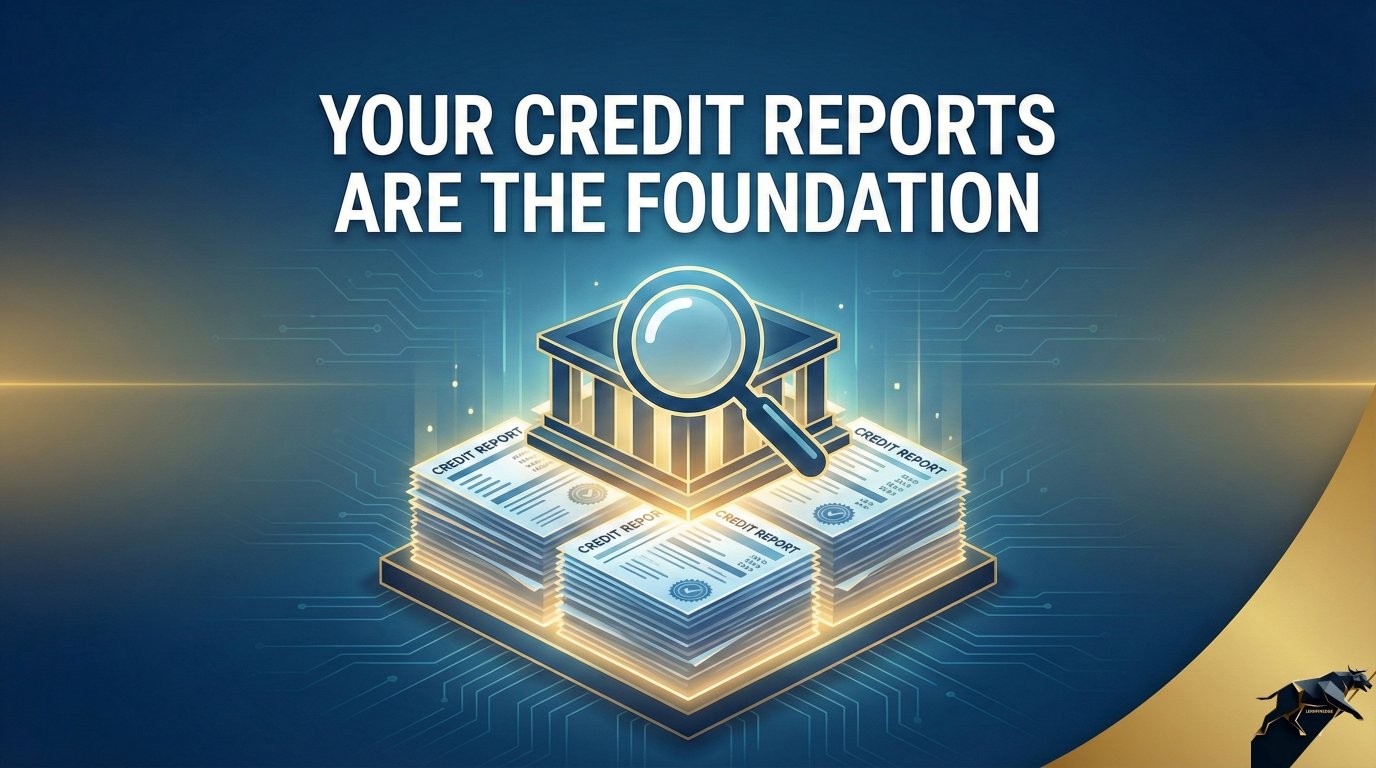
Before you optimize a score, you must protect the data underneath it: your credit reports.
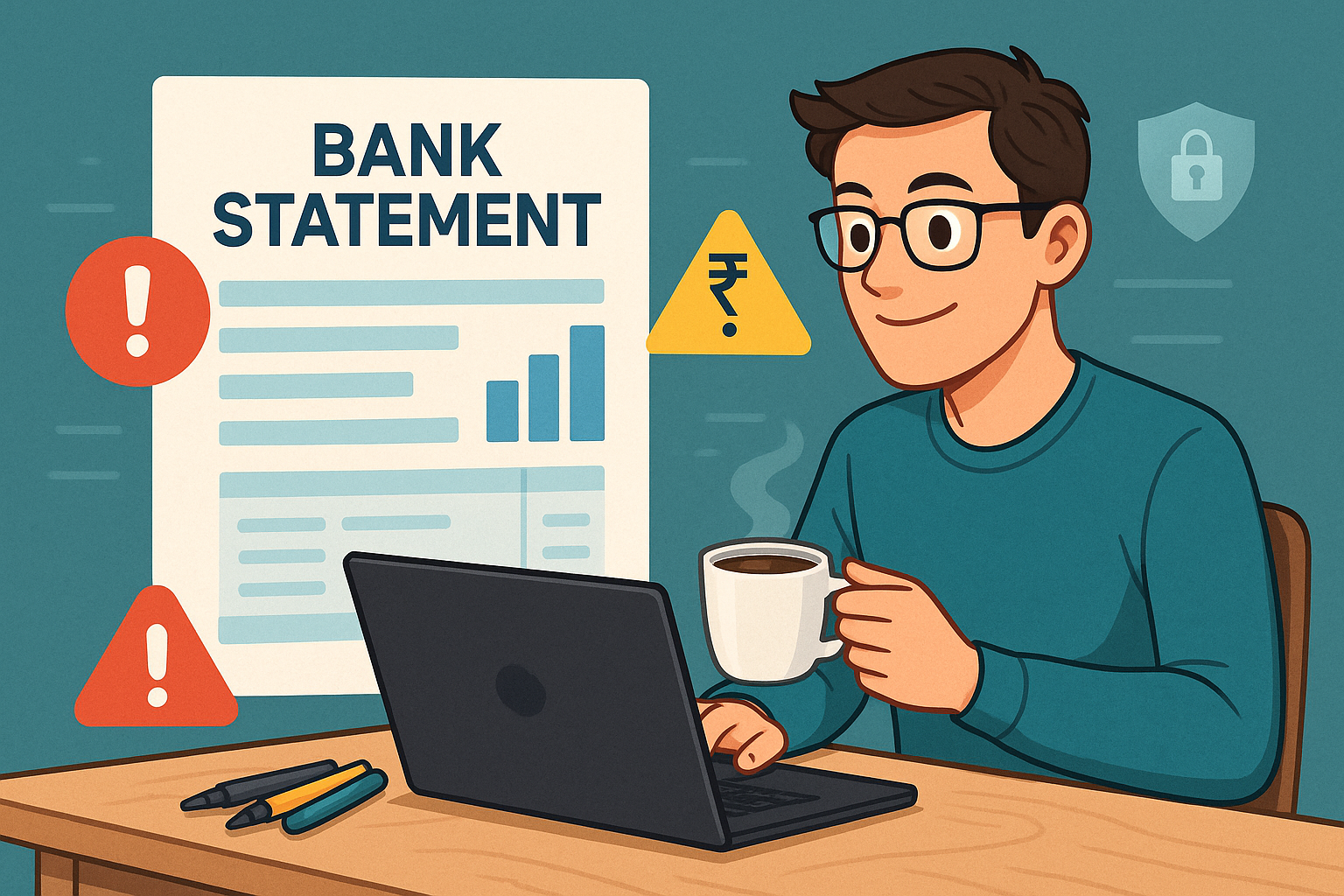
Major bureaus maintain your credit reports. They feed the scoring models. If your reports have errors, your score can be “accurate” based on inaccurate data—which is the worst kind of problem.
How to get your reports
Request your free annual credit reports (and spread checks across the year).
What to look for (beginner checklist)
-
Personal information: name variations, addresses, and employer listings (wrong details can signal identity mix-ups).
-
Accounts you don’t recognize
-
Late payments you’re sure you made.
-
Duplicated collections
-
Incorrect limits/balances
-
Hard inquiries you didn’t authorize
Why this matters even if you’re brand new: Beginners are surprisingly vulnerable to mixed files, fraud, and reporting mistakes. To prevent “oops” money moments from becoming missed-payment credit damage, build a cushion using emergency funds: Build It Fast, Keep It Safe, Use It Right.
“Credit building is half behavior and half data hygiene—ignore reports and you’re building on sand.”
Pro Tip: If you’re moving to the U.S., start with “identity consistency”—use the same legal name format and address style across financial accounts to reduce mismatches.
[Visual suggestion placeholder: “Annotated credit report sample showing key fields to verify.”]
The Beginner Blueprint to Build a 700+ FICO (First 30–90 Days)
This is the part that most guides overlook: establishing a sequence. Research shows sequencing matters because you’re not only building a score—you’re building a file lenders trust.
Week 1: Set the foundation
-
Pull your credit reports (or confirm you’re “credit invisible”).
-
Set a simple budget so you never miss a due date (use How to Budget Money in 5 Steps).
-
Turn on autopay for at least the minimum (preferably the statement balance).
-
If you already have debt, list balances, limits, APRs, and due dates.
Weeks 2–4: Open the right starter account (not five)
Your goal is one strong revolving account first (usually a card), then add depth later.
Starter options:
-
Secured credit card (best for true beginners)
-
Student card (if eligible)
-
Starter unsecured card (if you qualify)
-
Authorized user (only with strict guardrails)
Months 2–3: Stabilize your “score signals.”
-
Make on-time payments without exception.
-
Keep utilization low (we’ll go deep next).
-
Avoid new applications unless necessary.
Case Study (beginner):
“Alex” starts with no credit history. Alex opens a secured card with a small deposit, uses it for one recurring bill, and pays it down before the statement closes. After 3 months, Alex has a clean on-time streak and low utilization—exactly what scoring models want.
“Your first 90 days should look boring—boring is bankable.”
Quick Takeaway: The fastest beginner wins come from one card + perfect payments + low utilization, not from opening multiple accounts.
Credit Utilization Mastery (the fastest ethical way to lift scores)
If payment history is the engine, utilization is the turbocharger.
A common guideline is keeping credit utilization at no more than 30% of the total credit limit. But here’s the nuance: many high scorers aim much lower (often single digits) because it signals, “I can borrow, but I don’t need to.”
The “statement date vs. due date” trick is a hidden mechanic.
Your lender typically reports your balance when your statement closes, not when you pay your bill.
So if you spend $400 on a $500 limit and wait until the due date to pay, your report may show 80% utilization—even if you pay in full later. That can suppress your score temporarily.
Beginner rule of thumb:
-
Try to have 1–9% utilization reported (ideal for many people).
-
Aim to keep reported utilization below 30% at a minimum.
How to lower utilization quickly (without stress)
-
Please consider making an additional payment before the statement closes.
-
Spread spending across cards (later, when you have more than one).
-
Ask for a credit limit increase after consistent on-time history (advanced section).
-
If you’re carrying balances, use a structured payoff plan—LearnFineEdge’s budgeting systems help you organize that (start with the Budgeting Tips Playbook).
“Utilization is a snapshot—control the snapshot and you control a major scoring lever.”
Pro Tip: Put one small recurring expense (like a subscription) on your card, then pay it off early. This approach maintains activity reporting while keeping utilization low.
[Visual suggestion placeholder: “Timeline graphic: purchase → statement close → due date → reporting.”]
Best Credit-Building Products for Beginners (Pick the Right Combo)
When beginners ask, “What should I open?” The real question is, “What builds the strongest credit profile with the lowest risk?”
Below is a practical comparison.
Comparison Table: Beginner Credit Tools
| Tool | Best for | Pros | Watch-outs | How it helps FICO |
|---|---|---|---|---|
| Secured credit card | True beginners/rebuilding | Easy approval builds a revolving history. | Fees, low limits | On-time payments and utilization control |
| Student card | Students with limited history | Better perks, may graduate to unsecured | Approval depends on the issuer. | Revolving history + payment streak |
| Starter unsecured card | Beginners with some history | No deposit, can grow limits | Risk of denial, higher APR | Revolving history and utilization |
| Credit-builder loan | Thin files, no card access | Adds installment history | Must pay monthly fees. | Payment history + mix |
| Authorized user | Newcomers, thin file | Can inherit age/limit benefits | The primary user’s mistakes hurt you | Age/utilization boost (if managed well) |
“The best product is the one you can manage perfectly for 12 months.”
Real-world pick strategy
-
If you have no credit, start with a secured card.
-
If you’re a student, try a student card first, with a secured card as a fallback.
-
If you can’t get a card, use a credit-builder loan and try again later.
-
If you’re a newcomer to the U.S., consider authorized user only with someone extremely responsible.
Quick Takeaway: You don’t need five accounts. You need one or two accounts managed perfectly.
Build a 700+ FICO Faster (Without Wrecking Your File)
Now we optimize like a pro—still beginner-safe.
Application pacing (hard inquiry strategy)
Every new application can create a hard inquiry, which may temporarily lower your score. The bigger issue is velocity: too many applications too quickly can signal risk.
Safe pacing plan:
-
Start with 1 account.
-
Wait ~3 months before considering a second credit line (unless you must).
-
Avoid “shopping sprees” of credit applications.
Credit limit increases (CLI): the clean utilization hack
A higher limit can reduce utilization even if spending stays the same.
When to ask:
-
After 3–6 months of consistent on-time payments.
-
When your income is stable and reported accurately.
How to use the increase wisely:
-
Keep spending similarly.
-
Let the limit do the work of lowering utilization.
Mix optimization (revolving + installment)
Industry experts agree: mix matters less than payments and utilization, but it can still help once your basics are strong.
If you already have student loans or an auto loan, you may already have installment mix. If you don’t, a small credit-builder loan can add variety—but only if it fits your budget. If you’re planning around a car purchase, this guide helps you plan the full cost picture: Budgeting for Car Ownership in the U.S.
“A bigger credit profile is not better—an older, cleaner one is.”
Pro Tip: If your goal is a mortgage soon, avoid opening new accounts 6–12 months before applying unless your lender advises otherwise.
Mistakes That Keep Beginners Below 700 (And How to Avoid Them)
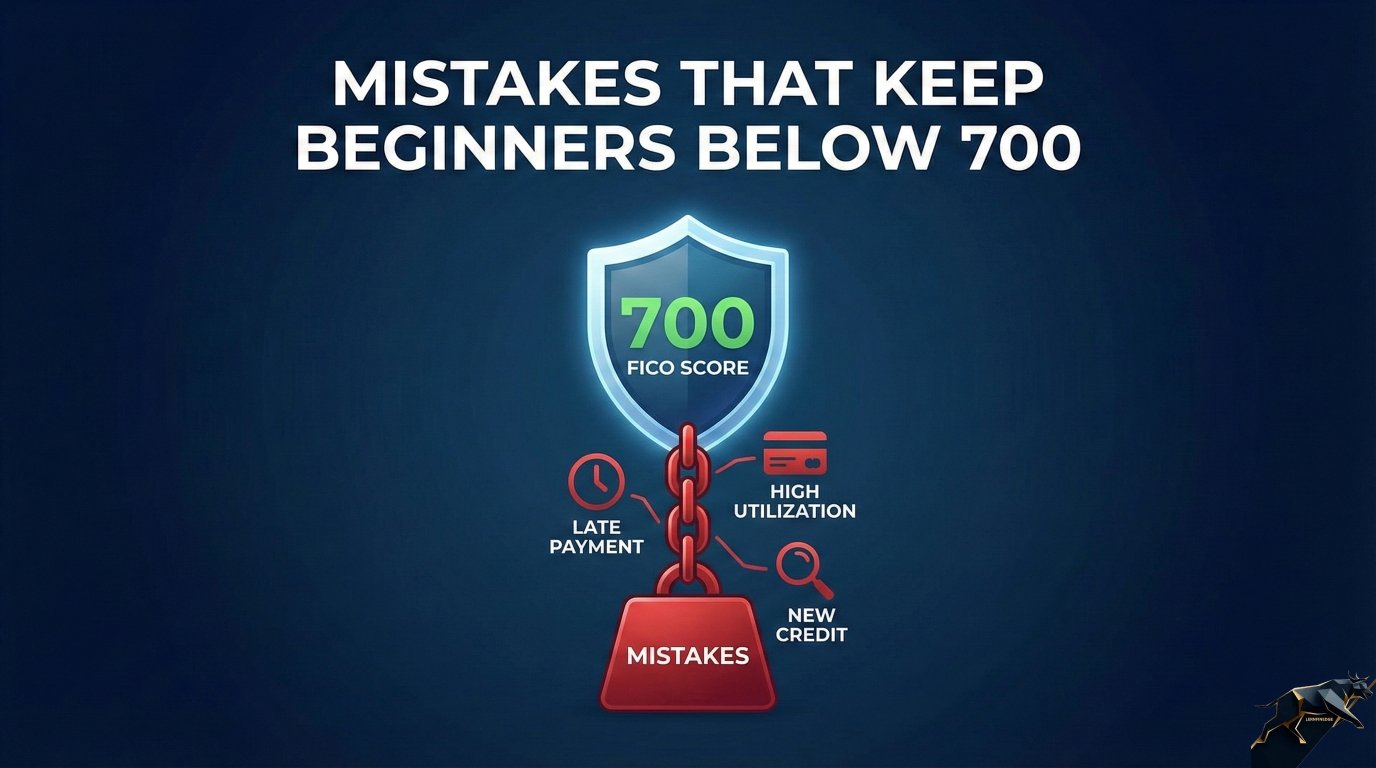
Most sub-700 problems come from a few repeat offenders.
Mistake #1: Missing a payment “by accident”
A single late payment can be a big setback because payment history is the largest factor.
Fix: autopay + calendar reminders + keep a cash buffer (build that buffer using emergency funds).
Mistake #2: High utilization—especially on a small limit
Beginners often get a $200–$500 limit and accidentally report 70–90% utilization by using the card for regular spending.
Fix: pay before the statement closes; keep reported utilization low.
Mistake #3: Carrying a balance to “build credit”
You do not need to carry interest-bearing debt to build a score. Paying in full can still build history and protect your budget.
Mistake #4: Closing your first card too early
Length of history matters.
Fix: Keep no-fee starter cards open if they’re not harming you.
If you want a checklist of the most common “silent leaks” that derail progress, use Money Mistakes to Avoid.
“The scoring system is boring on purpose—consistency beats cleverness.”
Quick Takeaway: The biggest beginner unlock is not a new trick—it’s never being late and never looking maxed out.
Troubleshooting: Why Your Score Isn’t Going Up (Fixes That Work)
If you’re doing “everything right” but the number won’t budge, you need to diagnose the type of problem.
Thin file vs dirty file
-
Thin file: not enough history. Solution: time + steady activity.
-
Dirty file: negatives like late payments, collections, and charge-offs. Solution: cleanup and rebuild.
“My utilization is low, but my score is stuck.”
Common reasons:
-
No recent activity reported (card unused)
-
Only one account, very new
-
Recent hard inquiries
-
Reporting timing issues (balance reported high at statement close)
Disputing errors (high-impact move)
If you see incorrect late payments or accounts you don’t recognize, dispute with the bureau and (when relevant) the lender. Start by documenting:
-
Account number
-
What’s wrong
-
Evidence (statements, letters, confirmations)
To stay consistent month-to-month (so issues don’t creep back in), use a simple daily check routine like 5-Minute Daily Money Habits.
Case Study (error fix):
“Mina” sees an address she never lived at and a store card she didn’t open. She freezes her credit, disputes the account, and follows up. Once corrected, her utilization and account mix normalize, and the score recovers over subsequent reporting cycles.
“If the data is wrong, no amount of ‘good behavior’ can fully compensate—fix the record.”
Pro Tip: If identity theft is suspected, consider a credit freeze and fraud alerts immediately (the process varies).
Keep Your 700+ FICO for Life (Big Purchases + Long-Term Habits)
A 700+ FICO is not a finish line. It’s a lifestyle with simple rules.
Mortgage/auto readiness
If you want to apply for a major loan:
-
Keep utilization low for several months leading up to the application.
-
Avoid new credit applications during the runway period.
-
Keep payments perfect and documentation organized.
If your goal includes a home down payment, build your saving system here: Smart Spending Habits for Building a House Deposit.
Monitoring without obsession
Check credit reports on a schedule (monthly or quarterly). Use monitoring as a smoke alarm, not a daily mood tracker.
Maintenance checklist (simple, effective)
-
Autopay statement balance (or at least minimum).
-
Keep utilization low (ideally 1–9%, under 30% at minimum).
-
Apply for new credit slowly.
-
Keep older accounts open when reasonable.
-
Review reports for errors and fraud.
To keep your spending clean (and avoid “utilization spikes”), anchor the habit system with the Smart Spending Habits System.
“The easiest way to keep a great score is to treat credit like a tool, not like income.”
Quick Takeaway: Your credit score is a reflection of habits. Once the habits are automatic, 700+ becomes normal.