


Why a Car Ownership Budget Is Essential
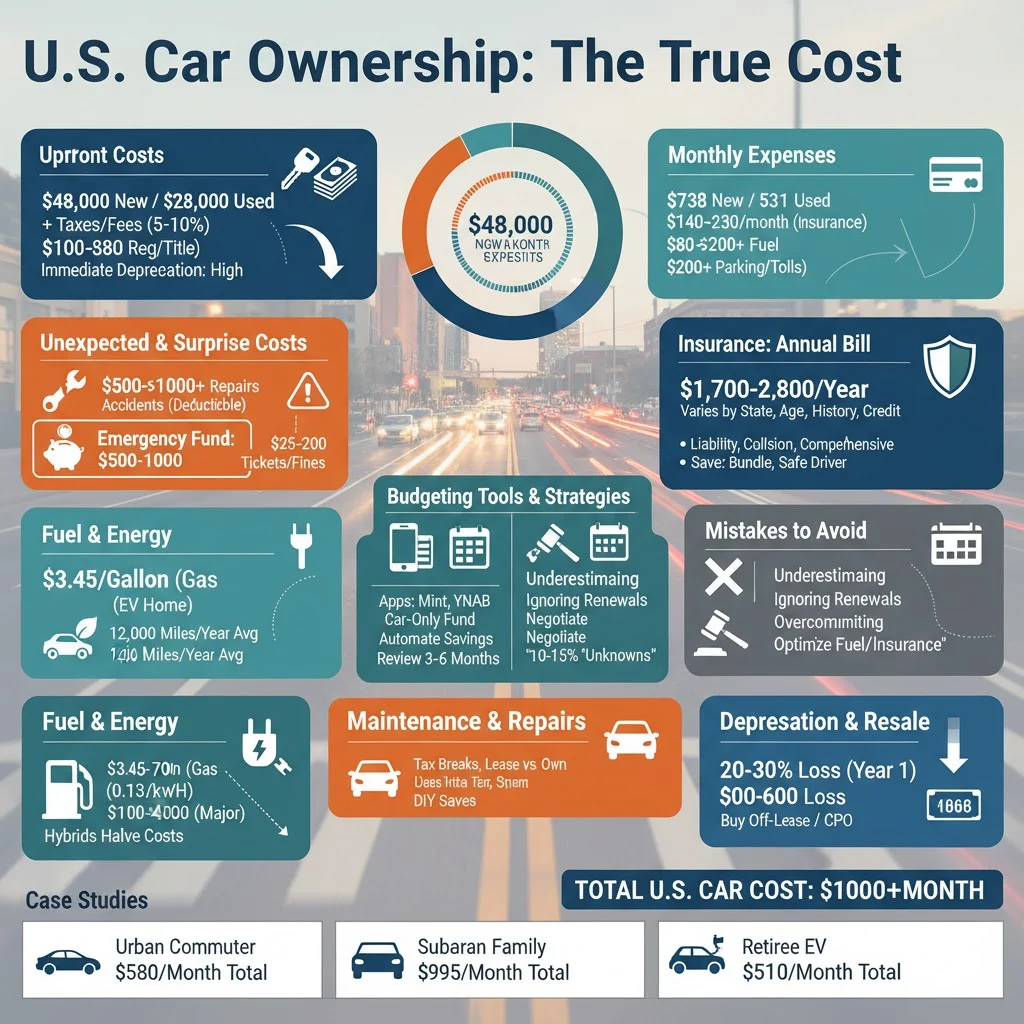
A car ownership budget covers far more than monthly payments and fuel, it maps the predictable and surprise expenses that can quietly strain your finances. Those who plan out every vehicle cost, from the DMV paperwork to a sudden alternator failure, tend to drive with less stress and more confidence. Recent industry analysis puts the average annual cost of car ownership in the U.S. at about $12,182, or roughly $1,015 per month, which makes a clear budget essential.
But what ARE all these costs? How can you anticipate and plan for them, especially given recent spikes in insurance premiums and repair costs? This guide provides a comprehensive understanding of car ownership budgeting in America, incorporating expert advice, data-driven examples, and step-by-step strategies to keep you in control and prevent unexpected expenses.
Table of Contents
-
Upfront Costs: What Happens Before You Drive Off
-
Monthly Expenses: The Budget You Can’t Ignore
-
Unexpected & Surprise Costs: Expect the Unexpected
-
Insurance: The Real Monthly (and Annual) Bill
-
Fuel & Energy: Gasoline, Diesel, and Electric Charging
-
Maintenance & Repairs: Keeping Your Car (and Wallet) Healthy
-
DMV & Legal Fees: Your Obligatory Costs
-
Depreciation & Resale: Hidden Costs Over Time
-
Budgeting Tools & Strategies: Master Your Money
-
Mistakes to Avoid: How to Fail-Proof Your Auto Budget
-
Advanced Tips for Savvy Owners
-
Case Studies: Real U.S. Car Budget Examples
-
Quick Takeaways & Final Thoughts
Upfront Costs: What Happens Before You Drive Off
Understanding upfront costs is crucial for every car buyer. These are the payments due before you even start the engine, and they can vary significantly.
Purchase Price: New vs. Used
-
New car average price: In 2025, the average transaction price for a new vehicle in the U.S. hovers around $48,000 [Source].
-
Used car average price: A quality used vehicle now averages $28,000 [Source].
-
Expert Quote: “A new car loses 10% of its value the moment you drive off the lot—consider a gently used model for maximum value.” [Expert Quote placeholder]
Comparison Table: New vs. Used Car Upfront Costs
| Cost Factor | New Car | Used Car |
|---|---|---|
| Average Price | $48,000 [Source] | $28,000 [Source] |
| Sales Tax | 5-10% | 5-10% |
| Registration/Title | $100–$800 | $100–$800 |
| Immediate Depreciation | High | Lower |
Sales Tax, Title, and Registration
-
For example, you can expect to pay 5-10% in sales tax, depending on the state you reside in.
-
DMV registration and titling fees range from $100 to $800.
-
Documentation fees (dealer “doc fees”) can add between $100 and $600.
Down payments and finance Costs
-
Most loans require a down payment of 10–20%.
-
A loan origination fee or credit report fee may apply.
Pro Tip: Always ask your dealer for a drive-out price breakdown to avoid last-minute surprises.
Quick Takeaway
Don’t just budget for the car; also include taxes, fees, and extras to avoid wallet shock on signing day.
Monthly Expenses: The Budget You Can’t Ignore
Consistent monthly expenses form the backbone of your car budget.
Car Loan Payments
-
The average monthly payment for a new car loan is $738 [Source].
-
For used cars, you can expect an average monthly payment of $531.
Insurance Premiums
-
Fact: Insurance is often the second-largest recurring expense, ranging from $1,700 to $2,800 annually depending on your state and situation [Source].
-
Factors that influence insurance premiums include driving history, age, credit score, location, and vehicle type.
Fuel or Charging Costs
-
Gasoline budgets can vary widely, ranging from $80 to over $200 per month depending on driving habits.
-
Electric vehicle charging can cost as little as $25 to $50 per month when done at home.
Expert Insight: “Set up automated transfers into a car fund for monthly essentials—this smooths out peaks and valleys and keeps your overall budget healthy.”
Parking and Tolls
-
Urban dwellers can expect to pay $200+ for monthly parking.
-
Toll accounts may require $20–$100/month, especially in metro areas.
Quick Takeaway
Monthly car costs involve more than just the payment; be sure to factor in insurance, fuel, parking, and tolls to get an accurate total.
Unexpected & Surprise Costs: Expect the Unexpected
Surprise costs can derail your budget if you are not prepared for them.
Maintenance Surprises
-
Average unexpected repair bill: $500–$1,000+ [Source].
-
Common issues include flat tyres, battery failures, and sudden brake problems.
Accident Costs
-
Even minor accidents can result in out-of-pocket expenses of several hundred dollars, even with insurance coverage (keep your deductible in mind).
Tickets & Fines
-
Budget for traffic, parking, or emissions fines, which typically range from $25 to $200 per incident.
Pro Tip: Maintain an emergency car fund of at least $500 to $1,000, as industry experts agree that it is crucial for financial stability.
Quick Takeaway
Prepare for the unpredictable: an emergency fund can transform surprises into inconveniences rather than crises.
Insurance: The Real Monthly (and Annual) Bill
Car insurance in the U.S. Rates vary by state, age, driving history, and even credit score, complicating the situation.
Types of Coverage
-
The types of coverage include liability (which is required), collision, comprehensive, uninsured motorist, underinsured motorist, and more.
-
For example, a 30-year-old in Texas with a clean record pays around $1,900 per year, while a 22-year-old in Michigan may pay over $5,000. Source].
Factors Affecting Your Rate
-
State regulations
-
Credit score
-
Claims and driving records
-
Vehicle make/model
How to Save
-
Compare annual rates instead of only looking at monthly payments.
-
Furthermore, look for discounts available for multi-policy holders, safe drivers, or students.
Expert Quote: “Research shows that bundling your auto policy with home or renters insurance can save you up to 15% on annual premiums.
Quick Takeaway
Do not settle for your renewal quote; instead, shop for insurance annually to keep your premiums in check.
Fuel & Energy: Gasoline, Diesel, and Electric Charging
Fuel and energy costs are controllable yet essential recurring expenses.
Average Fuel Costs
-
The current average gas price in the U.S. is $3.45 per gallon [Source].
-
Electric car charging costs $0.13 per kWh at home, which is the national average.
How to Estimate Your Costs
-
Estimate your monthly mileage, which is typically 12,000 miles per year in the U.S.
-
Us Use your car’s miles per gallon (mpg) or electric vehicle (EV) efficiency to ensure accurate calculations.
Fuel Efficiency Matters
-
Hybrid and electric vehicles offer significant savings.
-
For example, a plug-in hybrid can reduce monthly fuel costs by half when compared to a standard sedan.
Pro Tip: Fuel-saving apps and loyalty programmes can generate $10–$25/month in savings with minimal effort.
Quick Takeaway
Choose your vehicle and driving habits wisely, as they can either double or halve your annual fuel expenses.
Maintenance & Repairs: Keeping Your Car (and Wallet) Healthy
Budgets often underestimate ongoing maintenance.
Routine Maintenance
-
Oil changes, brakes, and tire rotation: $500–$700/year on average [Source].
-
EVs have lower maintenance but higher tire and battery costs over time.
Repair Costs and Lifespan
-
Major repairs (transmission, alternator) can be $1,000–$4,000.
-
The longer you drive, the more you spend—but periodic upkeep increases lifespan and resale value.
DIY vs. Professional Service
-
Learn minor fixes (bulb/air filter changes) to save hundreds.
-
For advanced repairs, trusted mechanics are worth every penny.
Expert Insight: “A maintained car costs less over time. Skipping service to save $50 now could cost $500 or more down the line.”
Quick Takeaway
Budget $50/month for maintenance, and boost it as your vehicle ages.
DMV & Legal Fees: Your Obligatory Costs
DMV fees can sneak up on new car owners.
Registration and Title Fees
-
Annual registration: $46–$225 depending on state and vehicle [Source].
-
Smog and emissions testing: $20–$60 in emissions states.
Licence Renewals
-
Driver’s licence renewal is $20–$40 every 4–8 years, based on state.
State-Specific Extras
-
Some states levy personal property tax on your vehicle.
-
New residents moving states should budget an extra $100–$300 for out-of-state transfer fees.
Pro Tip: Check your state’s DMV website every year for changing fees and emission requirements.
Quick Takeaway
Legal costs may seem minor—but add up over years if unplanned.
Depreciation & Resale: Hidden Costs Over Time
Depreciation is the “invisible cost” most owners underestimate.
Typical Depreciation Rates
-
New cars lose 20%–30% of their value in the first year [Source].
-
By year five, expect a 50–60% total loss from MSRP.
Impact on Your Wallet
-
Resale or trade-in value can dramatically affect your next purchase.
-
Choose slow-depreciating models (Toyota, Honda SUVs) to reduce long-term loss.
Pro Tips and Mitigation
-
Buy “off-lease” 2-3-year-old vehicles for better value retention.
-
Consider certified pre-owned for warranty-backed peace of mind.
Expert Quote: “Industry experts agree—depreciation is the biggest single vehicle cost after fuel and insurance. Owning a car longer reverses that curve.”
Quick Takeaway
Depreciation is unavoidable, but smart shopping and ownership can reduce its bite.
Budgeting Tools & Strategies: Master Your Money
Getting granular with your auto budget sets you apart from the average owner.
Use Budgeting Apps
-
Try Mint, YNAB (You Need A Budget), or EveryDollar with category tracking.
Create a Car-Only Fund
-
Segment car costs in your main budget spreadsheet.
Plan for Upgrades and Life Events
-
Plan for technology (dashcams, GPS), post-warranty repairs, and lifestyle changes (a new baby, longer commute).
Step-by-Step Budget Setup
-
List all current car-related expenses.
-
Estimate annual “surprise” costs.
-
Divide by 12 for the monthly buffer.
-
Automate savings for both recurring and emergency costs.
Pro Tip: Review and update your budget every 3–6 months for best results.
Quick Takeaway
Active budgeting keeps car costs predictable and scalable—and never overwhelming.
Mistakes to Avoid: How to Fail-Proof Your Auto Budget
Budgeting for the car is one thing—sticking to the plan is another.
Common Pitfalls
-
Underestimating maintenance and surprise repairs.
-
Ignoring DMV and registration renewals.
-
Overcommitting on monthly payments.
Avoiding the Traps
-
Never budget for the “dream car” without forecasting real monthly obligations.
-
Always allow 10–15% extra for “unknowns”.
Troubleshooting
-
If costs suddenly spike, use your car fund, then review for a pattern.
-
Don’t hesitate to shop or refinance a loan/insurance when rates improve.
Expert Insight: “In my experience, car budgeting pitfalls are less about math and more about missed details. Use checklists!”
Quick Takeaway
Flexibility, vigilance, and periodic review prevent financial headaches down the road.
Advanced Tips for Savvy Owners
For the budget masters, here’s how to go next level.
Leverage Tax Breaks
-
EV and hybrid credits, local incentives, or small business deductions.
Compare Leasing vs. Owning
-
Leasing offers lower monthly payments but often higher long-term costs and mileage restrictions.
Negotiate Everything
-
From dealer add-ons to mechanic labour, there’s always room for negotiation.
Optimize Fuel and Insurance
-
Maximise rewards with gas credit cards; reshop insurance after every big life change.
Quick Takeaway
Stacking small advantages amounts to major savings over time.
Case Studies: Real U.S. Car Budget Examples
Applying it all together with real numbers.
Example 1: Single Urban Commuter
-
Used sedan, short commute.
-
Upfront: $25,000 (used car, taxes/fees)
-
Monthly: $350 loan, $120 insurance, $80 fuel, $30 parking = $580/month
-
Surprise fund: $600/year
-
Example 2: Family in Suburbs
-
New SUV, longer drives, multiple drivers.
-
Upfront: $55,000 (new car, taxes/fees)
-
Monthly: $600 loan, $200 insurance, $180 fuel, $15 tolls = $995/month
-
Repair/maintenance buffer: $1,200/year
-
Example 3: Retiree with EV
-
2-year-old electric vehicle, modest mileage.
-
Upfront: $36,000 (CPO EV, taxes/fees)
-
Monthly: $400 loan, $80 insurance, $30 charging = $510/month
-
Lifetime maintenance is lower; budget $400/year
-
Quick Takeaway Box: There’s no “one-size-fits-all” auto budget—customise your numbers, and repeat the review.
Quick Takeaways & Final Thoughts
-
Car ownership costs can easily top $1,000/month when all factors are considered.
-
Budget for everything—from DMV to depreciation—for true financial confidence.
-
Use tech tools and automation to consistently refine your car budget over time.
-
“In my experience, drivers who treat car costs as a ‘fixed life expense’ stay clear of debt and are ready for anything the road throws their way.”
FAQ Schema
Q1: What are the upfront costs of buying a car in the U.S.? A1: Upfront costs include purchase price, sales tax, title and registration fees, and dealer documentation fees.
Q2: How much should I budget monthly for a car in the U.S.? A2: Budget $500–$1,200 per month for loan/lease, insurance, fuel/charging, maintenance, and parking.
Q3: What are common surprise costs for U.S. car owners? A3: Surprise costs include emergency repairs, accident deductibles, tickets, and unexpected DMV fees.
Q4: Does car insurance cost the same everywhere in the U.S.? A4: No, car insurance costs vary by state, age, driving record, and vehicle type.
Q5: How does depreciation affect my car budget? A5: Depreciation reduces your car’s value, impacting resale/trade-in; plan for 20–30% value loss in the first year.