
Introduction to Cash Stuffing: The Ultimate Guide to Envelope Budgeting
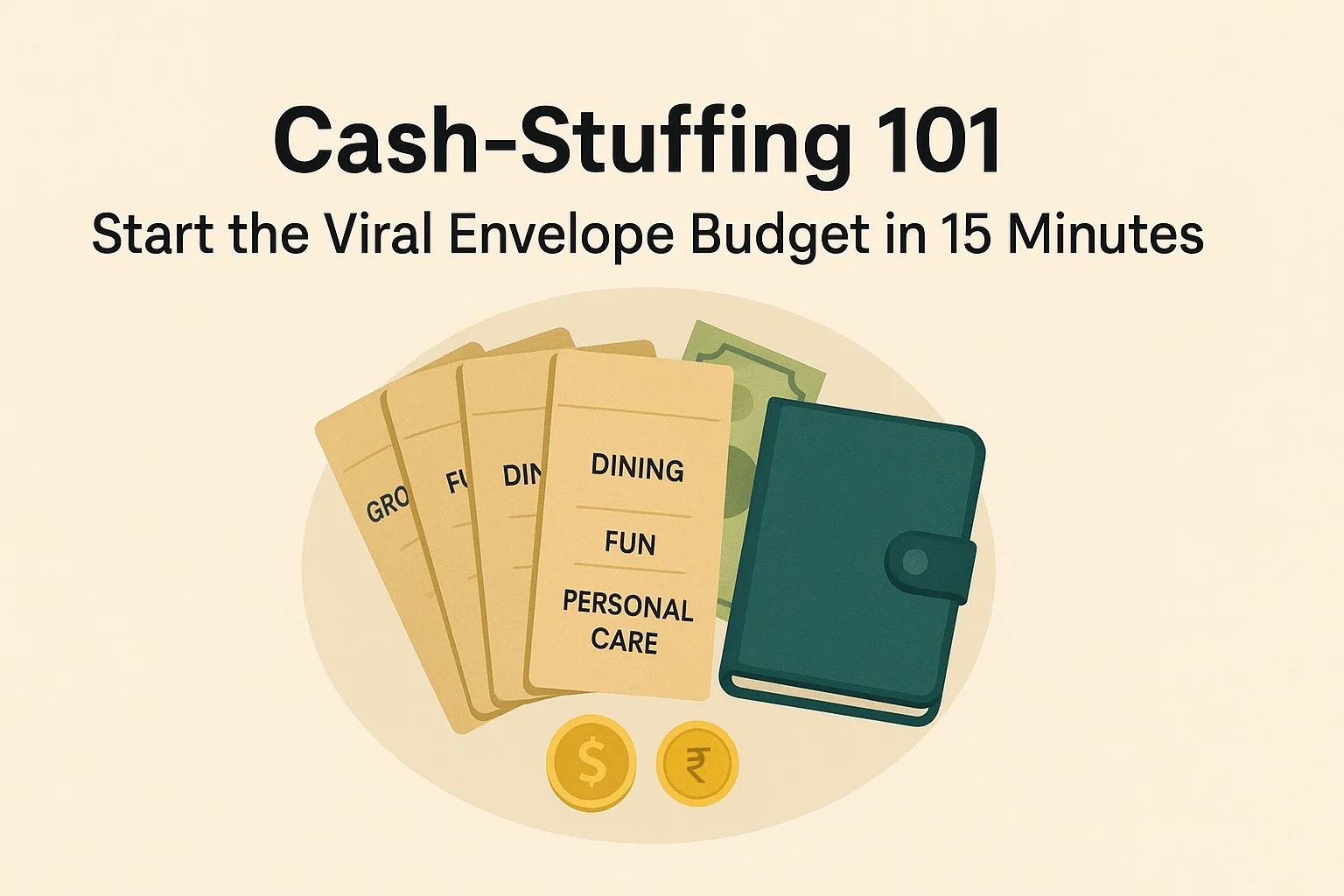
A cash stuffing budget, also known as the cash envelope system, has rapidly become one of the most popular budgeting methods in recent years. The method involves physically allocating cash into envelopes marked for specific spending categories like groceries, gas, and fun money, giving you a simple tool to control your finances. In this comprehensive guide, you will learn how to start your cash stuffing budget in just 15 minutes, build discipline in spending, and work steadily toward your financial goals. You will get step-by-step instructions, clear insights, and practical tips for a clean path to mastering your budget.
What’s cash stuffing? Understanding Envelope Budgeting in the USA
Cash stuffing is a straightforward budgeting method where you place your allotted spending money in labeled envelopes designated for different expense categories. This tactile approach makes budgeting tangible and visually obvious, helping prevent overspending. Unlike digital budgeting apps, cash stuffing enforces real limits—once the cash in an envelope runs out, there’s no overspending or credit card borrowing. Originating decades ago, it has recently resurged in popularity, especially in the US, due to its simplicity and effectiveness for managing typical expenses such as groceries, gas, utilities, and more.
Cash Stuffing Budget vs. Digital Budgeting
While digital budgeting apps track spending virtually, cash stuffing brings physical awareness to money management. The physical act of handling cash and seeing empty envelopes encourages better spending choices.
Psychological Benefits of Using Cash
Industry experts agree that handling cash creates a psychological ‘pain of payment,’ reducing impulse purchases significantly.
Common Misconceptions Debunked
Contrary to belief, cash stuffing is not outdated; it offers a hands-on control mechanism absent in many digital-only approaches.
Why Choose Cash Stuffing? Top Reasons to Use Envelope Budgeting Today
Cash stuffing improves financial discipline by giving you clear visual cues about your spending limits. Research shows that individuals using cash envelopes are more likely to stick to budgets and save more money. It helps:
-
Prevent overspending and accumulating debt.
-
Avoid overdraft fees and credit card interest.
-
Promote mindful spending on categories like groceries, gas, and leisure.
-
Cater to various income levels with customizable envelopes.
Pro Tip: Use your envelopes to prioritize debt payoff by dedicating some cash to that envelope each month. Example: A study showed users increasing savings by 25% on average within three months of using envelopes [Source].
How to Start Cash Stuffing in 15 Minutes: A Step-by-Step Beginner’s Blueprint
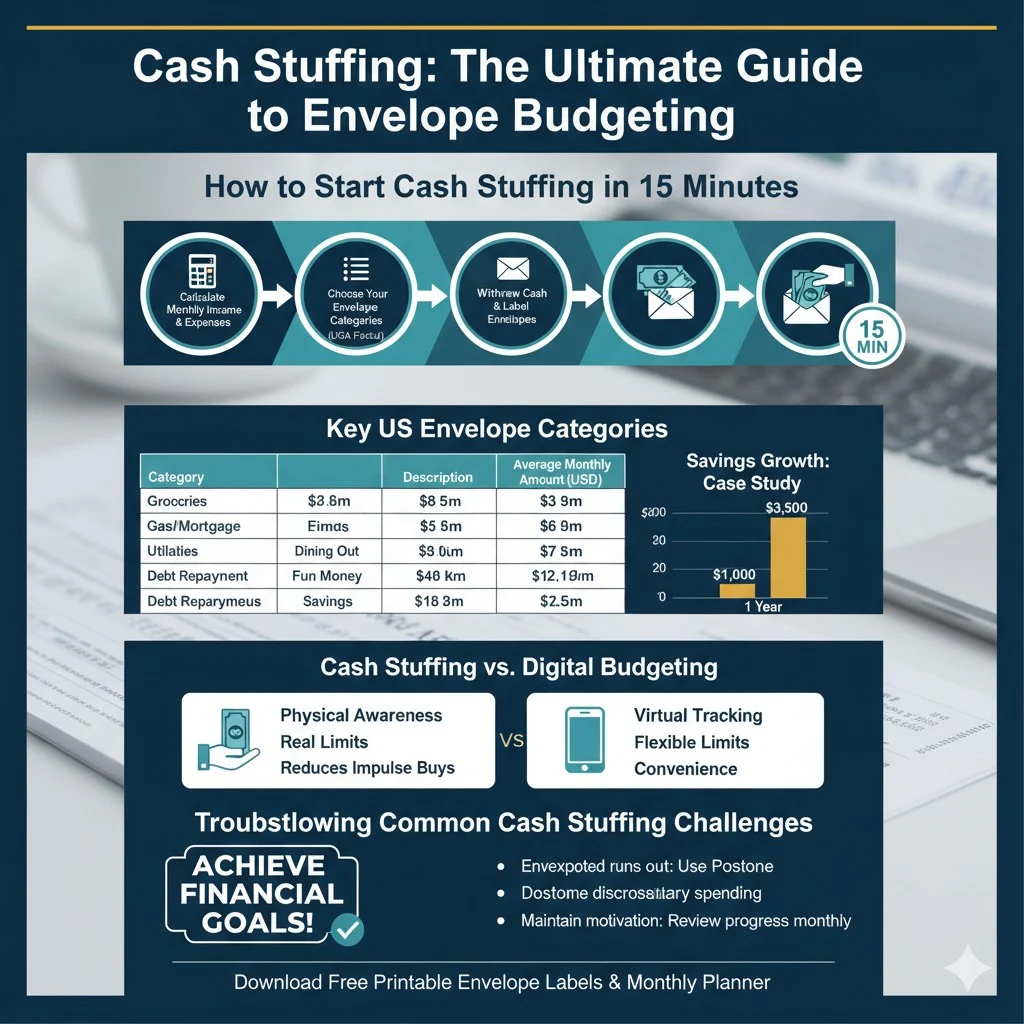
Starting cash stuffing is simple and quick. Here’s how to launch your budget in 15 minutes:
Step 1: Calculate Monthly Income and Expenses
Gather your net income details and list average expenses using the last few months’ statements.
Step 2: Choose Your Envelope Categories (USA Focus)
Popular US categories include groceries, gas, rent/mortgage, utilities, dining out, entertainment, and savings.
Step 3: Withdraw Cash and Label Envelopes
Take out the total budgeted cash and label envelopes clearly with each category name.
Step 4: Start Spending from Envelopes
Only use cash from the corresponding envelope for expenses. When it’s empty, spending in that category pauses until the next budget cycle.
Visual: A timer infographic showing a 15-minute setup plan boosts motivation.
Key US Envelope Categories for Every budgeter.
Selecting relevant categories is crucial to the success of the system. Here is a breakdown of typical US envelope categories with practical budgeting advice:
| Category | Description | Average Monthly Amount (USD) |
|---|---|---|
| Groceries | Food and household supplies | $300 – $600 |
| Gas | Fuel for vehicles | $150 – $250 |
| Rent/Mortgage | Monthly housing payment | $1000+ |
| Utilities | Electricity, water, gas, internet. | $150 – $300 |
| Dining Out | Restaurants and takeout | $100 – $200 |
| Fun Money | Entertainment and hobbies | $50 – $150 |
| Savings | Emergency fund and long-term goals | Varies |
| Debt Repayment | Credit cards, loans | Varies |
| Miscellaneous | Unexpected expenses | $50 – $100 |
Pro Tip: Customize categories to fit your lifestyle, adding envelopes for kids, pets, or charitable giving if needed.
Creating Your Cash Envelopes: Labels, Cash, and Organization Tips
Use colorful or transparent envelopes with clear labels for visual ease. You can purchase specialty cash-stuffing wallets with sections or use simple paper envelopes. Withdraw cash preferably from your bank or ATM, at the start of each budgeting cycle. Bring your envelopes with you when shopping to stay within limits and avoid impulse purchases.
Managing Your Cash Envelopes for Success
Allocate your monthly income into the envelopes based on your budget. Track spending by deducting cash as you go and review envelope balances regularly. Adjust envelope amounts monthly based on spending habits to stay realistic. Avoid common pitfalls such as borrowing from other envelopes or withdrawing additional ATM cash mid-cycle.
Advanced Tips for Consistent Cash Stuffing Success
Consider using hybrid systems that combine cash envelopes with budgeting apps to track non-cash purchases. Set up sinking funds within envelopes for larger irregular expenses such as holiday shopping or car maintenance. Use color coding or stickers for motivation and quick identification. Stay disciplined by setting clear limits and rewarding yourself when staying within budget.
Troubleshooting Common Cash Stuffing Challenges
Unexpected expenses can disrupt your plan; allocate a miscellaneous envelope as a buffer. If an envelope runs out, avoid borrowing; instead, postpone discretionary spending. Maintain motivation by reviewing your financial progress monthly and adjusting envelopes thoughtfully.
Case Studies: Real US Users Transforming Finances with Cash Stuffing
-
Young Professional: Paid off $5,000 credit card debt within six months using dedicated debt repayment envelopes.
-
Family Budgeting: Managed monthly grocery and utilities spending strictly, saving over $300 each month by avoiding overspending on dining out.
-
Savings Growth: An individual grew a $1,000 emergency fund to $3,500 in one year using targeted savings envelopes.
FAQs About Cash Stuffing in the USA
Q1: How much cash should I put in each envelope? A1: Allocate based on your monthly budget and past spending patterns; adjust as needed.
Q2: Can I combine cash stuffing with digital tools? A2: Yes, many use apps to track cash spending or budgets not suited for cash.
Q3: Is cash stuffing suitable for irregular income? A3: Yes, adjust envelope amounts each pay period accordingly.
Q4: How often should I refill envelopes? A4: Typically every month or biweekly, synchronized with your income schedule.
Q5: What are the best envelope categories for beginners? A5: Start with essentials like groceries, gas, rent, utilities, and fun money.
Conclusion and Next Steps: Make Cash Stuffing Your Financial Habit
Cash stuffing offers a practical, hands-on approach to budgeting that fits the U.S. lifestyle perfectly. It drives mindful spending and helps people gain control over their finances quickly. Starting in just 15 minutes, anyone can take charge of their money and work steadily toward savings and debt payoff goals. Download our free printable cash envelope labels and monthly planner today to jumpstart your budget journey!
FAQ Schema: Q1: What is cash stuffing? A1: A budgeting method using labeled envelopes filled with cash for specific spending categories.
Q2: How do I start cash stuffing quickly? A2: Calculate your budget, label envelopes, withdraw cash, then spend only from those envelopes.
Q3: What categories should I use? A3: Common US categories include groceries, gas, rent, utilities, dining out, and savings.
Q4: Can I combine a budget with apps? A4: Yes, many people use apps alongside cash envelopes for hybrid budgeting.
Q5: How often do I refill envelopes? A5: Typically monthly, matching your income schedule.