

An emergency fund is a liquid stash of cash reserved solely for real-life surprises: job loss, medical bills, or the washing machine that gives up at the worst moment. Most experts suggest parking three to six months of essential expenses where you can reach them quickly. Yet knowing you should save and actually piling up the money feel like different planets. That is why motivation matters.
In this long-form guide you will find fifty carefully selected emergency fund quotes alongside practical tactics you can apply today. Each quote sparks fresh energy, while every strategy section shows exactly how to turn inspiration into money in the bank. By the last paragraph you will know:
-
What an emergency fund is, how much is enough, and where to keep it
-
Why mindset fuels successful saving
-
Fifty quotes grouped into five themes that tackle the toughest mental barriers
-
Four concrete steps for accelerating contributions
-
Clear answers to the most common emergency fund questions
Sprinkled through the text, you will notice related phrases like ‘rainy-day savings’, ‘financial safety net’, and ‘cash cushion’. These synonyms keep the conversation lively while helping search engines understand that emergency funds are our central topic. Feel free to skim, highlight, and return whenever your resolve starts to fade. Your future self will appreciate every deposit.
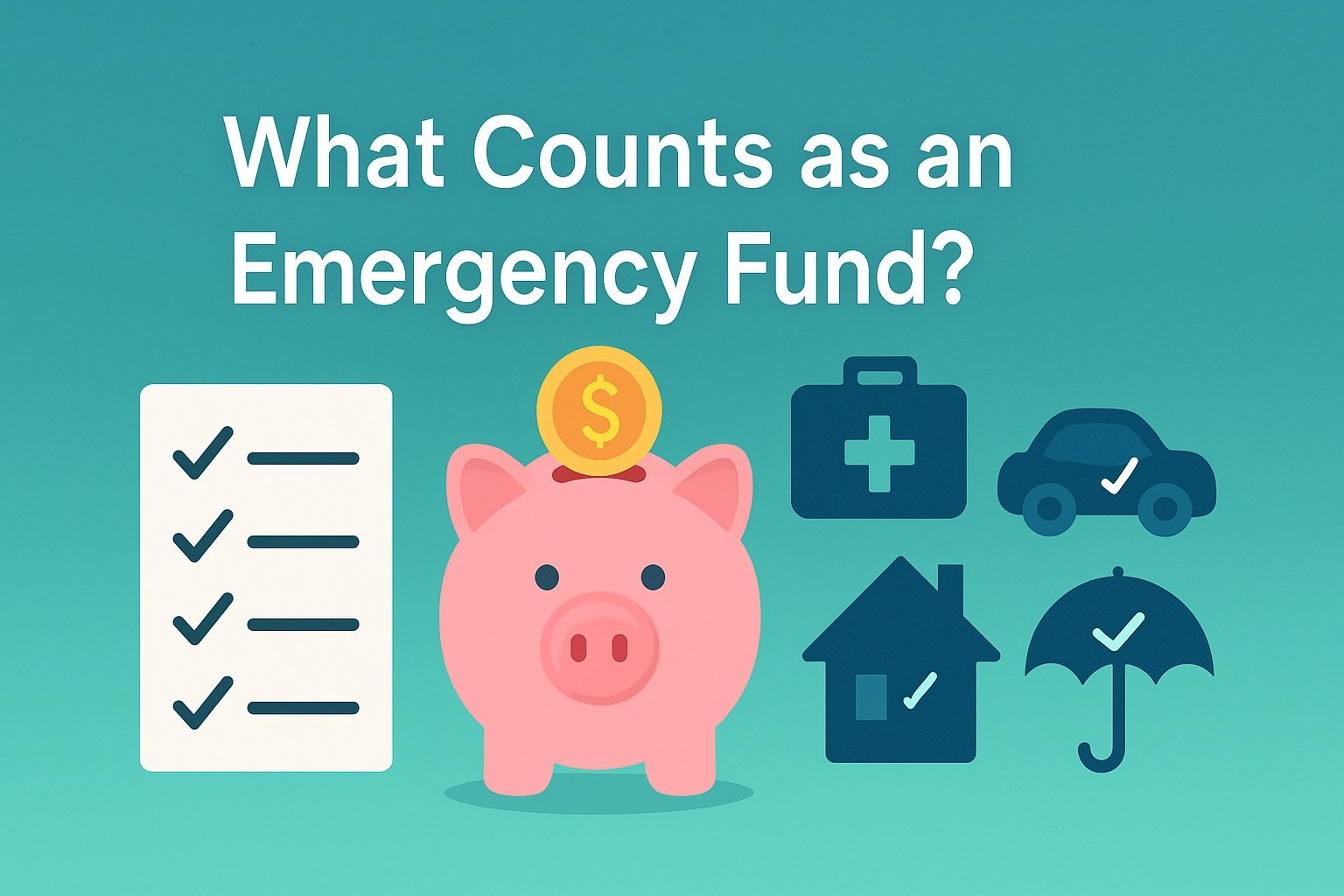
Quick Primer: What Counts as an Emergency Fund?
1.1 How Big Should It Be?
Think of your emergency fund’s target as a sliding scale rather than a single magic number. A stable two-income household with low fixed costs usually needs three months of expenses. Freelancers, commission-based earners, or anyone supporting dependants often sleep better with six to nine months. Use these checkpoints:
| Risk Level | Monthly Essentials | Recommended Cushion | One-sentence Insight |
|---|---|---|---|
| Low (two salaries) | ₹80,000 | ₹240,000 | Three months covers most short disruptions. |
| Medium (single salary) | ₹80,000 | ₹480,000 | Six months lets you job-hunt without panic. |
| High (variable pay) | ₹80,000 | ₹720,000 | Nine months shields you during long dry spells. |
Caption: Bigger income volatility demands a thicker buffer.
1.2 Where to Keep It?
Emergency funds work only if the money stays liquid, safe, and slightly productive. The sweet spot is a high-yield savings account or money market fund that:
-
Offers instant or next-day access
-
Charges zero penalties for withdrawal
-
Earns an interest rate that keeps pace with inflation as closely as possible
Avoid tying your emergency money into stocks, real estate, or fixed deposits that lock you in. When the roof leaks, you need rupees, not paper statements.
1.3 What Isn’t an Emergency Fund?
Tax bills, weddings, and dream vacations are predictable events; they deserve separate sinking-fund buckets. Likewise, credit cards are not a backup plan because they simply convert an emergency into high-interest debt. Genuine emergency funds stand alone, untouchable until a true surprise appears.
1.4 Psychological Benefits
Beyond the maths, growing your financial safety net reduces anxiety, improves sleep quality, and frees up mental bandwidth. A 2024 wellness survey showed that households with at least one month of emergency funds scored 17% higher on life-satisfaction scales than those living paycheque to paycheque. The simple knowledge that you can handle a curveball creates calm confidence in daily decisions.
1.5 How to Start With Small Numbers
If the full target feels overwhelming, begin with a mini-goal of ₹10,000. Automate a ₹1,000 weekly transfer and celebrate every milestone. Momentum beats magnitude at the beginning. As salary grows or side hustle income arrives, increase the transfer by 10%. Consistency compounds both balance and confidence.
Emergency Fund Quotes and the Science Behind Saving Motivation

Finances often appear purely logical, yet behaviour beats calculus in personal money management. Here is why your mental framing around emergency funds either propels you forward or glues you to the couch.
2.1 Scarcity vs Abundance Scripts
People locked in a scarcity mindset focus on immediate gaps: “I never have enough to save.” In contrast, an abundance perspective reframes small deposits as seeds that inevitably sprout. Every ₹100 you move into your cash cushion proves you can create a margin. Repeat the action often enough and it becomes identity: “I am someone who protects future me.”
2.2 The Dopamine Loop
Each transfer, no matter how tiny, releases a dopamine hit, reinforcing the behaviour. Apps that show a rising balance graph tap this neurological reward system. Combine that visual with our upcoming quotes, and you double-stack motivation.
2.3 Implementation Intentions
Telling yourself “I should save” lacks power. Instead, script a clear plan: “On every salary day at 9 a.m., I will move 5% into my Emergency Funds account.” Linking the habit to a specific cue slashes procrastination.
2.4 Social Proof and Gamification
Studies on peer comparison show that seeing friends celebrate hitting their rainy-day savings targets nudges others to copy. If your circle is silent about money, join an online community where people post monthly progress bars. Friendly competition transforms dull discipline into a game.
2.5 Break Big Goals Into Micro Wins
A six-month cushion may equal several lakh rupees, which can paralyse action. By framing the journey as sixty deposits of ₹5,000, you convert a mountain into walkable steps. Each micro win feeds pride, builds habit memory, and keeps momentum alive.
50 Inspiring Emergency Funds Quotes
Below you will find fifty quotes sorted into five themes. Read them straight through or bookmark your favourite section for rainy days. After each quote, a short reflection shows how to apply the wisdom to emergency fund building.
Plant the Tree Today – Starting Early (H3, Quotes #1–10)
-
“Someone is sitting in the shade today because someone planted a tree long ago.” – Warren Buffett
Reflection: Your first ₹500 deposit plants that shade-giving tree. Start before you feel ready. -
“The best time to save was yesterday; the second best is now.” – Anonymous
Reflection: Regret is backward-facing energy. Convert it to the first transfer you can make today. -
“Do not wait; the time will never be just right.” – Napoleon Hill
Reflection: A perfect moment is a myth. Emergency funds thrive on imperfect but immediate action. -
“Small deeds done are better than great deeds planned.” – Peter Marshall
Reflection: Intention without motion earns zero interest. Hit the transfer button. -
“A journey of a thousand miles begins with a single step.” – Lao Tzu
Reflection: That single step could be a ₹100 automatic round-up from every transaction. -
“The man who moves a mountain starts by carrying away small stones.” – Confucius
Reflection: Think stones, not boulders, and your mountain of savings will shrink fast. -
“You cannot escape the responsibility of tomorrow by evading it today.” – Abraham Lincoln
Reflection: Future crises do not care about excuses. Protect yourself now. -
“Time is more valuable than money. You can get more money, but you cannot get more time.” – Jim Rohn
Reflection: Early deposits enjoy extra time to earn interest. -
“Never depend on a single income. Make an investment to create a second source.” – Warren Buffett
Reflection: Your emergency fund is that second source in crisis mode. -
“Start where you are. Use what you have. Do what you can.” – Arthur Ashe
Reflection: Even spare change builds muscle memory for bigger moves later.
Plug the Leaks – Spending Discipline (H3, Quotes #11–20)
-
“Beware of little expenses; a small leak will sink a great ship.” – Benjamin Franklin
Reflection: Audit subscriptions; funnel the savings into your cash cushion. -
“Every time you borrow money, you are robbing your future self.” – Nathan Morris
Reflection: Emergency funds shield you from debt and protect future you. -
“Rich people stay rich by living like they are broke. Broke people stay broke by living like they are rich.” – Anonymous
Reflection: A flashy lifestyle drains the fund before it starts. -
“It is not your salary that makes you rich; it is your spending habits.” – Charles A. Jaffe
Reflection: Raise your savings rate before you chase a raise. -
“Do not save what is left after spending; spend what is left after saving.” – Warren Buffett
Reflection: Automate the transfer so spending adjusts automatically. -
“A penny saved is two pence clear.” – Benjamin Franklin
Reflection: Every rupee avoided in interest charges is a rupee earned. -
“He who buys what he does not need steals from himself.” – Swedish proverb
Reflection: Reframe impulse purchases as theft from your safety net. -
“Frugality includes all the other virtues.” – Cicero
Reflection: Conscious consumption feeds not only your fund but your character. -
“Debt is the slavery of the free.” – Publilius Syrus
Reflection: Emergency funds keep you free by preventing debt bondage. -
“Financial peace is not the acquisition of stuff. It is learning to live on less than you make.” – Dave Ramsey
Reflection: Peace arrives the moment your cushion equals months of expenses.
Prepare for Rain – Security & Resilience (H3, Quotes #21–30)
-
“Save for a rainy day.” – Traditional proverb
Reflection: The clouds will gather; your fund is the umbrella. -
“An emergency fund is your wealth’s best friend.” – Carl Richards
Reflection: Investments flourish only when protected from forced liquidation. -
“Money in the bank is a cushion against vagaries of life.” – Anonymous
Reflection: Cushion, not crutch. Use it only for true emergencies. -
“Preparation is the key to confidence.” – Arthur Ashe
Reflection: Knowing cash is ready quiets the panic voice in crisis. -
“Expect the best, plan for the worst, and prepare to be surprised.” – Denis Waitley
Reflection: Your emergency fund is that preparedness plan. -
“The future belongs to those who prepare for it today.” – Malcolm X
Reflection: Every deposit is a vote for future stability. -
“Luck is what happens when preparation meets opportunity.” – Seneca
Reflection: Cash on hand turns crises into opportunities to negotiate or invest. -
“Better to have and not need than to need and not have.” – Franz Kafka
Reflection: Extra liquidity rarely hurts; lack of it always does. -
“You do not drown by falling in water; you drown by staying there.” – Edwin Louis Cole
Reflection: Emergencies happen; funds prevent prolonged drowning. -
“Build your own dreams, or someone else will hire you to build theirs.” – Farrah Gray
Reflection: Financial resilience lets you choose projects, not chase paycheques.
Freedom to Choose – Opportunity & Growth (H3, Quotes #31–40)
-
“Money is a terrible master but an excellent servant.” – P. T. Barnum
Reflection: Emergency funds put money back in the servant role. -
“Wealth is the ability to fully experience life.” – Henry David Thoreau
Reflection: A paid-for crisis lets you keep enjoying life’s moments. -
“Financial freedom is available to those who learn about it and work for it.” – Robert Kiyosaki
Reflection: Your cushion is lesson one in freedom class. -
“The goal isn’t more money. The goal is living life on your terms.” – Chris Brogan
Reflection: Security money underwrites bold life choices. -
“Opportunities are usually disguised as hard work, so most people do not recognize them.” – Ann Landers
Reflection: Building emergency funds is hard work that reveals future opportunities. -
“A big enough cushion lets you say no.” – Anonymous
Reflection: Saying no to toxic gigs preserves wellbeing. -
“Savers have the firepower to invest when others panic.” – Anonymous
Reflection: Cash during downturns buys assets at discounts. -
“Your net worth to the world is determined by what remains after your bad habits are subtracted from your good ones.” – Benjamin Franklin
Reflection: Saving regularly is a good habit that compounds worth. -
“Discipline is choosing between what you want now and what you want most.” – Abraham Lincoln
Reflection: Choose financial freedom over fleeting dopamine. -
“If you live for having it all, what you have is never enough.” – Vicki Robin
Reflection: Contentment plus security beats endless consumption.
Protect Your Future Self – Investing in You (H3, Quotes #41–50)
-
“Personal finance is 20% head knowledge and 80% behaviour.” – Dave Ramsey
Reflection: The quotes feed knowledge; deposits prove behaviour. -
“Self-trust is the first secret of success.” – Ralph Waldo Emerson
Reflection: Every growing balance strengthens self-trust. -
“Disaster occurs when you cannot afford it.” – Anonymous
Reflection: Affordability turns disaster into inconvenience. -
“Take a lesson from the trees: no matter how tall the branch, it still needs roots.” – Anonymous
Reflection: Your fund is the root system anchoring lofty goals. -
“You can’t pour from an empty cup.” – Proverb
Reflection: Fill your financial cup first; then help others. -
“The only thing you can control is your effort.” – Anonymous
Reflection: Direct effort toward consistent contributions. -
“Time is your friend; impulse is your enemy.” – John C. Bogle
Reflection: Leave the fund untouched unless it is a true crisis. -
“If you do not make time for your wellness, you will be forced to make time for illness.” – Anonymous
Reflection: Emergency funds purchase wellness options like prompt care. -
“When you take risks, you learn there will be times when you succeed and times when you fail, and both are equally important.” – Ellen DeGeneres
Reflection: Safety nets encourage smart risk-taking, knowing failure is survivable. -
“Your future is created by what you do today, not tomorrow.” – Robert Kiyosaki
Reflection: Today’s deposit literally funds future you.
Strategy Steps: Turn Inspiration into Action
The quotes above prime your mindset. Now let us turn emotion into execution through four field-tested steps. Keep the phrase Emergency Funds front and centre as you move forward.
Step 1: Set Your Target (3-6-9 Rule)
-
Calculate bare-bones monthly essentials: housing, utilities, groceries, basic transport, insurance, and minimum debt payments.
-
Multiply by three for low-risk households, six for average, and nine for high-volatility or single-income families.
-
Break the figure into monthly or weekly mini-goals.
Write the number on a sticky note. Seeing it daily cements intention. Remember, an emergency fund is not a guess; it is a measurable milestone.
Step 2: Automate & Segregate
Automation transforms willpower into default behaviour. Set up a standing instruction the same day the salary lands. Use a separate bank or at least a dedicated account nickname like “Future Me – Emergency Funds”. Physical separation reduces the urge to dip in for non-urgent spending. Even better, hide the balance from everyday dashboard views so the money feels genuinely out of circulation.
Step 3: Fast-Track Boosters
-
Side Hustles: Tutor online, sell designs, walk dogs, or teach language lessons. Dedicate 100% of extra income to your emergency funds until you reach full capacity.
-
Windfalls: Tax refunds, bonuses, gifts, and cash-back rewards go straight into the fund. Pretend the money never existed.
-
Expense Audits: Cancel rarely used streaming services, renegotiate insurance premiums, and batch-cook meals to slash takeaway costs. Redirect savings instantly.
A three-pronged approach of earning more, spending less, and rerouting windfalls can cut the timeline to target by half.
Step 4: Keep It Liquid but Working
Parking money in a zero-interest account erodes purchasing power. Compare high-yield savings options, money-market funds, or short-term treasury funds that allow penalty-free access. Always confirm:
-
Liquidity: How quickly can I withdraw?
-
Protection: Is it insured or backed by a government guarantee?
-
Yield: What is the annual percentage return after fees?
Move balances once or twice per year if significantly higher yields appear elsewhere. But never sacrifice immediate access for a tiny uptick in interest. Emergency funds earn their keep by being ready, not by beating the stock market.
FAQ
| Common Question | Concise Answer | Quick Tip |
|---|---|---|
| How much should I have in my emergency fund? | Aim for three to six months of essential expenses; extend to nine if income is volatile. | Use the 3-6-9 rule for clarity. |
| Where should I keep it? | In a high-yield savings or money market account with instant access and no penalties. | Separate it from daily spending accounts. |
| Is ₹100,000 enough? | It can be a solid starter goal but rarely covers major events. Treat it as milestone one, not the finish line. | Celebrate but keep building. |
| Should I build my emergency funds or pay off debt first? | Save a mini-fund (₹50,000 or one month of expenses) to avoid new debt, then attack high-interest balances before fully funding the reserve. | Tackle goals in stages to stay safe. |
| How do I build an emergency fund on a tight budget? | Automate tiny transfers, trim recurring leaks, and channel any windfalls directly into the fund. | Turn cash-back and round-ups into deposits. |
Motivation without mechanics fades, and mechanics without motivation stalls. By combining fifty mindset-boosting quotes with a four-step action plan, you hold both fuel and a map. Revisit your favourite lines when enthusiasm dips. Then open your banking app, automate the next deposit, and watch your emergency funds balance climb. Every small step secures your future and gifts you peace of mind today.