

The link between your emergency fund mental health is stronger than most people realize. An emergency fund is a separate pool of money you keep liquid and ready for true surprises. Think of it as a personal airbag: you hope to never deploy it, but if trouble hits, it is the first thing that keeps you safe. Money anxiety is the heavy, restless feeling that bills might outrun income at any moment. By pairing an emergency fund with simple mental health habits, you can move from “I hope I survive” to “I know I am covered.” In this guide you will discover why even a modest savings cushion sweeps away worry, how big your own fund should be, and the exact habits that grow it painlessly. We also cover coping tactics you can use while the balance rises, plus a practical FAQ drawn from common People Also Ask queries. Every section speaks in plain language so you can act the same day you read.
Emergency Fund Mental Health: What It Is and Why It Matters
The science behind savings and stress relief
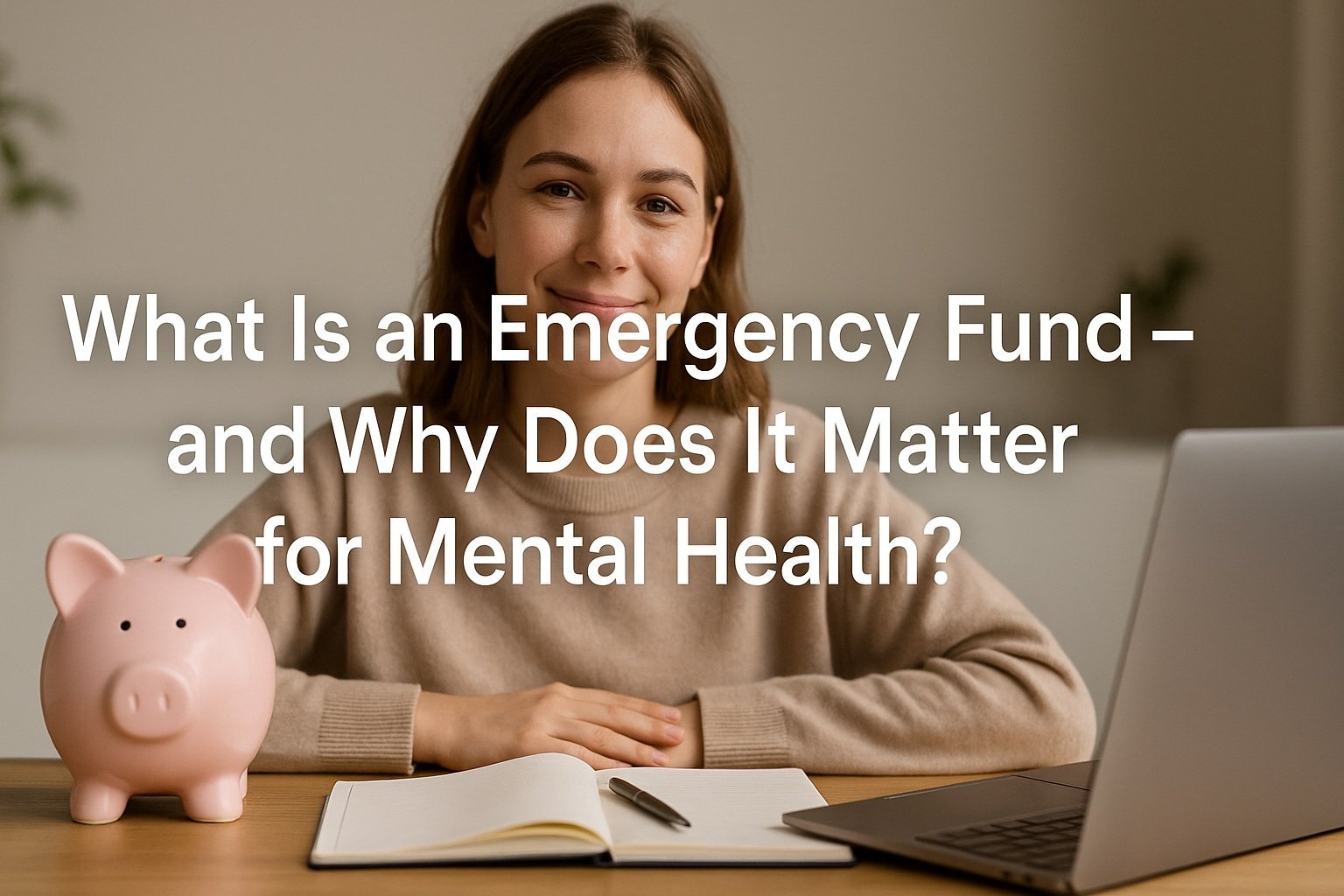
Financial psychologists have tracked thousands of households and found one truth that never wavers: when emergency funds rise, stress hormones fall. A cash reserve sends a direct safety signal to the brain. Cortisol levels drop, sleep quality improves, and work productivity climbs. The effect shows up even when the fund is small. Think of it like wearing a seatbelt on a calm road: the journey feels smoother because you know the belt is there. Your prefrontal cortex, the part in charge of planning, has more bandwidth for creative thinking once survival fear no longer hogs the stage. In plain words, your brain loves buffers.
How money anxiety shows up
Money stress rarely shouts; it whispers everywhere. You might wake at 3 a.m. worrying about a flat tire you cannot afford. You may snap at loved ones over tiny expenses or avoid opening mail because the envelopes look threatening. Chronic worry is linked to headaches, digestive troubles, and mild depression. Emergency funds act like noise-cancelling headphones against this background hum. Each saved dollar lowers the volume of the “what if” soundtrack. Soon you notice calmer mornings and lighter shoulders.
How Big Should Your Emergency Fund Be to Feel Secure?
Rule of thumb vs. personal factors
Most experts quote the classic range: three to six months of essential living costs. That guideline covers rent or mortgage, groceries, utilities, basic transport, and insurance. Yet rules of thumb ignore personal context. A stable government employee with strong benefits needs a smaller cushion than a freelance designer whose income swings wildly. If you have high-interest debt, an aggressive savings target could stall progress elsewhere. Instead, zoom in on your own risks: job stability, dependants, insurance coverage, and health status. Layer these details on top of the classic range, and you will land on a target that feels both realistic and comforting.
Quick-start targets
Starting can feel like staring up a cliff. Rather than freeze, aim for the first psychological milestone: two thousand dollars. Research reveals that figure is the tipping point where worry begins to decline for many people. It covers one large car repair or a month of rent in many regions. If two thousand still sounds steep, break it into four blocks of five hundred. Every block you finish turns the next into a lighter lift.
Reality check: You don’t need perfection to benefit
Some savers stall because they fear falling short of the ideal. Remember: an imperfect fund beats no fund by miles. Even five hundred dollars changes a blown tire from a disaster into a nuisance. Emergency funds offer linear peace of mind; each new deposit adds protection. Treat the process as building a wall brick by brick rather than pouring a single giant slab.
Step-by-Step Strategy to Build Your Fund Without Overwhelm
1. Audit cash flow
Begin with clarity. List every source of income on one side of a page and every monthly expense on the other. Use a phone note, spreadsheet, or old-fashioned notebook—whatever you stick to. This budgeting habit highlights leaks you never noticed: unused subscriptions, daily premium coffees, and forgotten app renewals. Redirect even fifty dollars a month to emergency funds, and you will hit six hundred within a year.
2. Automate small transfers
Willpower is unreliable; automation is flawless. Set a recurring transfer from checking to your savings cushion the day after each pay cheque lands. Start tiny if needed—twenty bucks is fine. Because you never see the money in your spendable balance, the transfer feels painless. Over time raise the amount in five- or ten-dollar increments. Many savers reach three hundred a month without noticing.
3. Choose the right parking spot
Parking matters. Your emergency funds must stay safe, liquid, and mildly rewarding. A high-yield savings account at an FDIC-insured bank checks all boxes. A credit union share account or a money market fund backed by short-term Treasury bills also works. Avoid tying the cash in long-term certificates or volatile stocks. The fund’s purpose is rapid access, not maximum return.
4. Layer windfalls
Windfalls give your fund a turbo boost. Tax refunds, work bonuses, cash gifts, and side-gig earnings all cooperate. Decide in advance that a fixed slice—say fifty percent—of any windfall drops straight into emergency funds. Because the money was not part of your regular budget, you sidestep lifestyle inflation.
5. Track progress visually
Humans love progress bars. Create a simple thermometer graphic, colour in a jar image, or use a banking app that shows a percentage wheel. Post it where you see it daily. Visual cues turn abstract numbers into tangible wins. Each filled segment sparks a dopamine hit that keeps motivation high. Over months the bar reaches one hundred percent and you will marvel at how painless the climb felt.
Coping Tactics While Your Fund Grows
Reduce financial noise
News apps and social feeds often highlight crises because fear grabs clicks. Limit doomscrolling to a timed ten minutes a day or choose one reliable source and ignore the rest. Schedule a weekly money date with yourself instead. Review balances, note victories, and set next week’s micro-goal. This ritual swaps reactive stress for proactive control.
Affordable mental-health supports
Therapy and anxiety relief do not need to break the bank. Many communities offer sliding-scale counselling or free peer support groups. Meditation apps provide guided sessions for pennies a day. Daily brisk walks release mood-boosting endorphins and cost nothing. Pair these habits with your growing emergency funds, and you reinforce mental resilience from two angles at once.
Know when it’s OK to spend the fund
A common fear is, “What if I withdraw and then regret it?” Your cash reserve exists for real emergencies: job loss, urgent home repairs, sudden medical bills, or critical travel to care for family. If the expense protects health, shelter, or essential mobility, using the fund is justified. When you do draw down, flag an action plan to refill it at the next pay cheque so the safety net rebounds.
Maintaining the Fund: Replenish & Review
Monthly check-ins
Life changes fast. Run a brief review at month end. Ask: Did my income rise or fall? Did core expenses shift? Does my current emergency fund balance still match three to six months of needs? Adjust automatic transfers up or down accordingly. Regular review keeps the cushion aligned with reality.
Integrate with long-term goals
The beauty of a finished safety net is that the same saving habit can hop to new missions. Once your fund is topped off, redirect the automated transfers toward retirement accounts, college savings, or extra loan payments. Your cash reserve now sits quietly, offering peace while other goals gather steam.
FAQ – People Also Ask
1. How does an emergency fund reduce stress?
Emergency funds create immediate options during a crisis, which calms the fight-or-flight response. Knowing you can pay a surprise bill lets your nervous system stand down.
2. How much emergency savings do I need for peace of mind?
Many people feel noticeably safer once they reach two thousand dollars, with optimal comfort at three to six months of expenses.
3. Should I pay off debt or build an emergency fund first?
Build a starter cushion of five hundred to one thousand, then tackle high-interest debt while you keep tiny automated savings rolling.
4. Where should I keep my emergency fund to stay safe?
Use an FDIC- or NCUA-insured high-yield savings account or a Treasury-backed money market fund so your principal stays secure and liquid.
5. Is one thousand dollars enough for an emergency fund?
It handles a minor car repair or small medical bill, but view it as level one. Move towards at least one month of expenses for fuller coverage.
6. What counts as a real emergency?
Events that threaten health, shelter, or essential transportation qualify: job loss, major home or auto repair, urgent medical care, or travel to assist close family in crisis.
Closing Call-to-Action
Set up your first automatic transfer to emergency funds right now—yes, while the motivation is fresh. Even ten dollars marks the start of a new safety net and a quieter mind. Bookmark this guide and return each month to celebrate your growing cash cushion. Every saved dollar removes one ounce of anxiety and adds one ounce of freedom.
Table: Monthly Expenses vs. Target Fund Size
| Monthly Essential Expenses | Starter Fund (1 month) | Comfortable Fund (3 months) | Robust Fund (6 months) |
|---|---|---|---|
| 1 000 | 1 000 | 3 000 | 6 000 |
| 2 500 | 2 500 | 7 500 | 15 000 |
| 4 000 | 4 000 | 12 000 | 24 000 |
Caption: This table lets you see at a glance how your emergency fund target scales with basic living costs.