
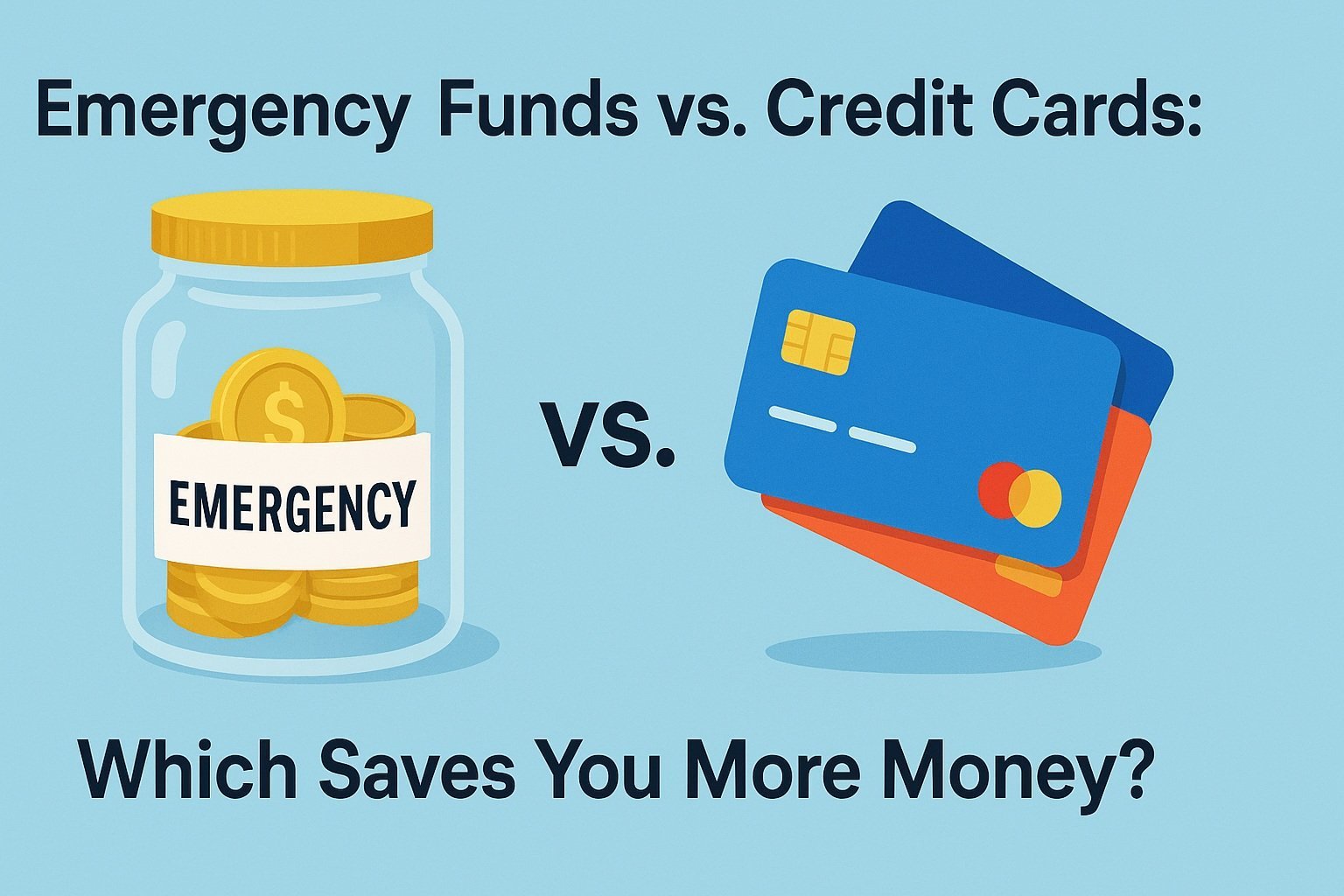
The emergency fund vs credit card question hits hardest when your car’s transmission fails, a pet needs surgery, or the boss announces layoffs. Your mind races: reach for plastic or lean on savings? An emergency fund is dedicated cash you stash for these surprises, while a credit card is a convenient loan that often carries hefty interest. In this deep dive you will:
-
Nail down the exact definition of both tools.
-
Learn the dollar‑for‑dollar cost difference.
-
Get practical tactics to grow emergency funds quickly or use credit cards wisely when you must.
By the end you will have a clear, numbers‑backed roadmap that shows how emergency funds can keep more money in your pocket and how to minimise damage if swiping is unavoidable.
What Exactly Is an Emergency Fund, and Why Does It Beat High‑Interest Debt?
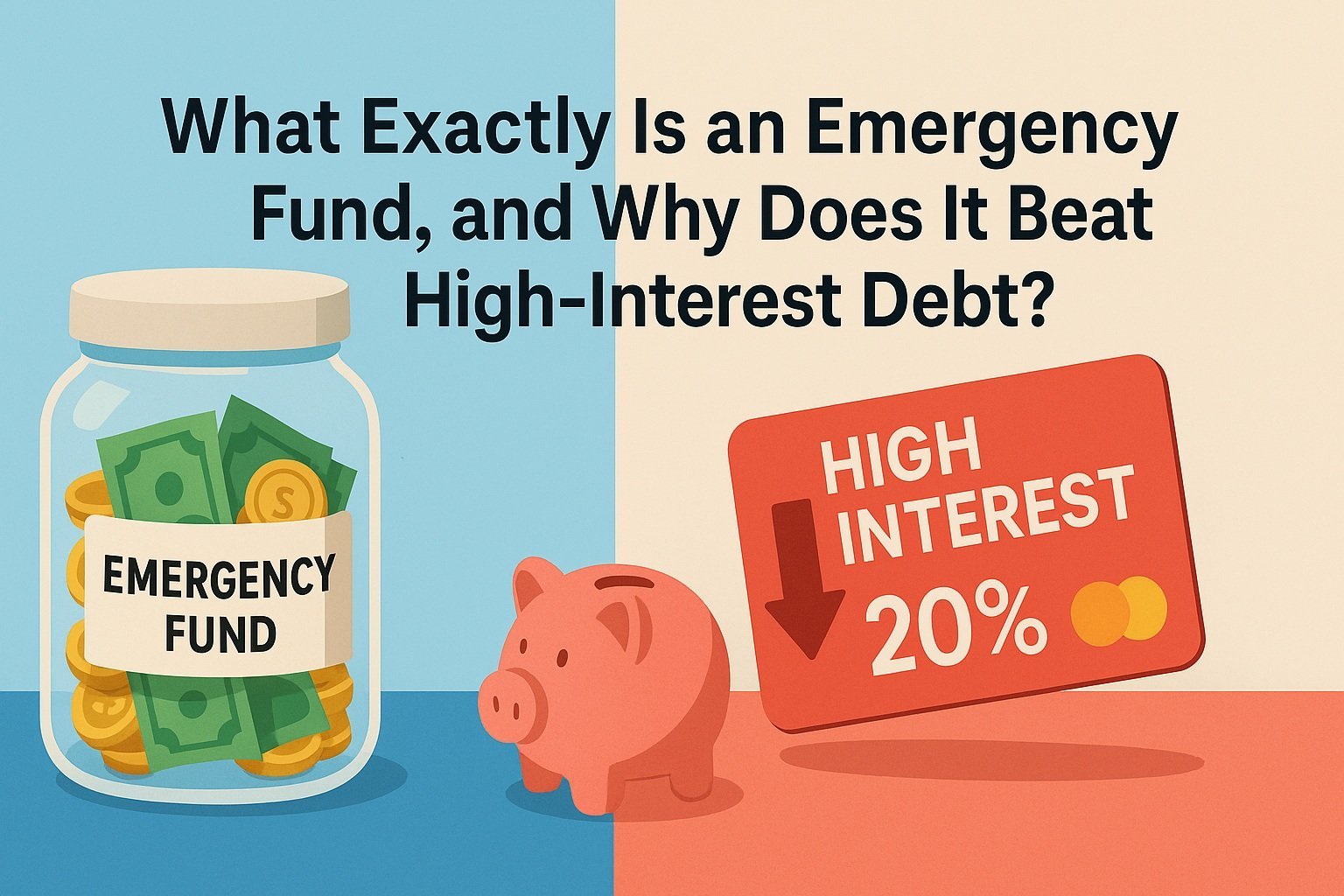
Start with basics: an emergency fund is liquid cash, usually parked in a high‑yield savings or money‑market account, that is earmarked only for unexpected, necessary, time‑sensitive costs. You do not tap it for vacations or designer gadgets. Instead, you reach for it when a water heater bursts, a job disappears, or medical deductibles arrive. Experts often suggest building emergency funds equal to three to six months of essential living expenses. Freelancers and anyone in a volatile industry may boost this to nine or even twelve months.
So why do emergency funds win against high‑interest debt? It boils down to arithmetic and psychology:
-
Cost advantage. The national average credit‑card annual percentage rate (APR) hovers around twenty‑two percent. By contrast, a high-yield account can pay four percent interest that compounds for you. Every dollar in emergency funds therefore saves roughly twenty‑two cents each year you would otherwise hand to a lender.
-
Sleeping‑well effect. Knowing you can cover a sudden thousand‑dollar bill without derailing rent or groceries lowers stress, improves decision‑making, and even correlates with better physical health.
-
Protection of future income. When emergencies strike and you borrow on plastic, tomorrow’s paycheques are already spoken for. Emergency funds let you keep future income flexible instead of locking it into repayment schedules.
The upshot: a solid emergency cash cushion is like an all‑risk insurance policy you pay yourself instead of an outside institution.
What’s the Real Cost of Putting Emergencies on a Credit Card?
Credit cards shine for security, fraud protection, and zero‑fee grace periods when you pay in full each month. Trouble appears the instant you carry a balance. Imagine a two‑thousand‑dollar car repair:
-
Charge it to a card at twenty‑two percent APR.
-
Make minimum payments of about forty dollars.
-
You will still owe nearly twenty‑three months later and pay roughly four hundred dollars in interest.
Now compare using emergency funds:
-
Withdraw two thousand from your savings.
-
Pay no interest.
-
Replace the money at your own pace, ideally within twelve months, while earning modest interest in that account.
Hidden downsides of relying on credit for emergencies:
-
Utilisation spikes. Suddenly using a large chunk of your limit pushes credit-utilisation ratios above thirty percent, a threshold that can ding scores.
-
Compounded interest. Carrying balances longer than a billing cycle accrues daily interest on the entire sum, not just new purchases.
-
Cash‑flow strain. Future monthly budgets must absorb payments plus interest, which may crowd out savings goals.
That chain reaction can snowball, especially if another surprise hits before the first is paid off. Emergency funds sidestep the domino effect entirely.
Emergency Fund vs Credit Card: Quick Cost Comparison Table
| Expense Size | Payment Method | Interest Paid | Months to Repay* | Credit Score Impact |
|---|---|---|---|---|
| $500 | Emergency Funds | $0 | Self‑paced | Neutral/Positive |
| $500 | Credit Card (22% APR) | $56 | 12 | Possible dip |
| $2,000 | Emergency Funds | $0 | Self‑paced | Neutral/Positive |
| $2,000 | Credit Card (22% APR) | $225 | 12 | Likely dip |
| $5,000 | Emergency Funds | $0 | Self‑paced | Neutral/Positive |
| $5,000 | Credit Card (22% APR) | $560 | 12 | Significant dip |
*Assumes a fixed monthly payment that clears the balance in twelve months.
Caption: A side‑by‑side snapshot reveals how emergency funds erase interest costs altogether, while credit cards quickly add hundreds of dollars.
When Does a Credit Card Make Sense First?
Situations
Credit cards are not villains; they are simply tools. In a few scenarios, plastic may be the smarter initial move even for people with healthy emergency funds:
-
Zero percent promotional window. New-card offers often waive interest for twelve to eighteen months. If you can pay in full before the promo ends, you effectively borrow free money and keep emergency funds intact, earning interest.
-
Card‑only merchants. Certain medical offices, online travel sites, or same‑day repair vendors may accept only cards. In those cases, your choice is to charge it or go without vital service.
-
Rewards with immediate reimbursement. Some cardholders swipe to earn travel points or cash back, then pay the statement in full using emergency funds the same day. The key is treating the card as a transactional conduit, not a loan.
Rules to Minimize Damage
If you decide to rely on credit for an emergency, set strict guardrails to keep the cost from spiralling:
-
Budget the payoff date before swiping. Mark your calendar with the exact day you will clear the balance, ideally within six to twelve months.
-
Keep utilisation under thirty percent. If your limit is five thousand dollars, avoid balances above fifteen hundred. Call the issuer for a line increase if necessary, but do not view that bigger limit as spending permission.
-
Automate payments. Arrange an automatic transfer from checking for at least the amount needed to clear the balance on schedule. Automatic payments remove willpower from the equation.
Follow these guidelines, and a credit card emergency can become a short‑term bridge rather than a long‑term burden.
Step‑by‑Step: Building an Emergency Fund Fast
Strategy Steps
Growing emergency funds feels daunting until you turn it into a series of small, repeatable actions:
-
Set a micro goal. Aim for the first one thousand dollars. Breaking the journey into stages keeps motivation high.
-
Automate transfers. Schedule a fixed dollar amount to move from checking to a high-yield savings account on every payday. Even twenty‑five dollars per week compounds into thirteen hundred dollars a year.
-
Redirect windfalls. Tax refunds, bonuses, cash gifts, and side-gig income can supercharge emergency fund growth without hurting daily budgets. Commit at least fifty percent of each windfall to the fund.
-
Trim recurring costs. Audit streaming subscriptions, negotiate cable bills, refinance insurance, and pack lunches. Saving one hundred dollars a month and funnelling it into emergency funds builds an extra twelve hundred in a year.
-
Level up. Once the starter fund is in place, expand the target to three months of essentials. Reassess expenses annually and adjust contributions so emergency funds stay current with lifestyle changes.
Pro tip: Name your savings account “Emergency Funds” inside your banking app. The label reinforces its purpose every time you check balances and reduces the temptation to raid it for non‑emergencies.
Step‑by‑Step: What to Do After You Must Swipe Plastic
Damage‑Control Plan
Sometimes life hits before emergency funds are ready. If you had to rely on a credit card, follow this roadmap the morning after:
-
Stop additional spending on that card. Freeze it in a drawer or pause it in your digital wallet. Avoid letting new purchases mingle with the emergency balance.
-
Transfer to a lower rate. If your credit is healthy, a zero‑per cent balance‑transfer offer can move the entire amount for a modest fee, buying interest‑free months to repay.
-
Pick a payoff method.
-
Snowball: pay the smallest debts first for quick wins.
-
Avalanche: pay the highest interest-debt first to save the most money.
Either works if you stay consistent. Choose the style you will stick with.
-
-
Compress the timeline. Aim to retire the balance in twelve months or less. Short payoff windows slash interest and free up cash flow sooner.
-
Rebuild emergency funds concurrently. Yes, this sounds counterintuitive, but keeping at least a mini cushion prevents the next surprise from landing on the same card and undoing progress.
With discipline, you can turn a credit‑card emergency into a temporary detour rather than a multi‑year debt marathon.
Decision Framework: Cash or Credit?
Use this quick checklist whenever a surprise expense appears:
-
Is your emergency fund target fully met?
Yes: pay cash, then schedule transfers to top it up. -
Is the fund incomplete (under one month of expenses)?
Combine whatever cash you have with a zero‑per-cent card you can clear within the promo period. -
No funds and only high‑interest cards available?
Swipe only if the expense is critical to health or livelihood. Immediately put the damage-control plan into motion.
The goal is binary clarity: either your emergency funds pay, or you use credit under strict limits while you sprint to replenish savings.
FAQ (Optimized for “People Also Ask”)
| Question | Snapshot Answer | Source |
|---|---|---|
| Is it better to build an emergency fund or pay off credit cards first? | Build at least a starter emergency fund of $1k–$2k so emergencies do not add more debt, then attack high‑interest balances. | Internal |
| How big should my emergency fund be? | Most people aim for three to six months of essential expenses; freelancers often push for nine or twelve months. | Internal |
| Can a zero‑per cent APR credit card replace an emergency fund? | Temporarily yes, but only if you can pay in full before the promo ends while still building emergency funds alongside. | Internal |
| What counts as a true emergency expense? | Unavoidable, necessary, and time‑sensitive costs such as medical care, job loss, or critical home and auto repairs. | Internal |
| Where should I keep my emergency fund? | A high‑yield savings or money‑market account that is FDIC insured, liquid, and currently earning about four percent. | Internal |
Caption: These fast answers tackle the most searched questions readers type into Google each day.
Key Takeaways
-
Every dollar in emergency funds can save twenty-plus cents a year in avoided credit‑card interest.
-
Credit cards are tools of convenience, not security: use them strategically and temporarily.
-
The cheapest money in any crisis is the money you have already saved.
-
Start with a micro-goal, automate contributions, and treat emergency funds as untouchable until a true emergency strikes.
-
If you must swipe plastic, confine the damage with a written payoff plan and rebuild emergency funds right away to break the debt cycle.
Related Articles