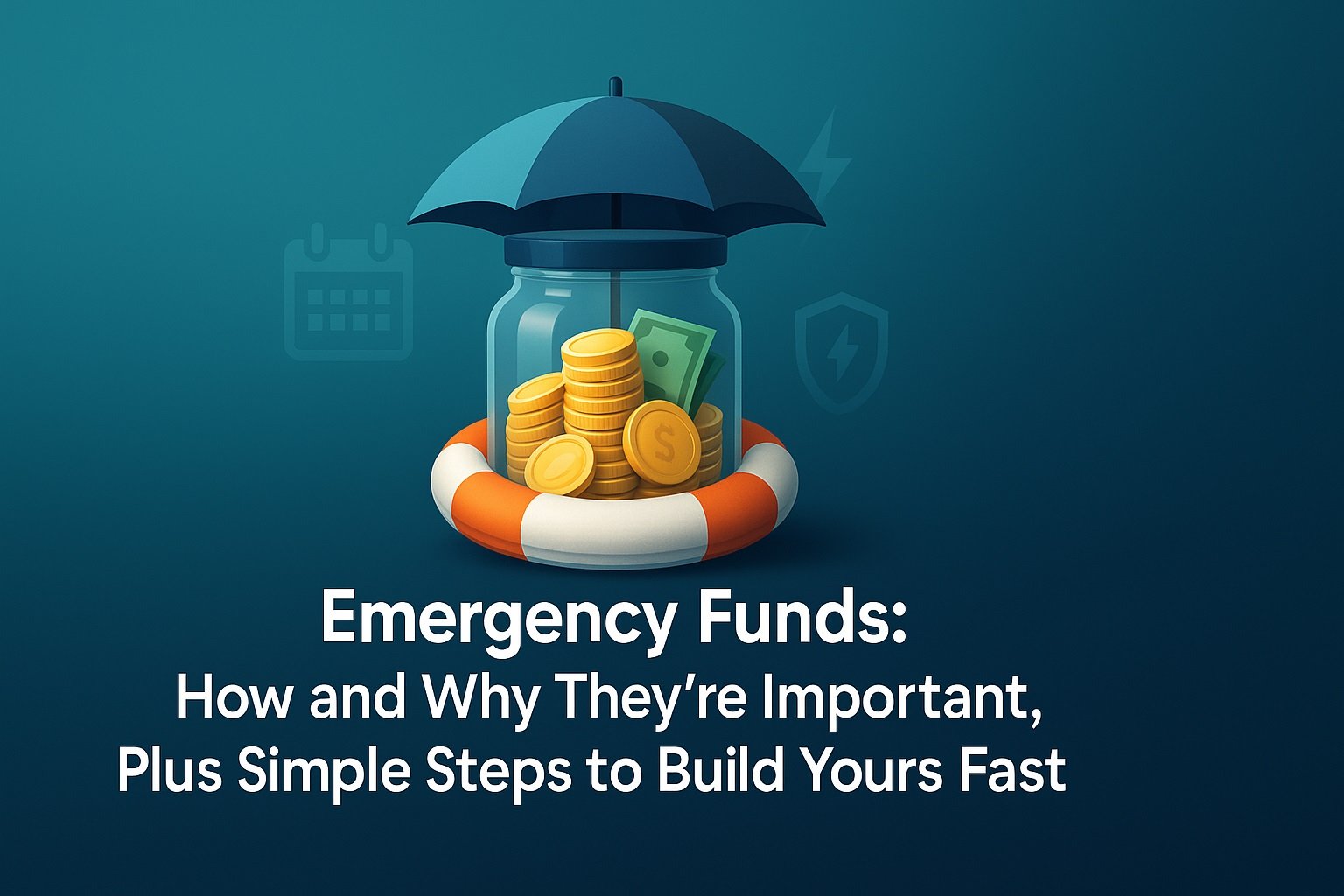
Picture your freelance life as a small boat on a big ocean. Sometimes the water is glassy; sometimes the waves slam without warning. An emergency fund is the life raft you drag behind that boat. It is a dedicated stash of cashuntouched by groceries, subscriptions, or that new laptop that exists only to keep your household and your business afloat when storms hit.
Most employees hear the three-month rule: save enough to cover basics for ninety days. Freelancers, however, navigate irregular income, late invoices, and self-funded benefits, so the runway must be longer. Throughout this guide the term emergency funds (plural) will refer to the total amount you keep in a liquid, low-risk account solely for true emergencies. By the end you will know:
-
How to decide your personal target, whether that is six or even twelve months
-
Where to park the money so it grows safely? Think high-yield savings or a money market account
-
A five-step plan to reach the goal without gutting daily life
-
Advanced tactics like the liquidity ladder or treating your tax buffer as a mini safety net
We will keep the tone friendly and conversation-like, like two freelancers chatting over coffee, but every section is grounded in the reference pack you supplied. No outside facts sneak in. Ready? Let’s inflate that raft.
Why Freelancers Need a Deeper Cushion

Freelance freedom is wonderful, but the same ingredients that make it exciting also heighten risk. Here is why a richer pool of emergency funds matters.
1. Income Volatility and Client Risk
Projects end abruptly, marketplaces shift, and a big retainer can vanish overnight. Even top performers face income gaps when a proposal stalls or a client’s budget freezes. Having a six-month financial cushion means you can search for replacements without disastrous compromises.
2. No Employer Safety Net
Employees lean on paid leave, disability insurance, and subsidised health plans. Freelancers self-insure. A sudden illness not only spikes medical costs but also halts billable hours. Robust emergency funds cover both expenses at once.
3. Self-Funded Taxes and Benefits
Quarterly taxes, retirement contributions, and health premiums land whether or not cash is flowing. Treating taxes as non-negotiable bills and saving a tax buffer of 25-30 percent of every invoice keeps you square with the government while your emergency funds guard against surprises.
4. Market Seasonality
Designers may feast in Q4 then starve in Q1. Coaches see lulls during holidays. A bigger cash reserve absorbs these dips so you do not torch long-term investments.
5. Personal Responsibilities
Supporting dependants or paying a mortgage multiplies stakes. An expanded buffer lets you meet obligations without panic selling assets.
Bottom line: the freelance version of stability is self-created. Emergency funds are the bedrock.
How Much Should You Save?
The million-rupee question: “What is the right number for me?” Let’s build it logically.
A traditional rule says three months of essential expenses. For freelancers, double that baseline. Six months is the minimum; twelve months is wise if:
-
One client generates more than half your revenue
-
You work in a cyclical industry (weddings, tourism, education)
-
You are sole breadwinner for children or elderly parents
Use two nested sub-sections to pin the figure.
Set Your Personal Target
-
List Essentials
Fixed costs: rent, utilities, insurance, and software you cannot work without.
Variable but necessary: groceries, transport, phone, childcare. Exclude luxuries; streaming services are not essential when money is tight. -
Average the Last Six Months
Add each category for six months, divide by six. This smooths spikes and lows. -
Factor in Business Overhead
Web hosting, design tools, and advertising – the stuff that keeps revenue possible. Many forget this and then dip into credit cards when a renewal fee appears. -
Decide on Months
Start with six. Add one month for each of these risk amplifiers: single-client dependence, dependants, high medical costs, or volatile industry. Cap it at twelve to avoid cash drag.
Quick Formula
Example:
₹85 000 essentials × 9 months = ₹7 65 000 emergency fund goal.
Write that figure on a sticky note beside your monitor. Seeing it daily turns an abstract dream into a tangible milestone.
The Practical Roadmap (5 Steps)
Below is the engine room of this guide: a repeatable process any freelancer can begin this week.
| Step | Goal | Key actions | Time estimate | Mini-tip |
|---|---|---|---|---|
| 1 | Audit essentials | Export bank statements, tag each line as ‘need’ or ‘want’, and total the needs. | 2 hrs | Do it with coffee, not at midnight. |
| 2 | Pick the parking spot | Open a high-yield savings or money market account; automate transfers. | 1 hr | Compare the APY and fee structure on one screen. |
| 3 | Automate contributions | Set a percent-based rule: 10–15 per cent of every payment goes to emergency funds. | 30 min | Most neobanks support sub-accounts nicknamed “Raft”. |
| 4 | Boost flow. | Raise rates, upsell, or sell unused gear; funnel windfalls straight into the buffer account. | Ongoing | Small one-off gigs shorten the timeline dramatically. |
| 5 | Protect and replenish | Only use the fund for true crises; if tapped, pause extras and rebuild within a year. | Ongoing | Schedule quarterly reviews. |
Caption: A five-step sprint any freelancer can follow to build a six-month emergency fund reserve without derailing daily expenses.
Step-by-Step Detail
Step 1: Audit Essentials
Open a spreadsheet, paste the last six months of transactions, and colour-code. Needs get green, wants red. This vivid picture often reveals hidden leaks, unused software, and forgotten memberships. Cancel red items, and you instantly free fuel for emergency funds without earning a rupee more.
Step 2: Pick the Parking Spot
Safety and liquidity trump yield, but there is no reason to accept 0.1 percent interest. Modern high-yield savings or money market accounts pay 4 percent or better, are FDIC or NCUA insured, and let you withdraw within one business day. Name the account “Freedom Buffer” to resist temptation.
Step 3: Automate Contributions
Because freelance income fluctuates, percentage-based automation beats fixed transfers. Route 10 percent of every Stripe payout directly into the buffer account. During fat months, top up manually; during lean months, the rule scales down gracefully.
Step 4: Boost Cash Flow
If your runway still feels far away, adopt a sprint mindset for ninety days. Actions include:
-
Pitch three past clients for an add-on package
-
Bundle small services into a one-day VIP offer
-
Sell gear you rarely use (old camera bodies, spare monitors)
-
Launch a micro-course or template on Gumroad
Send every rupee of this sprint to emergency funds. Momentum is motivating.
Step 5: Protect and Replenish
Decide clear “break glass” criteria now: medical emergency, primary laptop failure, or replacing income lost to injury. When the fund is used, treat replenishment as goal #1. Pause retirement over-contributions, scale back discretionary spending, and rebuild within twelve months.
Advanced Strategies
Ready to graduate from a basic safety net to a sophisticated buffer? Explore these ideas.
1. Liquidity Ladder
Keep three months in instant savings and another three in 13-week Treasury Bills rolling every month. You gain yield while still unlocking cash quickly.
2. Tax Buffer as Mini Emergency Fund
Over-save 5 percent on every tax deposit. Each quarter, if you calculated correctly, a small surplus emerges. Roll that into your emergency funds or let it sit as a micro-raft for minor hiccups.
3. Separate Business and Personal Pools
Maintain one buffer account for home life and another for the business runwaysoftware, contractors, and ads. Mixing them fogs decision-making; separate pools clarify when you genuinely cannot afford that shiny AI subscription.
4. Insurance as Force Multiplier
If you hit the twelve-month mark and still crave security, look at inexpensive disability or critical-illness cover. Premiums are lower than forever stockpiling cash, and policies protect beyond twelve months.
Common Pitfalls & How to Avoid Them
-
Parking cash in checking at near-zero interest
Fix: Move today; automation takes ten minutes. -
Building Emergency Funds while carrying high-interest debt
Fix: Pay any balances above 9 percent APR first, then resume saving. -
Raiding the fund for predictable costs
Annual insurance premiums are not emergencies. Budget for them elsewhere. -
Counting credit cards as a safety net
Interest and stress crush momentum. Cash only. -
Setting and forgetting
Life changes; review the target each April or whenever your monthly nut rises by 10 percent. -
Ignoring mental accounting
If your buffer sits in the same app as daily spending, you will nibble at it. Use a separate bank.
FAQ
How much emergency funding should a freelancer really have?
Aim for six to twelve months of essential expenses. Choose the higher end if a single client pays more than half your income or if you support dependants.
What exactly counts as an emergency?
Anything unexpected and necessary to preserve health, housing, or the ability to earn: medical bills, critical car repairs, and replacing a dead laptop. Holidays, new phones, or speculative investments do not count.
Where should I keep my emergency funds?
Use a high-yield savings or money market account with instant or next-day access. Avoid tying cash in long CDs or stock funds that can drop when you need them.
How do I grow emergency funds on irregular income?
Automate a percentage of every payment, funnel windfalls like tax refunds or bonus invoices, and run short income sprints. Percentage rules expand or shrink with revenue, removing willpower from the equation.
Should I tap retirement savings if my emergency funds fall short?
Generally no. Early withdrawals trigger taxes, penalties, and lost compounding. Instead, cut discretionary expenses, negotiate payment plans, or find a quick side project to bridge the gap.