Think of emergency funds as the shock absorber on your financial vehicle. When potholes like job loss or an unexpected roof repair appear, this cash cushion lets you glide over the bump instead of blowing a tire. But what if the broader market is skidding on ice at the same time? Rapid swings in stock and bond prices, what we call market volatility, lure savers into riskier choices or, worse, erode confidence so completely that they freeze.
In the next several thousand words you will learn exactly how to keep your emergency funds safe, liquid and productive in 2025. We will explain why protecting the money matters more than stretching for yield, map out a tiered storage plan, walk through nine detailed tactics that work in any market downturn, and finish with a 90-day action plan plus a reader-friendly FAQ. By the end, you will have a clear checklist that lets you sleep at night, even when headlines scream.
Along the way we will weave in important concepts like rainy day fund, liquid savings, high-yield savings account, money market fund, treasury bills, principal protection, safe cash storage, market downturn, financial cushion and cash reserve. These related phrases will help searchers find the article while also keeping the conversation natural – exactly what Google rewards today.
Why Your Emergency Fund Must Be Market-Proof
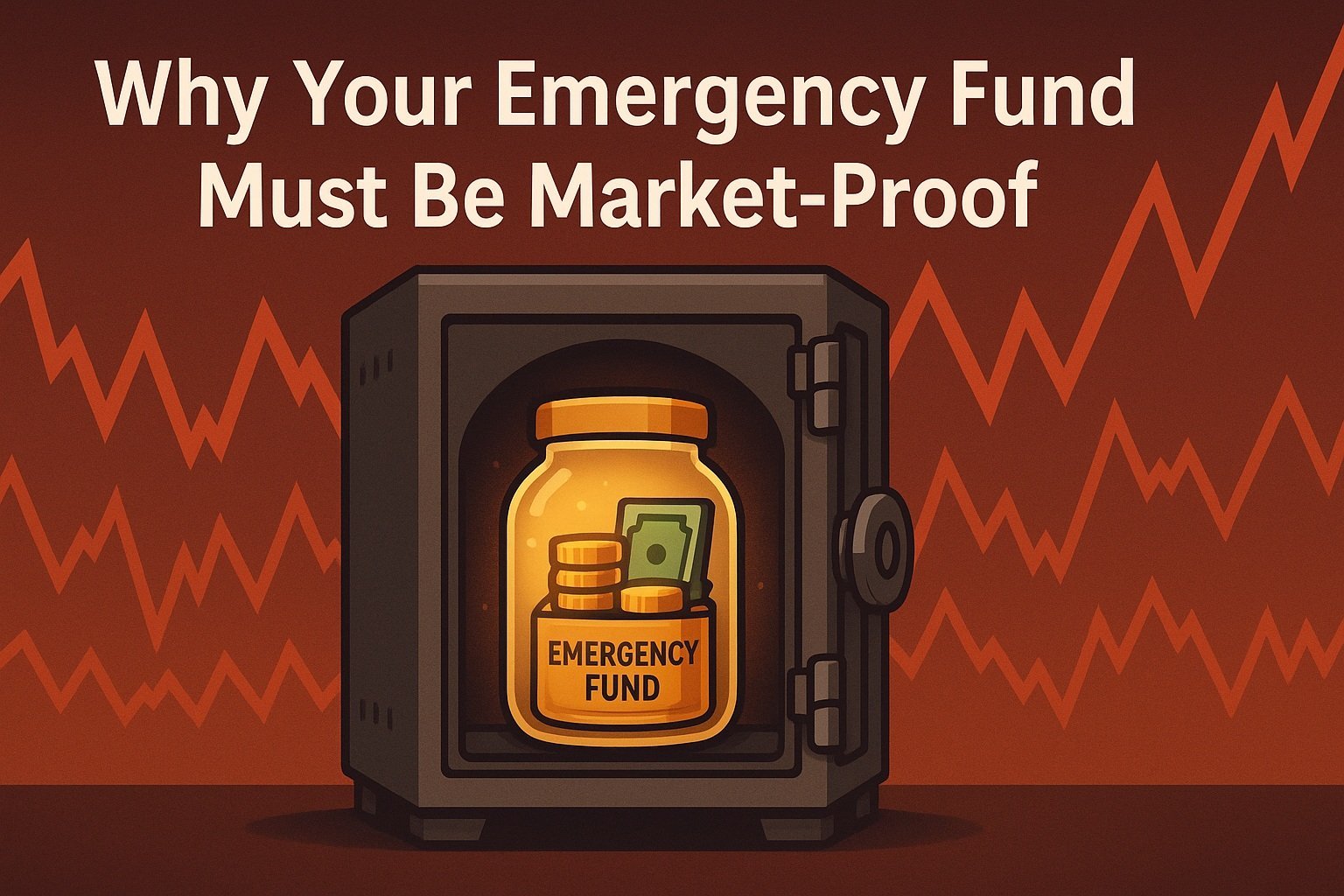
Picture two families during a sharp correction. Family A holds their emergency funds entirely in a diversified stock ETF. Family B keeps theirs in an insured savings account. When prices fall twenty percent, Family A has to choose between selling at a loss to cover an emergency car repair or putting the expense on a high-interest credit card. Family B makes the repair, keeps driving to work and sleeps normally that night.
The lesson is simple: principal protection outranks extra yield when we talk about emergency funds. The purpose of this money is not growth; it is stability plus instant availability. Selling volatile assets during a crisis is the opposite of stability. Worse, the psychological toll of seeing emergency cash swing in value can tempt us to take even bigger risks or abandon saving altogether.
Market-proofing means:
-
Separating emergency funds from long-term investments.
-
Choosing vehicles that will not lose nominal value day to day.
-
Keeping withdrawal hurdles low so cash is available within one or two business days.
If that sounds conservative, good. An emergency fund is the defensive line in personal finance. Offence belongs elsewhere.
2025 Safety & Yield Hierarchy
Storing all your emergency money in a single pocket rarely optimises both safety and yield. A tiered approach balances the need for immediacy with the desire to earn something above zero. Below is a simple hierarchy you can customise.
Tier 1 Instant Access (0–3 months of expenses)
-
FDIC- or NCUA-insured high-yield savings accounts (HYSA) paying roughly four percent annual percentage yield.
-
Funds settle instantly to checking via app or online transfer.
-
Ideal for surprise medical bills, urgent travel or deductible payments.
Tier 2 Near-Cash (3–9 months)
-
Money market account at a federally insured bank. These often allow six withdrawals per month and keep balances namespaced under federal coverage.
-
Treasury-only money market fund inside a broking. While not FDIC insured, it holds short-dated government securities, aiming for a stable one-dollar share price.
Tier 3 Yield Boost (optional overflow)
-
Three- to six-month Treasury bill ladder built in your broking account. Bills mature at staggered intervals, so part of the ladder comes due every few weeks.
-
No-penalty certificates of deposit that let you break without forfeiting interest, locking in a higher rate while retaining flexibility.
Pro tip: Split large balances across multiple institutions or joint registrations to stay under $250 000 FDIC / $250 000 NCUA caps.
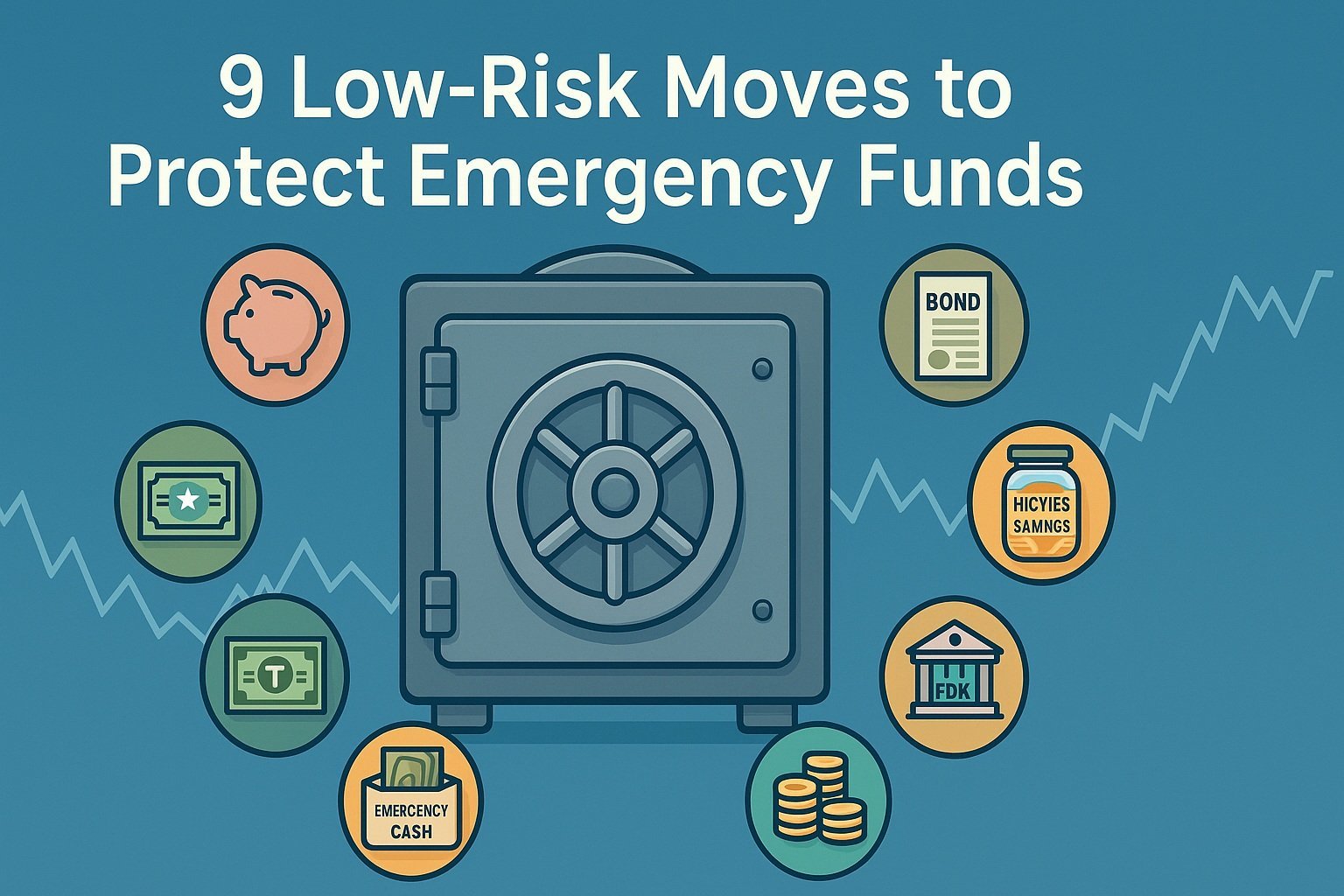
9 Low-Risk Moves to Protect Emergency Funds
1. Segregate Cash From Day-to-Day Checking
Out of sight often means out of mind. By housing emergency funds in a separate HYSA, you remove daily temptation to tap the money for lifestyle upgrades. Automation lets a slice of each pay cheque flow into the account without manual effort. Over time, your cash reserve grows quietly until you need it.
2. Keep the Core in FDIC-Insured HYSAs
Federal deposit insurance shields balances up to statutory limits. As long as you respect those limits with joint or individual titling, you essentially hold funds backed by the full faith and credit of the United States. That is the gold standard for safe cash storage, and it is available for free.
3. Ladder Short-Term Treasurys or No-Penalty CDs for Overflow
Once Tier 1 is full, spilling extra dollars into short maturities can squeeze out more yield without adding equity risk. Treasury bills are direct obligations of the government, exempt from state income tax and easy to resell. No-penalty CDs offer similar benefits through a bank wrapper Just check the break terms before committing.
4. Use a Treasury-Only Money Market Fund for Six-Figure Cushions
When balances exceed insurance caps, treasury-only money market funds become attractive: the underlying securities are still government-backed, but there is no FDIC guarantee because funds are investments. Maintain realistic expectations: the share price usually stays at one dollar, yet rare exceptions exist. Daily liquidity and competitive yields justify the slot in Tier 2 for many high earners.
5. Stress-Test the Size Annually
The rule of thumb – three to six months of expenses – works for dual-income households with stable employment. If you are a freelancer, sole earner or approaching retirement, doubling that cushion buys valuable peace of mind. Review factors like job security, healthcare costs, dependent count and economic outlook once per year, then adjust the target accordingly.
6. Automate Quarterly Top-Ups After Any Withdrawal
Emergencies happen by definition. The trick is rebuilding right away so the buffer is ready for the next curveball. Schedule a repeating transfer that backfills the amount you pulled out within ninety days. Treat it like any other mandatory bill.
7. Check FDIC and NCUA Limits When Rates Rise
Rising interest rate environments often push savers to chase higher yields at new banks. Before you open yet another account, confirm how the new balance interacts with existing holdings under the same charter. Multiple accounts at the same institution share a single insurance limit per ownership category.
8. Review Money Market Fund Risks
Money market funds are not created equal. Prime funds hold corporate paper and can impose redemption gates. Treasury-only funds stick to government obligations and historically maintain greater stability. Read the prospectus and choose the government flavour if this bucket is part of your emergency strategy.
9. Set Up Mobile Alerts for Balance Dips or CD Maturities
Most banks and brokerages offer customisable push or text alerts. Enable ones that ping you when balances drop below a threshold or when a CD matures. Prompt reminders ensure that you stay proactive, not reactive.
Common Pitfalls That Expose Emergency Cash
| Mistake | Why It Is Risky | Safer Alternative |
|---|---|---|
| Parking cash in stock ETFs | Value can drop twenty percent in weeks | HYSA or Treasury bill ladder |
| Ignoring FDIC limits | Amounts over $250,000 lose federal coverage | Split across banks or credit unions |
| Mixing fund with brokerage sweep | Easy to raid for trades | Separate login or dedicated savings |
Caption: This table spotlights three frequent errors and points to lower-risk fixes.
90-Day Action Plan
-
Day 1-7: Diagnose current holdings. List every account, balance, interest rate and insurance status.
-
Day 8-21: Open Tier 1 HYSA and Tier 2 money market accounts if missing. Use reputable institutions with quick ACH transfers.
-
Day 22-45: Transfer cash into the proper tiers. Set direct-deposit splits so new income flows automatically.
-
Day 46-90: Build a six-month Treasury bill ladder or open no-penalty CDs. Enable quarterly calendar reminders for reviews.
By following these four phases you will transform a scattered pile of bank balances into a disciplined financial cushion.
FAQ (People Also Ask)
| Question | Short Answer |
|---|---|
| What is the safest place to keep an emergency fund? | An FDIC-insured high-yield savings account or federally insured credit union savings. |
| How much of my emergency fund should be in cash versus investments? | Most working adults need three to six months of expenses in cash or near-cash; retirees should target twelve to twenty-four months. |
| Is a money market fund safe for emergency savings? | Treasury-only money market funds offer low risk but are not FDIC insured; treat them as Tier 2 after insured options. |
| Can I use CDs for emergency money? | Yes, if you choose short-term or no-penalty CDs that allow withdrawal without hefty fees. |
| Should I ever invest my emergency fund in bonds or stocks? | Preferably not. Volatility defeats the fund’s purpose of immediate, certain liquidity. |