
Cashless everywhere: health insurance is the reform that lets you walk into almost any hospital and settle the treatment cost without paying from your pocket first, even when that hospital is not on your insurer’s network list. Before this reform, a non-network admission usually meant you paid the full bill and chased a refund for weeks.
In 2026, most retail health policyholders in India can use this facility, but only if they follow the intimation rules correctly. This guide explains how it works, the exact timelines you must meet, who qualifies, what still gets rejected, and how it differs from the old reimbursement route.
How Cashless Everywhere Health Insurance Actually Works
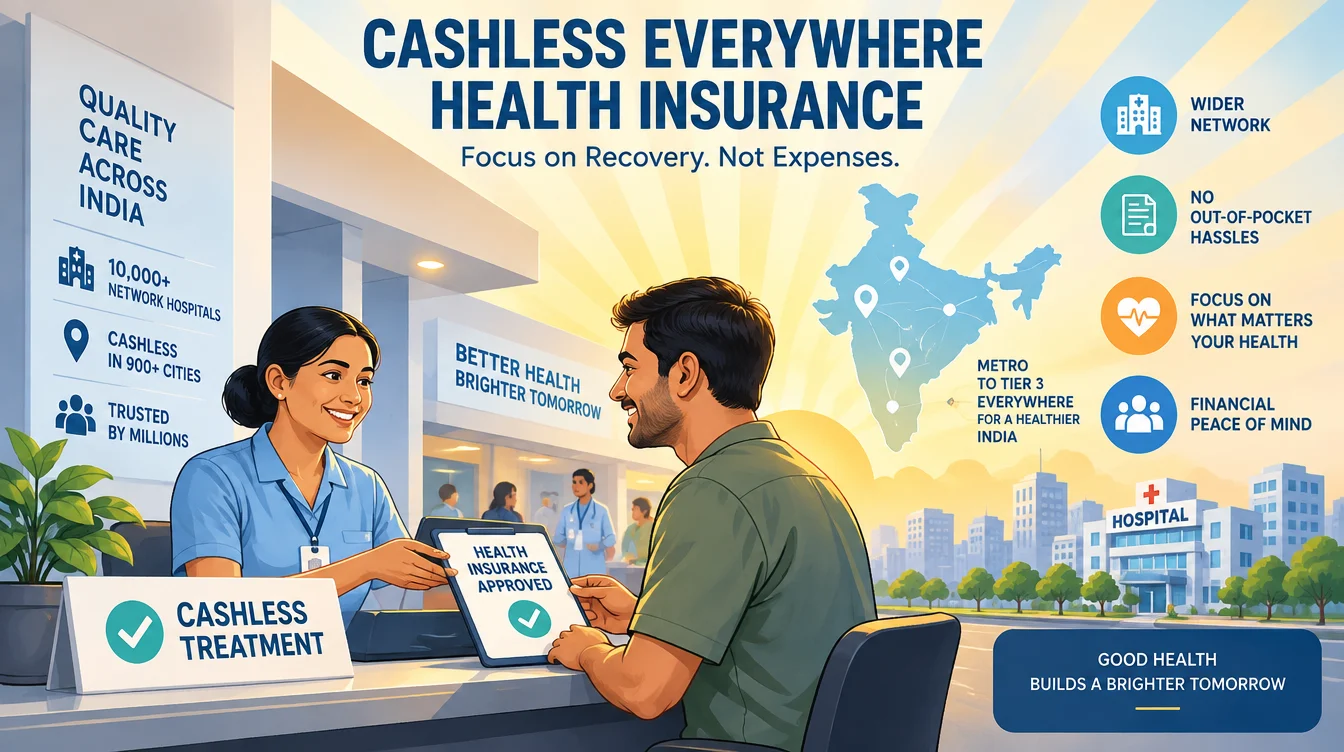
Traditionally, cashless treatment only worked at hospitals inside your insurer’s network. If you were admitted somewhere else, you paid the bill yourself and filed for reimbursement later. The IRDAI-backed cashless everywhere framework, rolled out by the General Insurance Council, changed that. Now the insurer can approve a cashless claim directly with a non-network hospital, so you leave without settling the bill in cash.
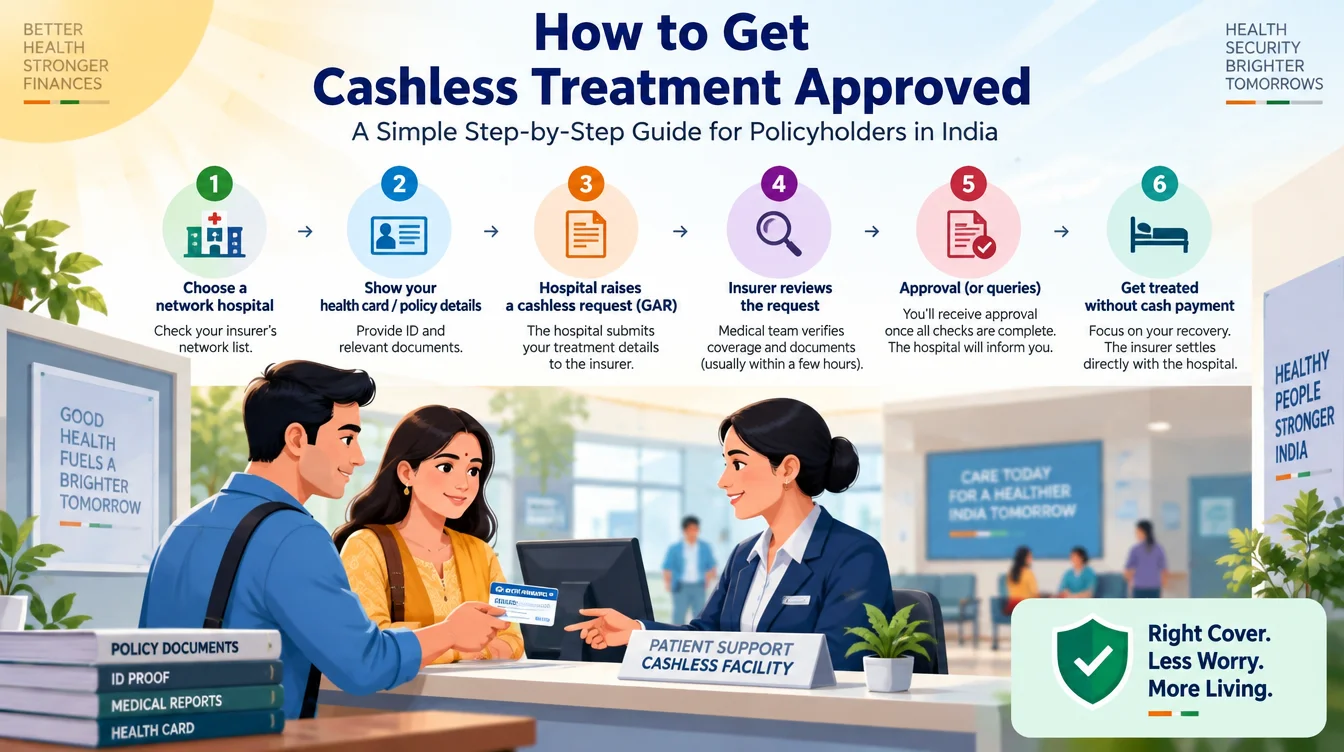
The mechanics are simple. You (or a family member) inform the insurer or the third-party administrator and share your policy and hospital details, and the insurer coordinates with the hospital’s billing desk. If everything checks out, the insurer pays the hospital directly under the agreed terms. Your insurer’s track record matters here, which is why it helps to know the health insurance claim ratio of the top insurers in India before you buy a policy.
Key point: the hospital is still free to decline the arrangement. Cashless everywhere is an industry commitment, not a legal obligation on every hospital, so a small hospital may still insist on cash. That is the single biggest gap you should plan for.
The Intimation Timelines You Cannot Miss
The whole facility rests on informing your insurer within a fixed window. Miss it, and the claim can slip back to the slower reimbursement track or get rejected outright. There are two timelines, and they depend on whether the admission is planned or an emergency.
Planned Hospitalisation: The 48-Hour Rule
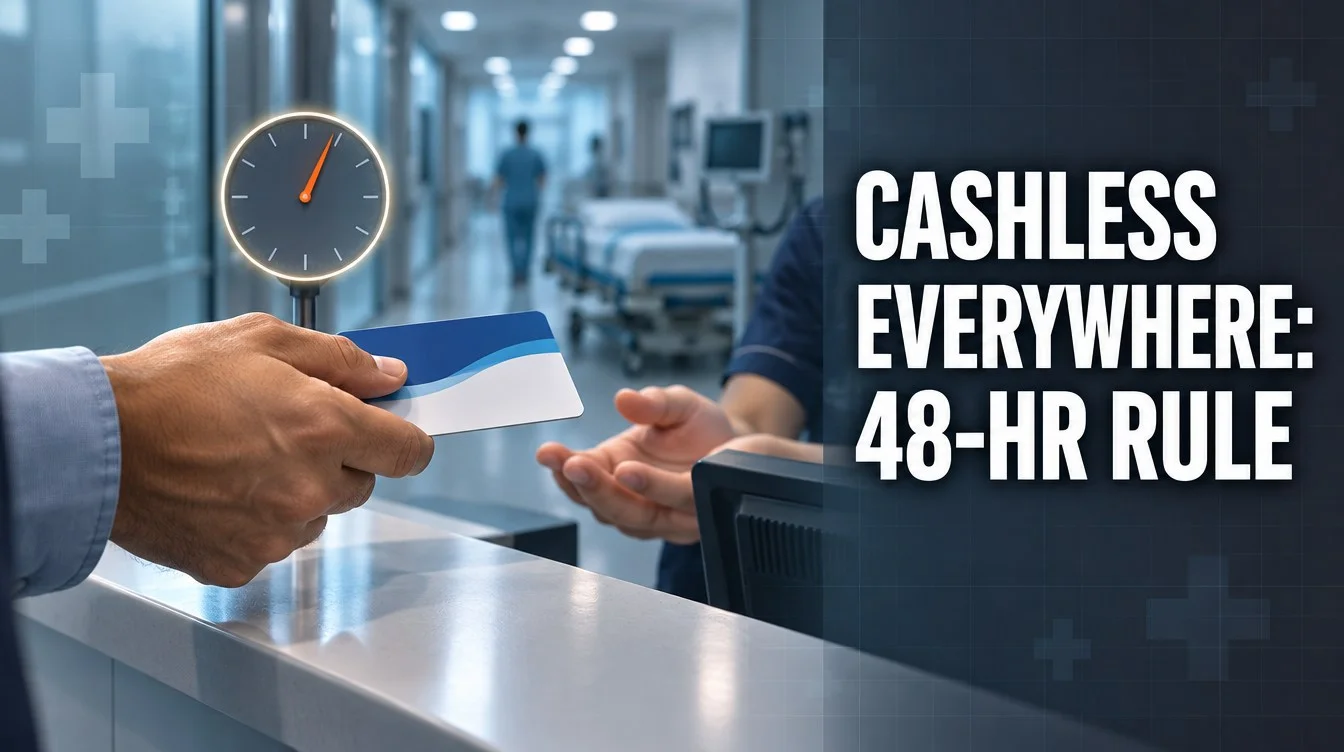
For a planned procedure, such as scheduled surgery, you must intimate the insurer at least 48 hours before admission. This gives the insurer time to verify your policy, check the hospital, and issue a cashless authorisation to the billing desk. Please book your intimation as soon as your doctor fixes a date, rather than on the morning of admission.
Emergency Admission: The 24-Hour Rule
For an emergency, you cannot plan ahead, so the rule is to intimate within 24 hours of admission. Ask a relative or the hospital insurance desk to call the TPA as soon as possible. Keep the policy number and your insurer’s helpline saved on your phone so that no one scrambles for details during a crisis.
Who Is Eligible and What Still Gets Rejected
Eligibility for cashless everywhere is broad but not unlimited. You generally qualify if you hold an active retail health policy with an insurer that is part of the initiative, your policy is not lapsed, and the treatment is a covered benefit under your plan. It is not a new add-on you buy separately; it is a service layer on top of your existing cover.
Several things still lead to a rejected or reduced claim. Watch for these:
- Waiting periods: pre-existing diseases and specific illnesses under their waiting window are not payable yet.
- Policy exclusions: cosmetic work, non-covered treatments, and anything named in your exclusions list stay out.
- Late intimation: missing the 48-hour or 24-hour window can void the cashless approval.
- Sub-limits and room-rent caps: If your room is above the allowed limit, proportionate deductions still apply.
- Sum insured exhausted: once your cover for the year is used up, the balance is on you.
The room rent and sub-limit traps are the ones people forget. A higher sum insured and a super top-up health insurance plan can shield you from large deductions, while understanding how your no-claim bonus stacks up each year helps you keep that cover growing without paying more.
Is Cashless Everywhere the Same as Reimbursement?
No. Under cashless everywhere, the insurer pays the hospital directly, and you walk out without settling the bill, subject to deductions. Under reimbursement, you pay the entire hospital bill yourself first, then submit documents and wait for the insurer to refund the eligible amount, which can take days or weeks and strains your savings.
This difference is precisely why a strong cash cushion still matters. Even the best cashless facility can hit a snag, so keeping a buffer means you are never stranded. If you are weighing insurance against a self-funded buffer for smaller costs, our take on why emergency funds beat insurance riders for small setbacks is worth reading.
How to Use Cashless Everywhere Without Getting Stuck
Knowing the rule is one thing; using it smoothly is another. Follow these steps to avoid last-minute surprises:
- Confirm your insurer is in the scheme. Before you need it, check with your insurer or TPA to ensure they support cashless transactions everywhere.
- Save the helpline and policy number. Store them where a family member can find them quickly.
- Arrive on time. 48 hours before a planned admission, within 24 hours of an emergency.
- Ask the hospital upfront. Confirm the hospital will accept the cashless arrangement, since it can decline.
- Keep documents ready. ID proof, policy copy, and the doctor’s advice speed up authorisation.
Digital records make all of these steps faster. Storing policy PDFs and payment proofs in a secure wallet or cloud folder saves time, and our guide on digital wallet dos and don’ts covers how to keep those records safe without exposing yourself to fraud.
For educational purposes only. This article is general information about personal finance and is not investment, tax, or legal advice. Past performance does not guarantee future returns. Mutual funds and market-linked instruments carry market risk; read the scheme-related documents carefully. Consult a SEBI-registered investment adviser or a qualified tax professional for guidance tailored to your situation.
Frequently Asked Questions
Is cashless health insurance available on all policies everywhere?
It is available on most retail health policies where the insurer is part of the General Insurance Council initiative. Group and corporate policies may follow different terms. Confirm directly with your insurer or TPA that your specific plan supports the facility before you rely on it.
Do I need to inform the insurer even if I am using a non-network hospital?
Yes. Intimation is mandatory. For a planned admission, please inform the insurer at least 48 hours in advance. In the case of an emergency, you must inform them within 24 hours of admission. Skipping this step is the most common reason a cashless request fails and drops back to reimbursement.
Can a hospital refuse cash everywhere?
Yes. Cashless everywhere is an industry commitment, not a binding rule on every hospital. A hospital, especially a small one, can still ask you to pay in cash and file for reimbursement later. It’s advisable to confirm with the hospital billing desk at the time of admission.
Will I get the full amount without any deduction?
Not always. Room-rent limits, sub-limits, co-payment clauses, and non-covered items still apply. If your room category exceeds the policy limit, proportionate deductions kick in. Read your policy schedule so you know your caps before you are admitted.
How is the cashless option different from reimbursement?
With cashless facilities available everywhere, the insurer pays the hospital directly, allowing you to avoid paying the full bill upfront. With reimbursement, you pay first and claim a refund later. The cashless route protects your immediate cash flow, which matters most during a medical emergency.