
A delay in receiving your income tax refund in 2026 is the most common complaint on the e-filing portal this July, and in most cases the reason sits on your side of the screen, not the tax department’s. You filed on time, the portal showed a refund figure, and then nothing moved for weeks. The good news is that almost every stuck refund can be traced back to a short list of fixable causes.
This guide walks you through why refunds stall during the FY 2025-26 return season, how to check your exact status, how to raise a reissue when a credit fails, and what interest you are owed under Section 244A when the delay is genuinely the department’s fault.
Why an Income Tax Refund Delay 2026 Happens
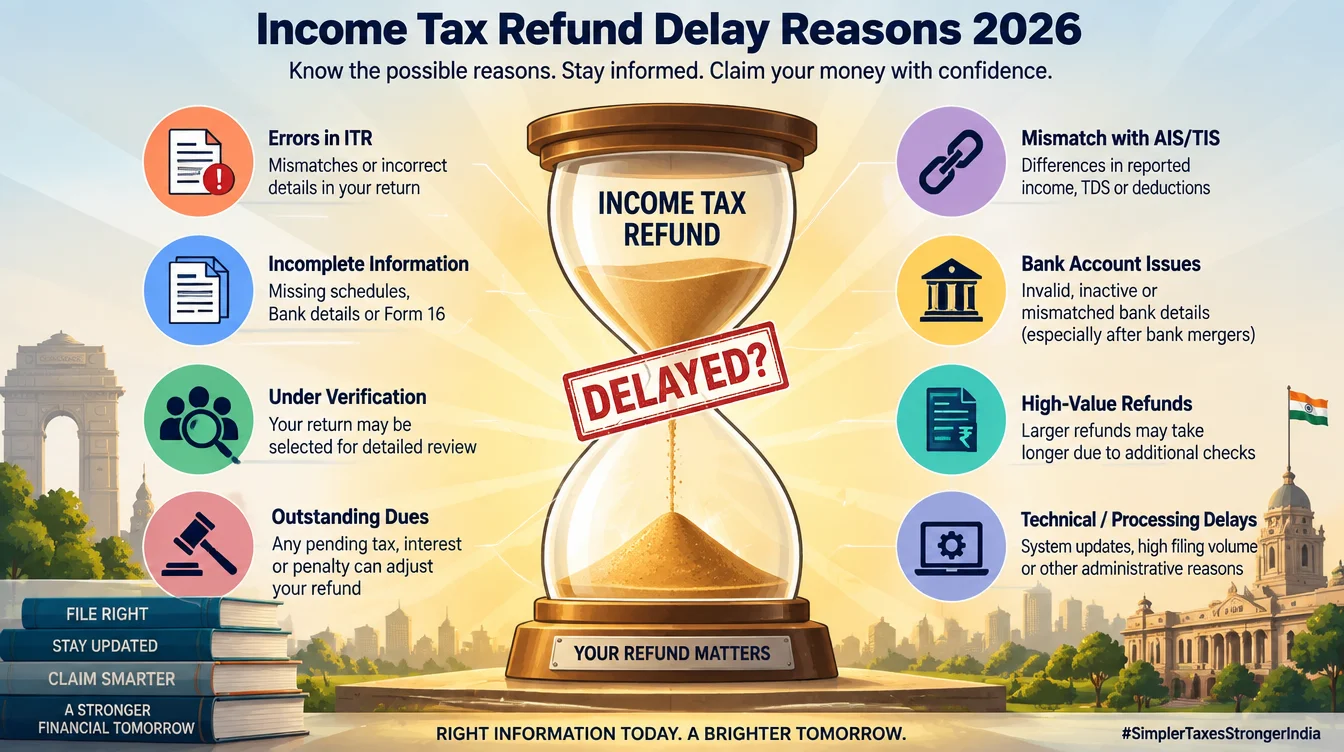
A refund is processed only after the Centralised Processing Centre (CPC) validates your return, matches your figures, and confirms a clean bank credit path. If any one of those steps fails, the refund waits. The usual culprits are the following:
- Return not e-verified. An unverified ITR is treated as though it were not filed. The clock on your refund does not even start until you verify.
- Bank account not pre-validated. Refunds are credited only to a pre-validated account linked to your PAN. A closed, dormant, or unvalidated account silently blocks the credit.
- AIS or Form 26AS mismatch. If the income or TDS you reported does not match the Annual Information Statement, CPC holds the return for a closer look.
- Adjustment against an old demand. Under Section 245, the department can set off your refund against tax you owe from an earlier year.
- Return under processing. High-volume filing weeks in July simply create a queue, and a straightforward return can still take several weeks.
Before assuming the department is at fault, please confirm that your return was filed correctly in the first place. Our step-by-step ITR filing guide covers the pre-validation and verification steps that prevent most delays.
E-verification pending
You have 30 days from the date of filing to e-verify your return. The fastest routes are Aadhaar OTP, net banking, or a pre-validated bank or demat account. If you miss the window, the return is invalid and you must file again, which resets your refund timeline completely.
Bank account not pre-validated
Log in to the portal, open Profile, and go to My Bank Accounts. The account marked for refund must show a green “Validated” status and be linked to the PAN that filed the return. Re-validation takes one to two working days, and a name mismatch between your PAN and bank record is the most frequent reason it fails.
How to Check Your ITR Refund Status
You do not need to guess where your refund is. There are two reliable places to check, and both are free.
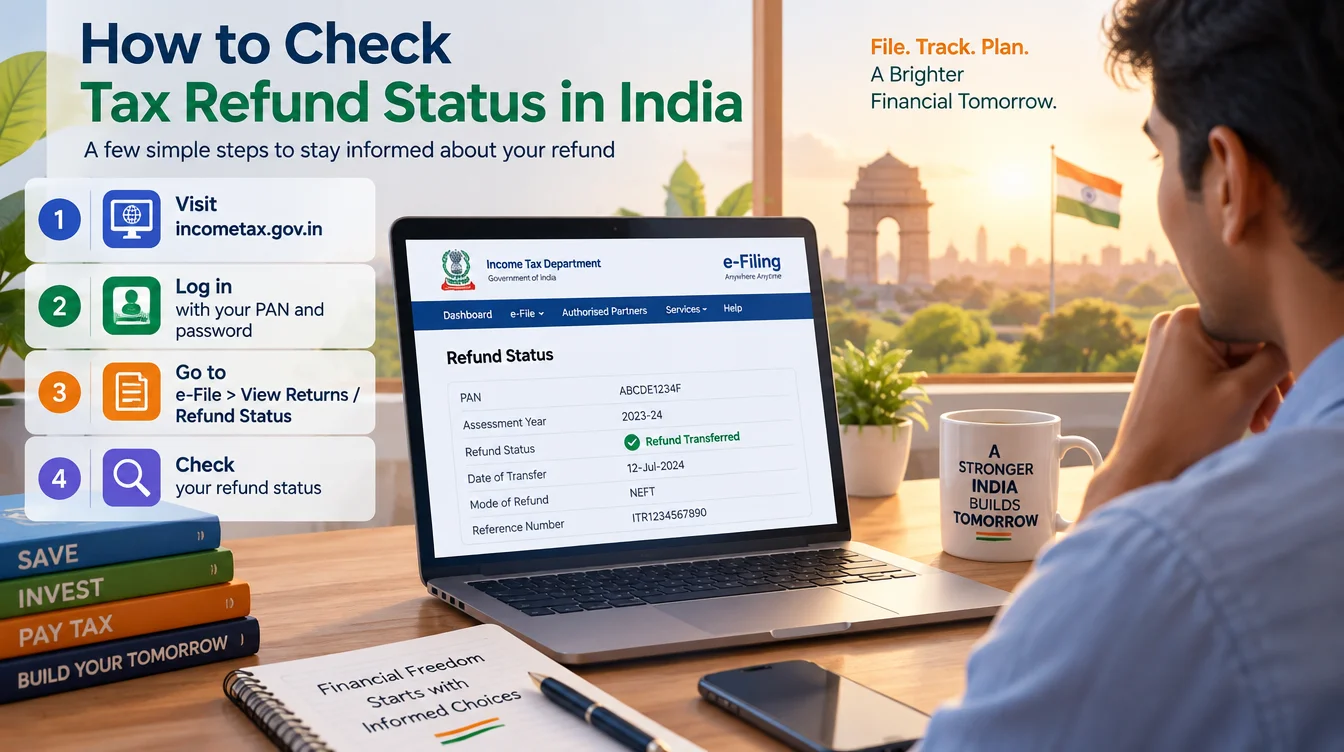
- To access the income tax e-filing portal, log in, select e-File, then choose Income Tax Returns, and finally View Filed Returns. The status line tells you whether the return is verified, under processing, processed, or whether a refund has been issued.
- NSDL / refund banker lookup: Once the status reads “processed”, the refund banker shows whether the credit was sent, is in transit, or has failed.
A “refund failure” status almost always points to a bank problem, not a rejection of your claim. Please cross-check the income and TDS entries in your AIS and TIS statements against your return to avoid any mismatches that could result in the file being sent back for manual review.
How Long Does an Income Tax Refund Take in 2026?
Most correctly filed and e-verified returns are processed within four to five weeks, and many simple salaried returns clear in as little as seven to twenty days. Complex returns, AIS mismatches, or a Section 245 adjustment can stretch the process to a few months. The timeline only begins on the date you e-verify, not the date you filed.
How to Raise a Refund Reissue Request
If your status shows the refund was issued but failed, you must raise a refund reissue request. The credit is not automatically resent. Follow these steps:
- Log in to the e-filing portal and open Services, then Refund Reissue.
- Select the assessment year and the return for which the refund failed.
- Choose a pre-validated bank account with a matching PAN name.
- Submit and e-verify the request using an Aadhaar OTP or net banking.
Once submitted, a reissue typically clears in two to four weeks, provided the new account is validated. Resolve the underlying bank problem first, or the reissue will fail for the same reason.
Section 245 Adjustment Against Old Demand
Sometimes your refund is not delayed at all, it has been used to clear a past dues figure. Under Section 245, the department must send you an intimation before adjusting a current-year refund against an outstanding demand from an earlier assessment year. You have 30 days to respond.
- If you agree with the demand, you do not need to take any action, and the set-off will proceed.
- If you disagree, please log in, open Pending Actions, then select Response to Outstanding Demand, and file your disagreement with supporting proof.
- If the demand arises from a genuine error in an earlier return, correcting the record may require a rectification or a fresh filing.
If the old demand exists because a previous return had a mistake, a revised return filed within the allowed window can be the cleaner solution than a drawn-out demand response.
Responding to a Section 143(1) Intimation
After processing, CPC sends a Section 143(1) intimation to your registered email. This is not a notice of trouble, it is a summary of how the department computed your income, tax, and refund against your filed figures. Read it carefully.
- Refund matches your claim: nothing to do, the credit is on its way.
- The refund is reduced or turned into a demand; the intimation shows exactly which entry differs, usually due to a TDS or deduction mismatch.
- You disagree with the computation: you can file a rectification under Section 154 or an online response within the stated window.
Deduction and regime choices drive much of this computation. If you are unsure whether your claimed deductions held up, our comparison of the new tax regime versus the old regime explains which deductions survive under each and why a refund figure can shift.
Refund Timelines and Interest Under Section 244A
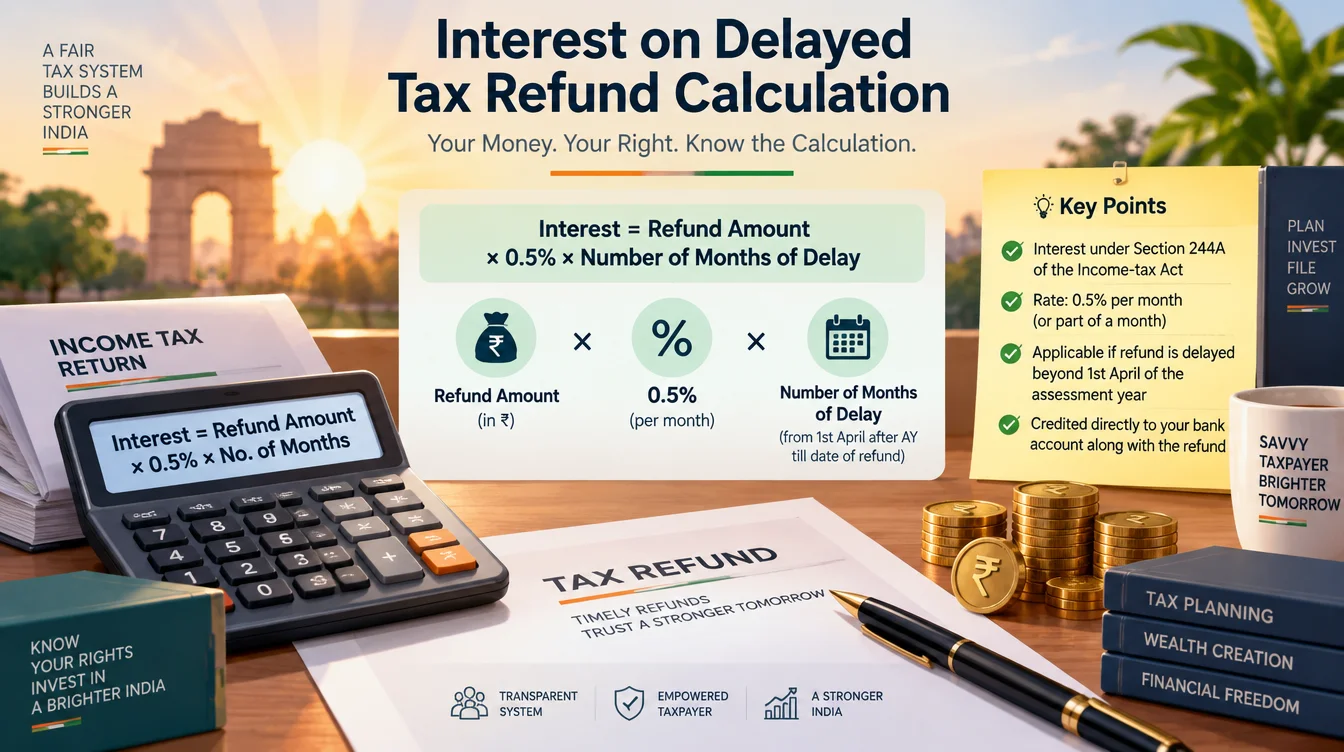
When the delay is the department’s fault and not yours, the law compensates you. Under Section 244A, you are entitled to simple interest of 0.5% per month, or part of a month, on the refund amount.
- For refunds arising from excess TDS or advance tax, interest usually runs from 1 April of the assessment year until the refund is granted, provided you filed on time.
- No interest is payable if the refund is less than 10% of your total tax liability.
- If you cause the delay, for example, by late e-verification, we can exclude that period from the interest calculation.
This interest is itself taxable as income from other sources in the year you receive it, so remember to report it next year.
How to Avoid a Refund Delay Next Year
Most delays are preventable with a little discipline at filing time. Pre-validate your bank account before you file, e-verify within 24 hours, and reconcile your AIS with your return so no mismatch flag is raised.
Planning your deductions early also keeps your refund clean and predictable. If you want to reduce the size of any refund by managing your tax outgo throughout the year, our guide to tax saving beyond Section 80C highlights the extra avenues that salaried filers often miss.
For educational purposes only. This article is general information about personal finance and is not investment, tax, or legal advice. Past performance does not guarantee future returns. Mutual funds and market-linked instruments carry market risk; read the scheme-related documents carefully. Consult a SEBI-registered investment adviser or a qualified tax professional for guidance tailored to your situation.
Frequently Asked Questions
Why is my income tax refund still showing under processing?
“Under processing” means CPC has accepted your verified return but has not finished validating it. This is normal during peak July filing and usually clears within four to five weeks. If it stays stuck for longer, check your AIS for a mismatch and confirm your bank account is pre-validated.
How do I fix a refund that failed to credit?
A failed credit almost always means your bank account is not pre-validated or the PAN name does not match the bank record. Please ensure the account is fixed and marked as validated before raising a refund reissue request under Services on the e-filing portal. The reissue then clears in two to four weeks.
Can the tax department adjust my refund without informing me?
No. Under Section 245, the department must send you an intimation and allow you 30 days to respond before setting off your refund against any old demand. If you disagree, please file your response with supporting documents under Pending Actions before the set-off is finalised.
Will I receive interest if my refund is delayed?
Yes, if the delay is not your fault. Section 244A grants simple interest of 0.5% per month on the refund amount, generally from 1 April of the assessment year until it is paid. No interest applies if the refund is under 10% of your total tax, and periods of delay caused by you are excluded.
Does an unverified ITR delay my refund?
Completely. An unverified return is treated as never filed, so no refund is processed at all. You have 30 days from filing to e-verify using Aadhaar OTP, net banking, or a pre-validated account. Miss it and you must file again, resetting the entire timeline.