
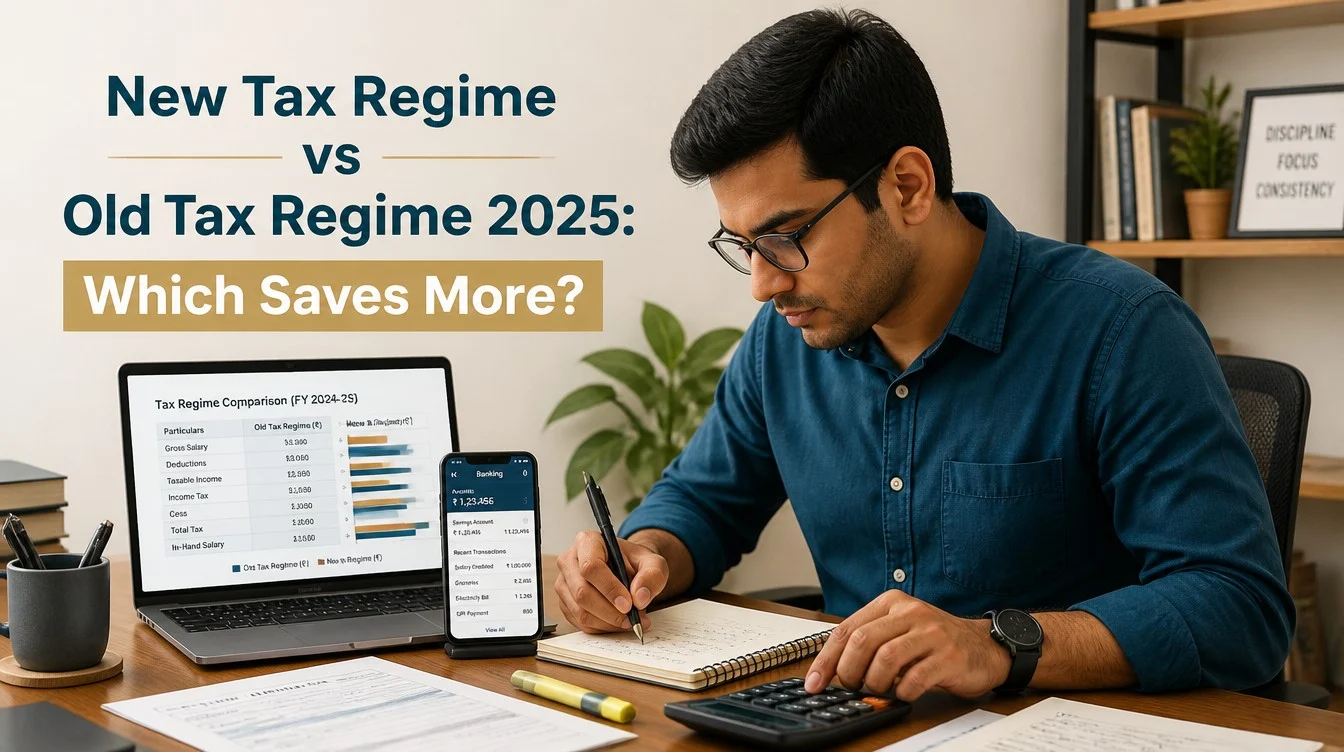
New Tax Regime vs Old Tax Regime 2025: Which Saves More Tax?
The new tax regime vs old tax regime 2025 choice is the single most important income tax decision Indian taxpayers make each year. The new tax regime offers lower slab rates and no documentation hassle. The old regime allows deductions that can significantly reduce taxable income but requires proof and planning. This guide provides a complete comparison, break-even income analysis, and decision framework to determine which regime saves you more tax based on your specific income and deductions.
New Tax Regime vs Old Tax Regime: Slab Rates Comparison
| Income Range | New Regime Rate (FY 2025-26) | Old Regime Rate |
|---|---|---|
| Up to Rs 4,00,000 | Nil | Up to Rs 2.5 lakh: Nil |
| Rs 4,00,001 to Rs 8,00,000 | 5% | Rs 2.5L to Rs 5L: 5% |
| Rs 8,00,001 to Rs 12,00,000 | 10% | Rs 5L to Rs 10L: 20% |
| Rs 12,00,001 to Rs 16,00,000 | 15% | Above Rs 10L: 30% |
| Rs 16,00,001 to Rs 20,00,000 | 20% | 30% (same) |
| Rs 20,00,001 to Rs 24,00,000 | 25% | 30% (same) |
| Above Rs 24,00,000 | 30% | 30% (same) |
The new regime has a basic exemption limit of Rs 4 lakh (up from Rs 3 lakh before Budget 2025) and provides a rebate under Section 87A making effective tax zero on income up to Rs 12 lakh. The old regime has a basic exemption of Rs 2.5 lakh (Rs 3 lakh for seniors, Rs 5 lakh for super seniors) with a rebate making tax zero up to Rs 7 lakh in income.
Key Deductions Available Only Under Old Regime
The old tax regime allows a wide range of deductions that the new regime does not (except for a few specific ones):
- Section 80C: Up to Rs 1.5 lakh for PPF, ELSS, NPS, EPF, LIC, home loan principal, tuition fees.
- Section 80D: Health insurance premiums – Rs 25,000 for self and family, Rs 50,000 for senior citizen parents.
- Section 80CCD(1B): Additional Rs 50,000 NPS contribution.
- HRA Exemption: Reduces taxable income for house rent allowance recipients.
- Home loan interest (Section 24b): Up to Rs 2 lakh deduction on self-occupied property interest.
- Standard Deduction: Rs 50,000 for salaried (also available under new regime now at Rs 75,000).
- LTA (Leave Travel Allowance): Exempt under old regime for actual travel expenses.
Who Benefits from the Old Tax Regime?
The old regime saves more tax when your total deductions are large enough to bring taxable income below the new regime’s effective threshold. The approximate break-even deduction amount by income level:
- Rs 10 lakh income: Old regime is better if total deductions exceed approximately Rs 2.75-3 lakh (80C + NPS + HRA/home loan interest).
- Rs 15 lakh income: Old regime is better if total deductions exceed approximately Rs 3.5-4 lakh.
- Rs 20 lakh income: Old regime is better if total deductions exceed approximately Rs 4.5-5 lakh.
- Rs 30 lakh+ income: The marginal tax rate is 30% in both regimes. Old regime benefits depend almost entirely on the quantum of deductions. Large HRA, home loan interest, and 80C can make old regime significantly better.
Salaried individuals with home loans, HRA, NPS contributions, and health insurance typically benefit from the old regime. Young employees with fewer deductions (no home loan, no dependents needing health insurance) typically benefit from the new regime. Understanding NPS contribution strategies is particularly relevant for old regime optimization since NPS can provide up to Rs 2 lakh in deductions (80CCD(1) + 80CCD(1B)).
Who Benefits from the New Tax Regime?
The new regime benefits taxpayers who:
- Have income below Rs 12 lakh (near-zero effective tax due to rebate).
- Have few or no deductions – young earners without home loans, health insurance, or significant 80C investments.
- Want simplicity – no need to maintain proof of investments, no deadline pressure for tax-saving investments.
- Receive significant employer NPS contributions (which are deductible in new regime too under Section 80CCD(2)) or employer perquisites like food coupons.
- Have business income as primary income (switching to new regime once is simpler than managing complex books for old regime).
The government’s policy direction since 2020 has been to make the new regime the default, with increasing rebates and expanding the nil-tax threshold. For FY 2025-26, the new regime is the default – taxpayers must actively opt for the old regime by submitting Form 10-IEA or declaring in their ITR. The updated 2026 comparison includes the latest slab changes from Budget 2025.

New Regime vs Old Regime for Specific Deduction Combinations
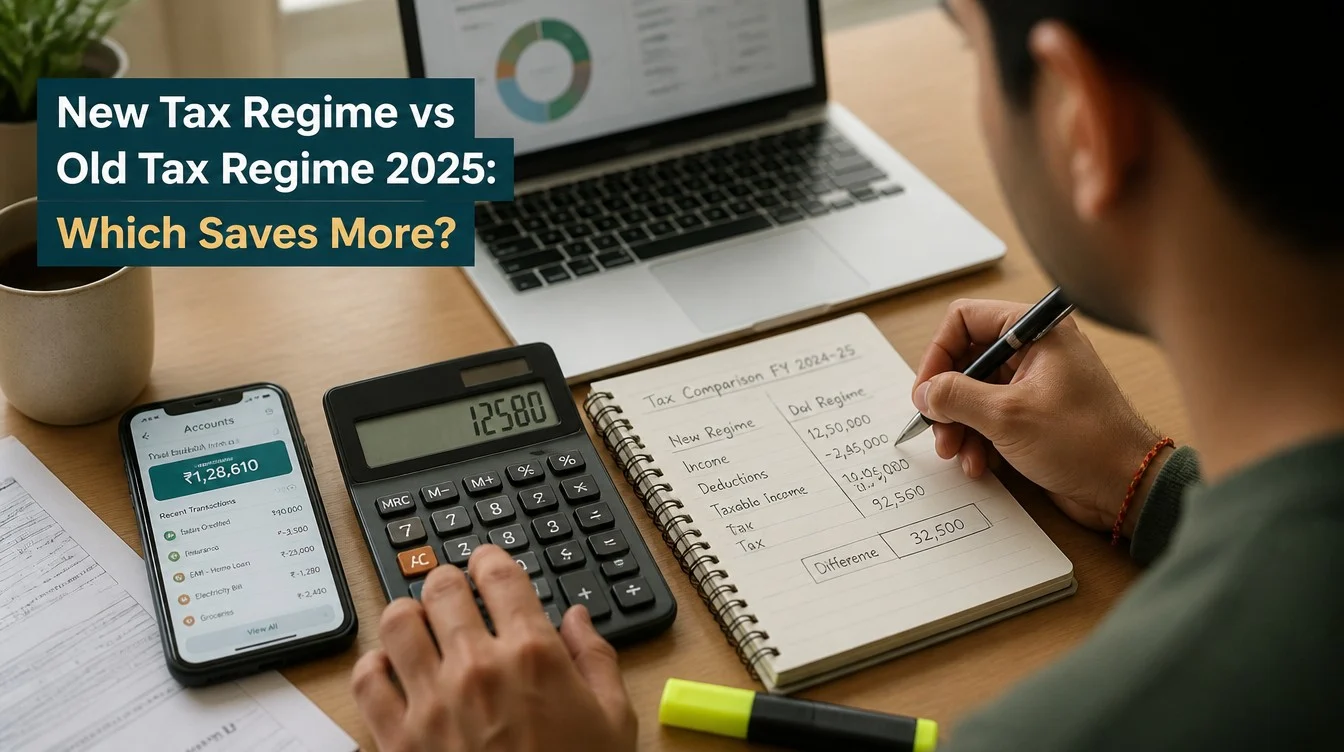
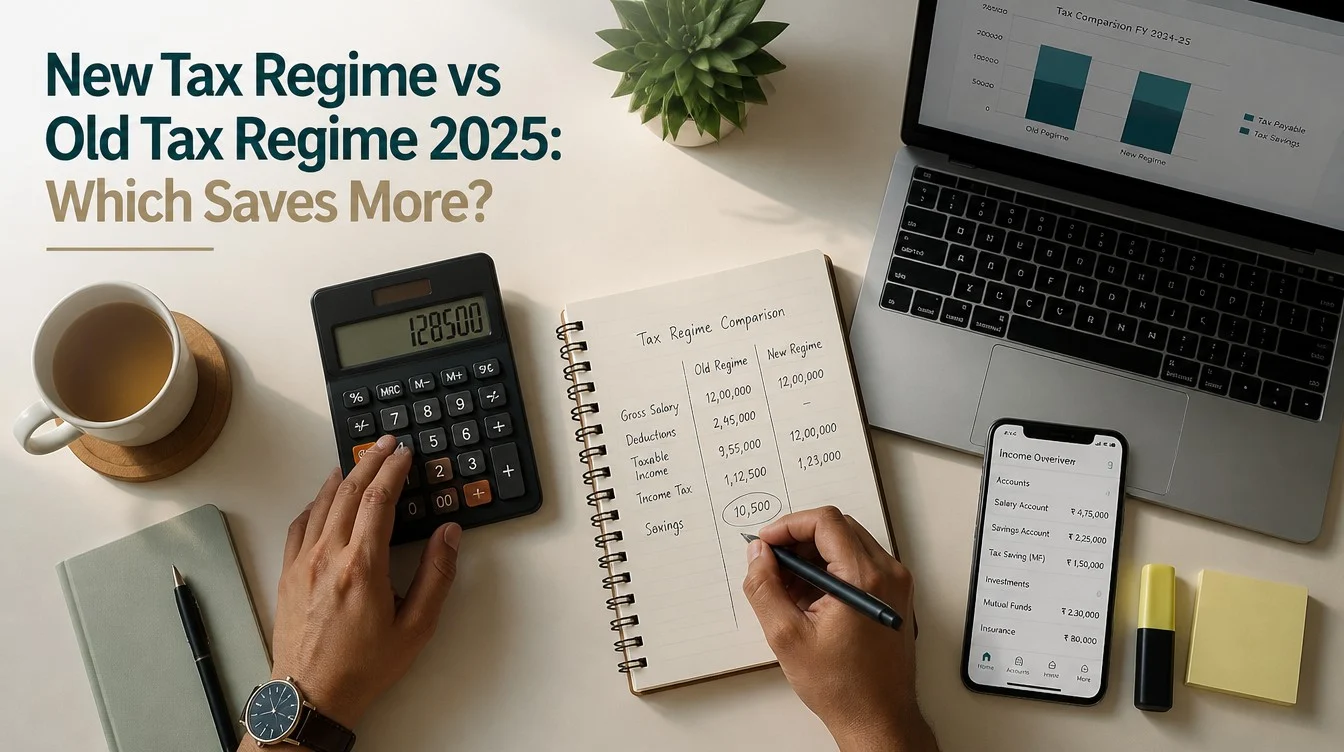
For Rs 15 lakh income (illustrative calculation, FY 2025-26):
- New regime: Taxable income = Rs 15 lakh minus Rs 75,000 standard deduction = Rs 14.25 lakh. Tax approximately Rs 1.82 lakh.
- Old regime with standard deductions: 80C (Rs 1.5 lakh) + 80D (Rs 25,000) + HRA exemption (Rs 1.5 lakh, varies) + 80CCD(1B) NPS (Rs 50,000) + Standard deduction (Rs 50,000) = Total deductions Rs 4.25 lakh. Taxable income = Rs 10.75 lakh. Tax approximately Rs 1.53 lakh.
- Saving from old regime: Approximately Rs 29,000 per year for this income level with these deductions.
The calculation shifts at different income levels and deduction combinations. Always compute both options for your specific numbers before deciding. Many AMCs, insurance companies, and tax platforms offer free online calculators for this comparison.
Switching Between Regimes
Salaried individuals can switch between new and old regime every year – this is one of the significant flexibilities for employed taxpayers. Each year, you evaluate which regime saves more tax and declare accordingly to your employer (Form 12B) and in your ITR. Freelancers and those with business income have much more restricted switching rights (see ITR filing for freelancers guide). For investment decisions that interact with tax regime choice, mutual fund SIPs and NPS contributions have different value under the two regimes – plan your investments accordingly.
Frequently Asked Questions
Is the new tax regime compulsory from 2025?
The new tax regime is the default from FY 2024-25 onward. If you do not actively opt for the old regime, you are automatically placed in the new regime. To use the old regime, salaried employees must submit Form 10-IEA to their employer or declare old regime in their ITR. This default change does not force the old regime away – it just shifts which one requires active selection.
Can I switch regimes mid-year?
Salaried employees can tell their employer which regime to apply for TDS deduction during the year. However, the final regime choice is made when filing the ITR. If you told your employer to use the new regime for TDS but want to switch to old when filing (because you accumulated more deductions than expected), you can do so. The TDS deducted under the new regime may be lower than your old regime liability – you pay the difference with interest if significant, or receive a refund if old regime tax is lower.
Are there any deductions available in the new tax regime?
Yes, a limited set. Standard deduction (Rs 75,000 for salaried), employer NPS contribution (Section 80CCD(2) – up to 10% of salary), employer EPF contribution, and certain allowances are still available under the new regime. The key deductions not available in new regime are: 80C, 80D, HRA exemption, home loan interest (24b), LTA, and most other Chapter VI-A deductions.
What happens to 80C investments if I switch to the new regime?
Your existing investments (PPF, ELSS, NPS, LIC) continue to grow and mature normally regardless of which tax regime you use. Switching to the new regime means you forego the 80C deduction on new investments, but existing investments are not affected. ELSS funds continue to have a 3-year lock-in. PPF maturity proceeds remain tax-free. The investments themselves are not invalidated – only the tax deduction on new contributions is unavailable in the new regime.
How do I calculate which regime saves me more tax?
Use the official income tax department’s regime comparison tool on incometax.gov.in, or any reputable tax calculator. Input your gross salary, actual deductions claimed (not just maximums), and employer-provided perks. The calculator gives you the exact tax under both regimes. The key inputs are: gross salary, actual HRA exemption (based on rent paid and salary), actual 80C investments made, actual health insurance premiums paid, home loan interest paid, and NPS contributions. Compare net tax after all deductions under old regime vs new regime.
Related Articles
- New Tax Regime vs Old Tax Regime 2026 Update
- NPS Vatsalya Scheme: Complete Guide
- SIP vs Lumpsum: 20-Year Backtest