

After gold’s record run and a raised import duty, more salaried Indians are asking whether silver investment in India deserves a slot in their portfolio. Silver is cheaper per gram, more volatile, and doubles as an industrial metal used in solar panels, electronics, and electric vehicles. That combination of monetary appeal and factory demand makes it distinct from gold.
This guide compares the main ways to own silver in 2026: silver ETFs, physical coins and bars, and digital silver. It explains the gold-silver ratio in plain language, how silver ETFs are taxed under current rules, and how much silver a portfolio can hold. Silver moves in sharp swings, so treat it as a satellite position, not a core holding, and read this guide as an India-first, educational take on the trade-offs.

Why Silver Investment India Is Getting Attention in 2026
Gold sitting near record highs has pushed many first-time buyers toward a cheaper hard-asset alternative. Silver, priced far lower per gram, feels more accessible for someone starting with a small monthly amount, which is a big reason interest in silver investment in India keeps climbing.
The dual-demand story: money plus industry
Gold is overwhelmingly a monetary and jewellery metal, while silver is both a store of value and a genuine industrial input, as solar cells, electronics, and EV components all consume it. That ties part of its price to the manufacturing cycle. It cuts both ways: expanding factories can support prices, while slowing growth softens demand and adds to silver’s swings.
Duty changes and their ripple effect
Import duty is a lever the government uses on precious metals, and any change flows straight into the landed price you pay, so physical premiums and ETF prices react. Reading the fine print after each union budget helps you time purchases better, a habit covered in this guide to the money moves worth making after every budget.
Silver Investment India: Silver ETFs Explained for Beginners
A silver ETF is a mutual-fund unit that tracks the domestic price of physical silver. The fund house buys and stores the metal in vaults, and you hold units in your demat account that rise and fall with silver’s price, minus a small expense ratio.
How a silver ETF actually works
Think of a silver ETF as a savings slip backed by real metal in an insured vault, so you skip storage, purity checks, and locker rent. SEBI regulates these schemes, and units trade on the exchange during market hours, just like stocks.
What to check before buying
- Expense ratio: a lower value is better over long holding periods.
- Tracking error: how closely the fund follows the actual silver price.
- Liquidity: healthy daily volumes so you can exit near fair value.
- Demat requirement: You need a demat and trading account to hold an ETF.
If you would rather not open a demat account, a silver fund-of-funds that invests in the ETF lets you buy through a regular mutual fund route, which pairs naturally with a disciplined systematic investment plan approach.
Physical Silver: Coins, Bars, and Their Hidden Costs
Physical silver has an emotional pull that a screen entry never will, and for gifting or tradition it is unmatched. But the convenience of touch comes with costs that eat into returns.
Making charges, premiums, and purity
Coins and bars typically sell for more than their raw metal value due to making charges and dealer premiums, and when you sell them back, you often receive less than the spot price. Always insist on hallmarked, high-purity silver and keep the invoice for tax and resale proof.
Storage and safety
Silver is bulky. A holding worth Rs 500,000 (5 lakh) in silver weighs far more than the same value in gold, so locker space and insurance matter, and that storage friction is precisely what ETFs remove.
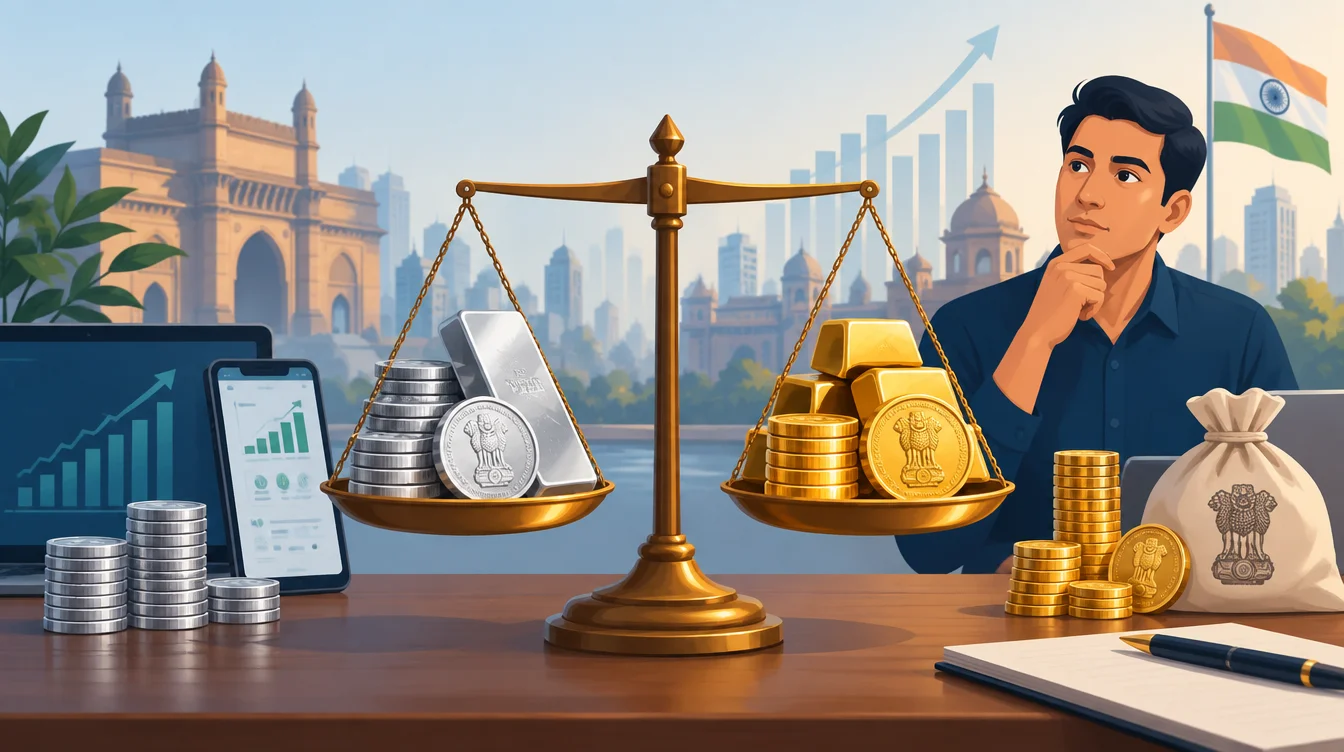
Digital Silver: Convenient but Know the Structure
Digital silver lets you buy fractional quantities online, sometimes for as little as one rupee, with a provider storing the equivalent metal on your behalf. It is beginner-friendly, but the structure deserves scrutiny before you commit serious money.
Where digital silver sits in the rulebook
Unlike SEBI-regulated ETFs, several digital silver products run through vaulting partners rather than a formal securities framework. That does not make them unsafe, but the investor protection layer differs, so read the custody terms, check who holds the metal, and understand redemption rules before buying.
Good for habit-building, not for size
Digital silver shines as a way to build the habit of buying small amounts regularly. For a larger, long-term allocation, many investors prefer the transparency and regulation of an ETF.
Silver ETF vs Physical Coins vs Digital Silver: Full Comparison
Each route buys exposure to the same metal, yet the ownership experience, costs, and taxation differ. The table below lays out the trade-offs so you can match a method to your goal.
| Feature | Silver ETF | Physical Coins/Bars | Digital Silver |
|---|---|---|---|
| Regulator | SEBI (mutual fund) | None (retail purchase) | Vaulting partner, limited oversight |
| Storage | The fund holds it, no effort | Your locker and insurance | Provider vault |
| Buying cost | Low expense ratio | Making charge plus premium | Small spread plus fees |
| Liquidity | Sell on exchange in market hours | Dealer buyback, lower price | In-app sales, provider-dependent |
| Account needed | Demat and trading | None | App or wallet |
| Best for | Long-term, cost-conscious holding | Gifting, tradition | Small, habit-building buys |
For most salaried investors chasing a clean, low-friction allocation, the ETF route usually wins on cost and liquidity, while physical and digital silver serve narrower needs.
The Gold-Silver Ratio Explained Simply
The gold-silver ratio tells you how many units of silver it takes to buy one unit of gold. If gold costs the same as 80 units of silver, the ratio is 80. Traders watch it as a rough gauge of whether silver looks cheap or expensive relative to gold.
A simple worked example
Gold trades around Rs.100,000 (1 lakh) for 10 grams and silver near Rs.1,250 for 10 grams. Dividing one by the other gives a ratio of roughly 80. A high ratio suggests silver is relatively cheap versus gold and a low ratio the opposite. But the ratio swings widely and mean-reverts loosely, so treat it as a context tool, not a crystal ball.

Silver vs Gold Investment: Which Belongs in Your Portfolio
The silver vs gold investment question is not an either-or for most people. Gold is the steadier hedge; silver is the higher-octane cousin that can outrun gold in a rally and fall harder in a slump. Understanding that personality gap matters most.
Volatility and role
Gold tends to be the calmer anchor during market stress, while silver can deliver larger gains but sharper drawdowns because of its industrial link. If you already own gold, a small silver slice adds spice, not stability. For the fuller picture on the yellow metal, this complete guide to gold investing in India pairs well with everything here.
Both are market-linked
Neither metal offers guaranteed returns. Silver and gold prices are market-linked and can fall for extended stretches, so past performance is not indicative of future results. Treat any commodity exposure as a diversifier, not a promised payout.
Taxation of Silver ETFs After 2026 Rules
Taxation shapes your real, take-home return, so it belongs in the decision. For silver ETFs, the holding period decides the rate you pay when you sell at a gain.
Short-term versus long-term treatment
Gains on specified silver and gold ETFs are treated by how long you hold. Short-term gains on units sold before the qualifying holding period are added to your income and taxed at your slab rate, while longer holds fall under the applicable capital-gains treatment. Because thresholds have shifted across recent budgets, confirm the current-year position before you sell.
Physical silver taxation
Physical silver is treated as a capital asset, with gains depending on your holding period, so retain purchase invoices to establish cost. When rate structures change with the budget, factor that into large exits, a discipline echoed in this look at how asset allocation shifts across your working life.
Silver Investment India: How Much Silver in a Portfolio
How much silver is in a portfolio? For most salaried investors, precious metals as a whole, gold plus silver, sit as a small diversifier rather than a core engine. A common rule of thumb in Indian personal finance is to keep total assets modest and let equity and debt do the heavy lifting.
A practical starting point
- Decide your total precious-metals slice first, often a small single-digit share of the portfolio.
- Keep gold as the larger, steadier part of that sleeve.
- Add silver as a minor tilt, sized so a sharp fall does not derail your plan.
- Rebalance yearly, trimming winners and topping up laggards.
Sizing silver so a bad year barely dents your net worth is the point. Managing that downside sits at the heart of broader portfolio risk management for Indian investors.
Silver Investment India: Common Mistakes to Avoid
Is silver a get-rich-quick asset? No. The most damaging mistakes come from treating a volatile diversifier as a jackpot, and avoiding a few predictable errors protects your money and your patience.
The usual traps
- Overallocating after a price surge, right when the risk is highest.
- Ignoring costs like making charges on coins that quietly reduce returns.
- Chasing momentum instead of averaging in through disciplined buying.
- Forgetting about tax and getting surprised by the bill at the sale.
Silver can serve as loan collateral in some cases, but borrowing against metal carries its own risks, so borrow against an asset only with a clear repayment plan.
For educational purposes only. This article is general information about personal finance and is not investment, tax, or legal advice. Past performance does not guarantee future returns. Mutual funds and market-linked instruments carry market risk; read the scheme-related documents carefully. Consult a SEBI-registered investment adviser or a qualified tax professional for guidance tailored to your situation.
Frequently Asked Questions
Is silver a good investment in India in 2026?
Silver can be a useful diversifier, but it is volatile and market-linked, so it suits a small satellite allocation rather than a core holding. Its industrial demand adds both upside potential and extra swings. There are no guaranteed returns, and past performance is not indicative of future results.
Which is better, a silver ETF or physical silver?
For most long-term, cost-conscious investors, a silver ETF wins on low cost, storage, liquidity, and SEBI regulation. Physical coins suit gifting but carry making charges and storage friction.
How is the gold-silver ratio useful?
It shows how many units of silver equal one unit of gold, giving a rough sense of relative value. A high ratio hints silver is cheap versus gold, but it is a context tool, not a timing signal.
How are silver ETFs taxed after 2026 rules?
Gains depend on your holding period, with short-term gains added to income at your slab rate and longer holds under the applicable capital-gains treatment. Thresholds have shifted across budgets, so confirm the current-year position before selling.
How much silver should I hold in my portfolio?
Keep total precious metals as a small diversifier, with gold as the larger part and silver as a minor element. Size silver so a sharp fall does not derail your plan, and rebalance yearly.