
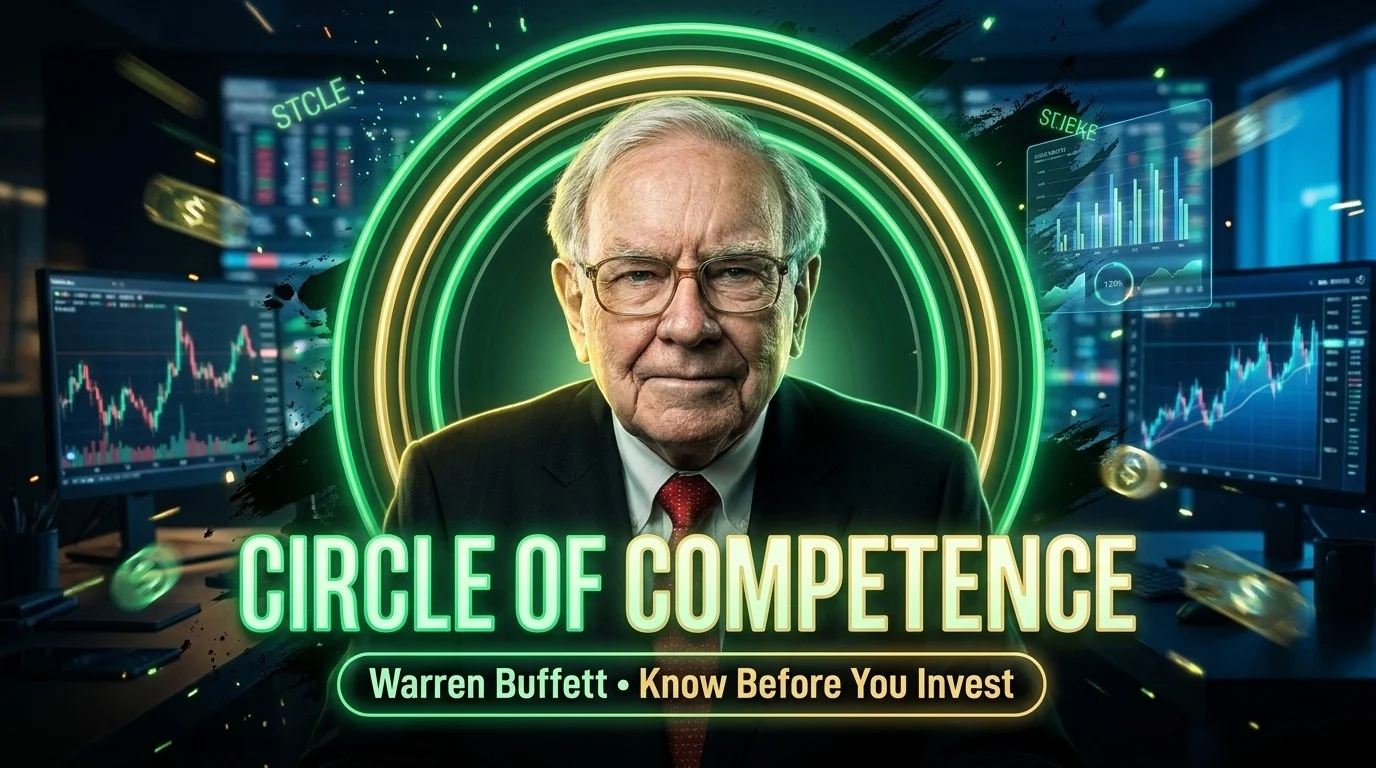
Warren Buffett’s Circle of Competence: How to Know What You Know Before You Invest
Warren Buffett has turned down hundreds of investments in businesses that looked cheap, growing, and well-managed. His reason for passing was not a flaw in the numbers. It was a flaw in his knowledge: the business was outside his circle of competence. For over 40 years, Warren Buffett has described this concept in shareholder letters, interviews, and speeches. Understanding this concept – and applying it honestly to your investing – may be the single most protective discipline available to Indian retail investors operating in a market full of noise, tips, and complex businesses they have never examined closely.
What Is the Circle of Competence Warren Buffett Made Famous?
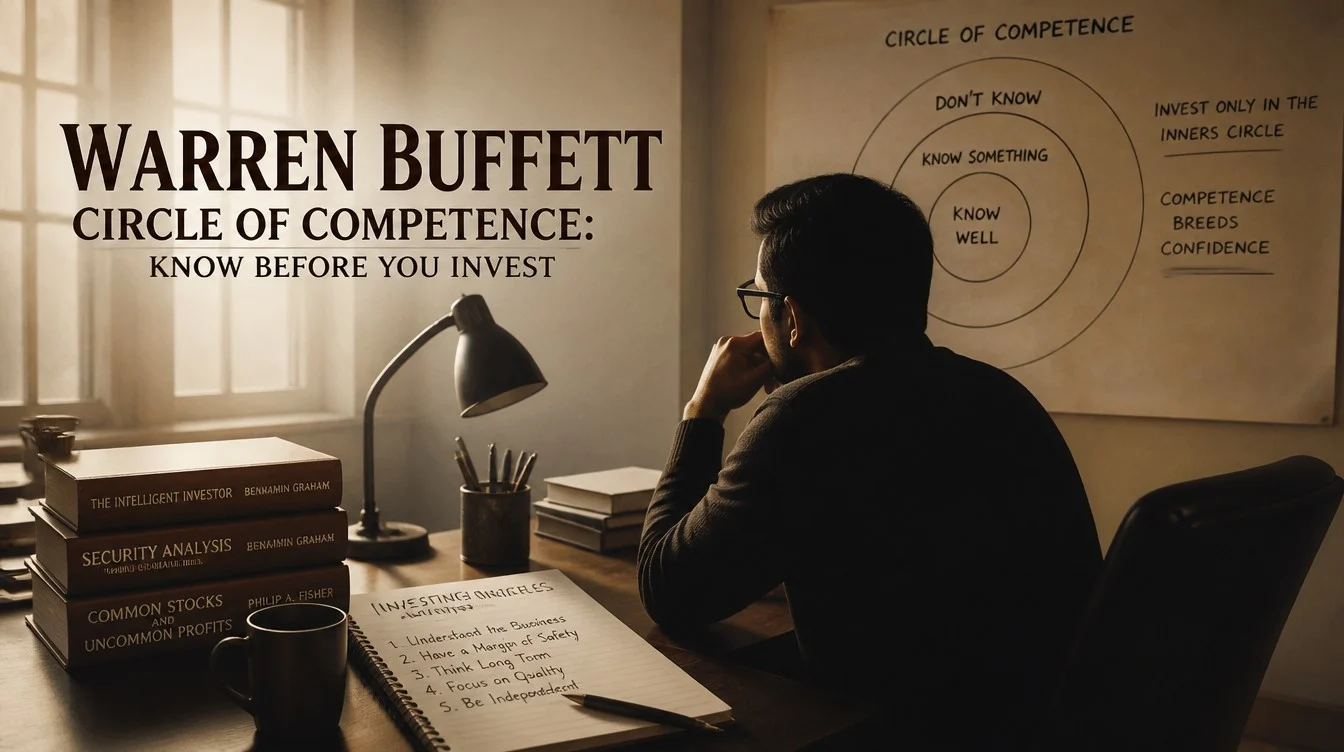
The circle of competence is not a formal framework with rules and criteria. It is a mental model about the limits of knowledge. Buffett’s idea is simple: every investor has a set of businesses, industries, and economic domains they understand deeply. Within that circle, they can make reliable judgments about future earnings, competitive dynamics, and management quality. Outside of it, they are guessing even if they have read the annual report three times.
The circle is defined not by what you find interesting or by what sector is currently popular. It is defined by whether you can predict, with reasonable confidence, how a business will look in five to ten years. Can you explain what will drive its revenue growth? Do you understand why a customer chooses it over a competitor? Can you identify the conditions under which its competitive advantage will erode? If the honest answer to those questions is no, the business is outside your circle.
Buffett’s Own Circle
Buffett has been explicit that his circle is narrower than most people assume. He spent decades avoiding technology companies, including Microsoft, despite a close friendship with Bill Gates, because he did not feel confident predicting where technology’s competitive advantages would sit in a decade. He built his understanding around businesses with simple, durable economics: insurance, consumer brands, newspapers (in an earlier era), railroads, and financial services. He did not apologize for the narrowness of his circle. He argued that defining its edges precisely was more valuable than expanding it carelessly.
Why Knowing the Edge of Your Circle Matters More Than the Size
Buffett’s partner, Charlie Munger, has said that it is not the size of your circle of competence that matters; it is knowing where the boundary is. This distinction has direct financial consequences for Indian investors.
An investor who knows they understand FMCG businesses but not semiconductor fabrication will avoid making the most dangerous kind of mistake: investing with high conviction in something they do not understand. Overconfidence about knowledge is pricier than admitted ignorance. An investor who says “I don’t know this business well enough” will pass and wait for an opportunity within their circle. An investor who wrongly believes they understand a business will invest with conviction, hold through deterioration, and lose capital they could not afford to lose.
The Indian retail market has a structural problem with false circles of competence. Technology IPOs, pharma companies with complex API chemistry, NBFCs with opaque loan books, and global commodity businesses attract retail investors who have read one analyst report and concluded they understand the business. Overconfidence bias is the cognitive mechanism behind false circles: the less someone actually knows about a domain, the more confident they tend to feel about their judgement within it.
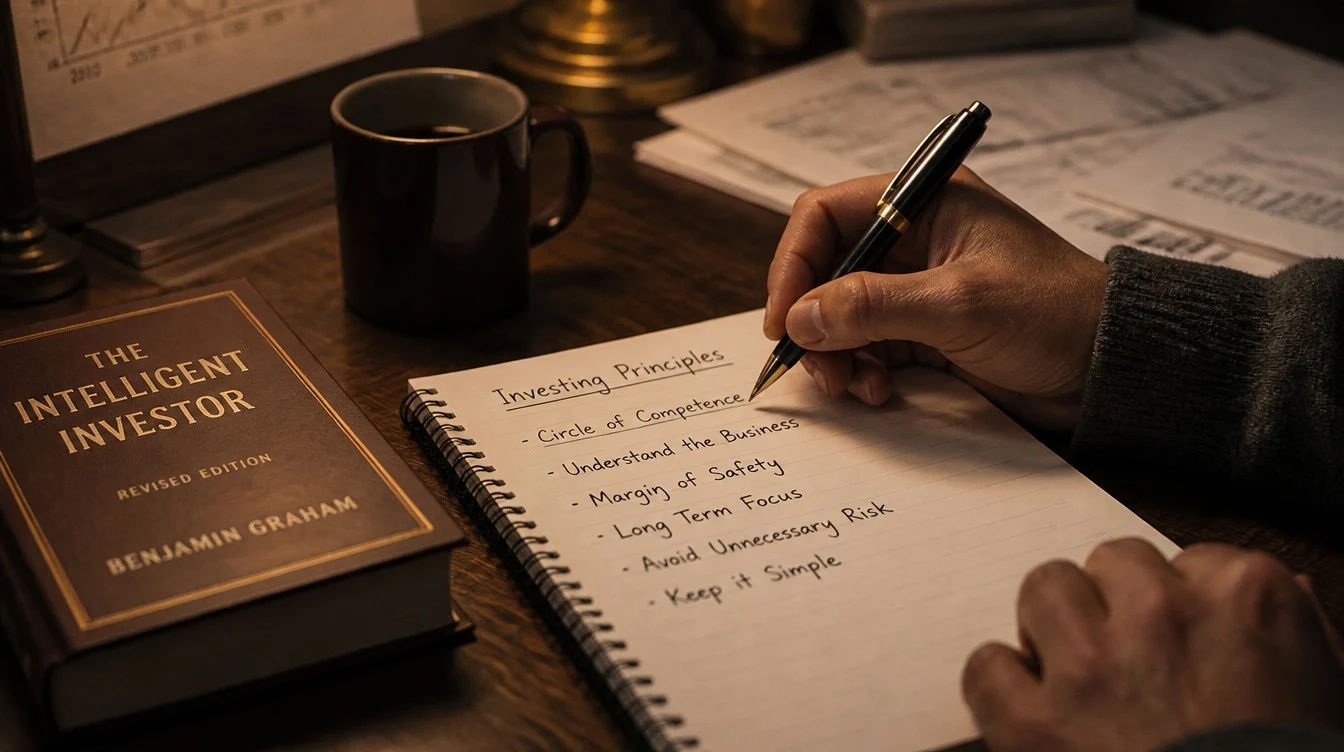
How to Map Your Own Circle of Competence
Buffett’s circle was built through decades of reading (he famously reads 500 pages per day) and through the experience of being in the insurance, banking, and retail industries either as an investor or an operator. Most retail investors will not replicate that depth. But mapping a circle is something every investor can do honestly.
Start with Your Professional Domain
The easiest starting point is your professional or educational background. A software engineer has genuine insight into the competitive dynamics of Indian IT services; they understand why TCS and Infosys win large enterprise contracts, what the switching costs look like from the client side, and how offshore delivery models compare on quality and cost. That is a real informational edge unavailable to most investors.
A doctor or pharmacist understands the Indian generic drugs market: the regulatory pathways, the pricing dynamics of branded generics vs. unbranded, the distribution networks, and the economics of off-patent drugs. A civil engineer has genuine insight into infrastructure contractors and construction material businesses. A financial expert understands bank balance sheets better than most retail participants.
None of these edges guarantee investment returns. But they represent areas where the investor’s judgment about business quality and competitive dynamics is grounded in real knowledge rather than surface-level research.
The Test: Can You Write the Bear Case?
One practical test Buffett has described is this: if you cannot articulate the most compelling argument against an investment, the genuine reasons why the business might underperform or fail, you do not understand the business well enough to own it. Writing the bear case requires knowing the business’s vulnerabilities, competitive threats, and the conditions under which its economics deteriorate. This is not pessimism. It is a test of whether your understanding is genuine or superficial.
Apply this test to stocks you currently own or are considering. For each holding, write three to four sentences explaining the most serious risk to the thesis. If you cannot do it, the holding is outside your actual circle of competence, regardless of how much you like the business or how much it has already returned. Buffett’s full investment framework treats the bear case as a mandatory step, not an optional stress test.
The Study Period Required to Enter a New Sector
Buffett’s circle expanded over time slowly and deliberately. He moved into airlines, technology (Apple), and energy businesses after years of study and observation. His rule for entering a new sector is implicit in how he describes his investment process: he reads everything available—industry economics, competitive history, regulatory frameworks, and major company filings—before making a judgment call about whether he understands the business well enough to own it.
For Indian retail investors looking to expand their circle into, say, healthcare diagnostics or renewable energy, the equivalent study period involves reading five years of annual reports for the two or three largest companies in the sector, understanding the regulatory environment (IRDAI for insurance, SEBI for financial services, and MoEFCC for energy), and ideally speaking to customers, suppliers, or employees who interact with the economics of the business directly.
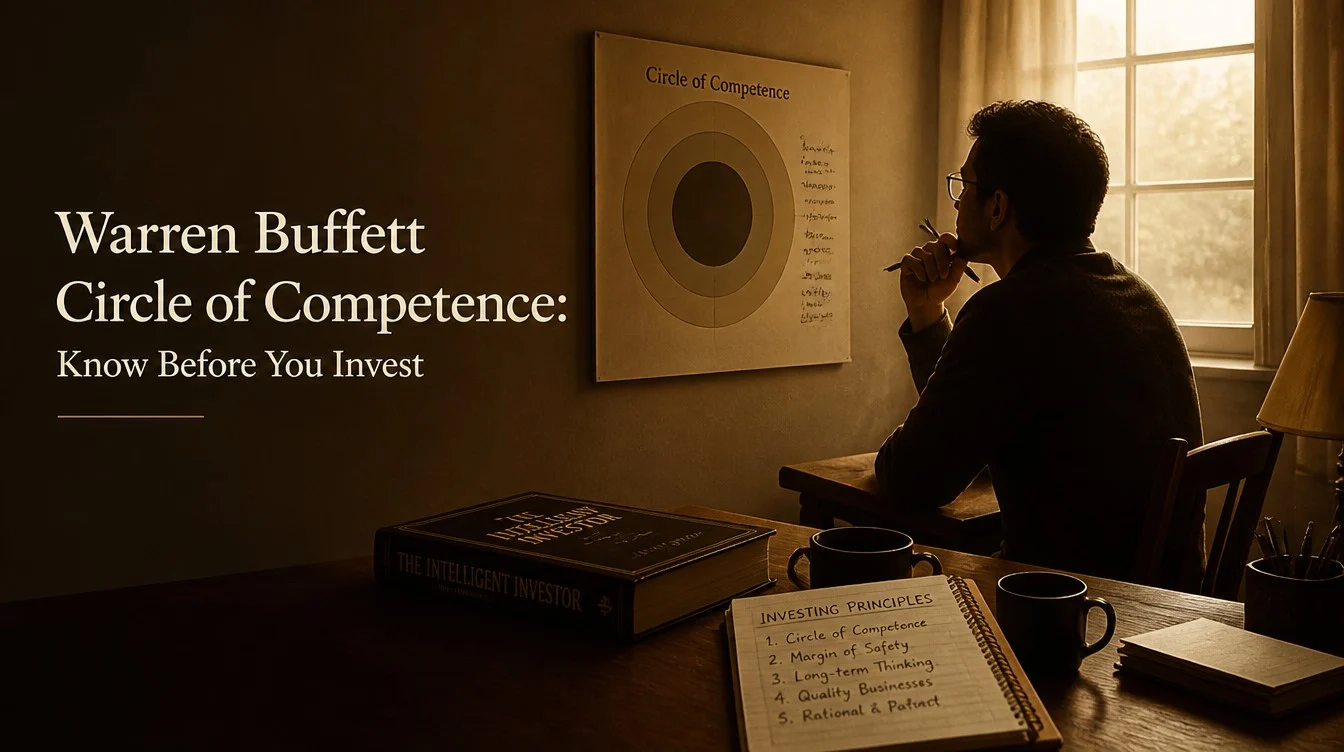
Circle of Competence Applied to Indian Markets
The Indian equity market has sectors that are naturally more accessible to the circle of competence framework and sectors that require specialist knowledge most retail investors will not have.
Accessible Sectors for Most Indian Investors
Consumer discretionary businesses (organized retail, consumer durables, branded apparel, and quick-service restaurants) have economics that most Indian consumers understand intuitively. You know why you buy Titan watches rather than unbranded alternatives. You understand why a family switches from unorganized local jewelers to Tanishq. You can observe whether a restaurant chain’s unit economics look healthy by watching queue length and order value at nearby outlets. This experiential knowledge is a genuine circle advantage.
Similarly, private sector banking is a domain where relatively straightforward analysis – comparing loan book growth, net interest margin, gross NPA ratios, and provision coverage across HDFC Bank, Kotak, and their peers – gives an analytical edge to investors willing to study the numbers carefully. The business model is not opaque. Systematic equity investment in businesses within your understanding compounds more reliably than diversified exposure to businesses you cannot evaluate.
Sectors That Typically Require Specialist Knowledge
Specialty chemicals, API manufacturing, semiconductor design services, clinical research organizations, and defense electronics are sectors where competitive advantage rests on intellectual property, regulatory certifications, and technical know-how that cannot be assessed from publicly available financial information alone. These are not automatically bad investments, but they require specialist knowledge that most retail investors do not have and cannot quickly develop.
The practical implication is not to avoid these sectors entirely but to demand a larger margin of safety when investing outside your circle, lower entry valuations that compensate for the analytical uncertainty, or to invest through fund managers who have the specialist knowledge you lack.
Common Mistakes When Applying the Circle Framework
The circle of competence concept is widely cited and poorly applied. Several misapplications are common among Indian retail investors.
The most frequent mistake is equating familiarity with understanding. You use Zomato every week; that does not mean you understand its unit economics, take-rate trajectory, competitive moat against Swiggy, or the regulatory risk from potential food-delivery platform regulation. Being a customer is the beginning of understanding a business, not the end of it.
A second mistake is treating the circle as permanent. Buffett expanded his circle to include Apple. After years of study, he came to understand the ecosystem lock-in, the recurring services revenue, and the switching costs that made Apple more like a consumer brand with durable economics than a traditional technology company. Your circle should grow over time through deliberate study, not stay fixed at whatever you understood on the day you opened your demat account.
The third mistake is using the circle as an excuse for under-diversification. Knowing your circle is not a reason to hold only three stocks. It is a reason to hold the best opportunities within your circle and to maintain honest humility about the businesses outside it. Asset class diversification remains important regardless of how deep your equity circle of competence runs.
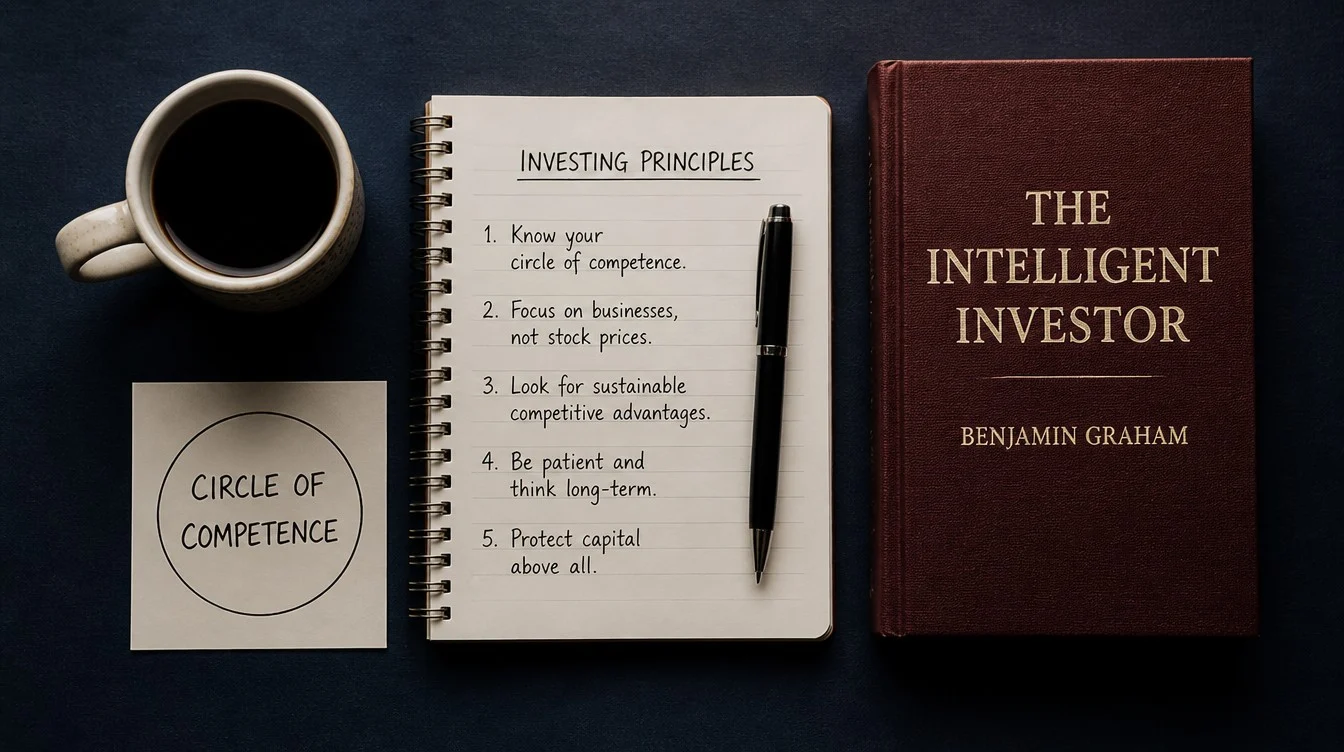
Frequently Asked Questions
What is Warren Buffett’s circle of competence?
The circle of competence is Buffett’s concept for the domain of businesses and industries where an investor has deep enough knowledge to make reliable judgments about competitive advantage, future earnings, and management quality. Inside the circle, investors can invest with conviction. Outside it, even well-researched investments carry hidden analytical risk because the investor cannot reliably assess what they do not understand.
How do you determine your own circle of competence?
Start with your professional and educational background, which gives you genuine insight into the economics of industries you work in. Then test your understanding of any business you own or are considering: can you write a compelling bear case? Can you explain what drives customer loyalty and switching costs? Can you predict how the competitive landscape will look in five years? If the honest answer is no to these questions, the business is outside your circle.
Did Buffett always stay within his circle of competence?
Buffett has said that he made his most expensive mistakes when he strayed outside his circle, most notably in the textile industry early in his career, where he kept Berkshire Hathaway’s original textile operations running long after the economics were clearly deteriorating because he understood the business but failed to recognize that the economics were structurally impaired regardless of management quality. The lesson he drew was that understanding a business is necessary but not sufficient; the economics must also be favorable.
How is a circle of competence different from diversification?
Diversification is a portfolio construction principle about spreading capital across assets to reduce concentration risk. The circle of competence is a stock selection principle about only investing in businesses you genuinely understand. They are complementary, not contradictory. You can hold a diversified portfolio entirely within your circle of competence, provided it spans multiple sectors. The risk of confusing them is using “I don’t understand this business” as a reason to avoid diversification, when it should be a reason to avoid that specific business, not the asset class.
Can the circle of competence be applied to mutual fund investing?
Yes, with a different application. For mutual fund investors, the circle of competence applies at the fund selection level rather than the stock level. Understanding which fund categories match your investment horizon and risk tolerance, how to read a fund’s rolling returns data, and what a consistent fund manager track record looks like across multiple market cycles is a circle of competence that most Indian SIP investors can and should develop.
Related Articles
- Warren Buffett Investment Strategy: The Complete Value Investing Guide for India
- Charlie Munger Mental Models: 25 Thinking Tools Every Indian Investor Needs
- 10 Investment Biases That Cost Indian Investors Money